 (585) 405-4375
 contact@echotonemusic.net




The Science of Sound at Dillon Amphitheater Colorado
Nestled on the north shore of Dillon Reservoir at 9,050 feet elevation, the Dillon Amphitheater isn’t just another outdoor concert venue in Colorado it’s a living laboratory where physics, engineering, and nature collide to create unforgettable sonic experiences. Whether you’re catching jam band legends or high energy electronic sets, the sound at this Summit County gem feels crisp, immersive, and perfectly balanced against a backdrop of snow capped peaks and shimmering blue water.

In this deep dive article, we’ll explore the real science behind the venue’s legendary acoustics, backed by its history since 1993, the 2018 multimillion dollar redesign, cutting edge sound monitoring introduced in 2026, and real concerts featuring bands like The String Cheese Incident, Nitty Gritty Dirt Band, and Dirty Heads. You’ll discover why sound travels differently at high altitude, how modern line array systems conquer the open air, and what the latest decibel data reveals about bass propagation to nearby homes. If you’re planning a trip or simply love the intersection of music and physics, this guide is your ticket to understanding and experiencing The Science of Sound at Dillon Amphitheater Colorado.
A Brief History: From Community Bandshell to Premier Mountain Venue
The Dillon Amphitheater opened in 1993, built by the Town of Dillon as a free community gathering space overlooking Lake Dillon. For its first 25 years, it hosted weekend shows featuring local country, jazz, and bluegrass acts more intimate than arena scale productions.
Everything changed in 2017. The Town of Dillon invested $9.7 million in a complete overhaul to attract national touring artists while preserving the venue’s natural charm. Renovation began in July 2017 the new stage, bandshell, green rooms, concessions, restrooms, and expanded plaza opened in June 2018. The original seating bowl remained intact, but everything else was upgraded for professional productions.
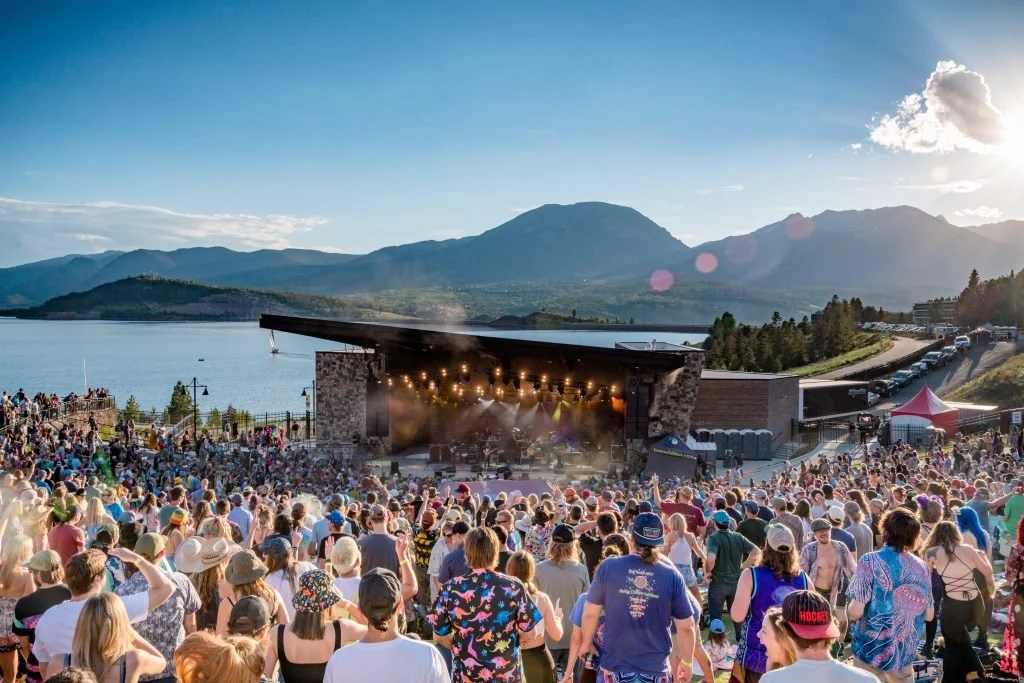
The grand reopening concert? None other than The String Cheese Incident on a summer evening in 2018. Fans still talk about how the jam band’s intricate layers cut through the mountain air with stunning clarity an early sign that the redesign had nailed the acoustics.
Fast forward to today: 2024 was the venue’s most successful year ever, with 44 live music events (28 ticketed) drawing 88,186 attendees. New traditions like Mountain Music Mondays (free shows every Monday since 2023) keep the community spirit alive alongside big names.
Upcoming 2026 highlights include:
June 6: Lane 8 with Dirty South, MYRNE, and Otherwish
June 16: Nitty Gritty Dirt Band with Molly Tuttle
June 26: Dirty Heads
July 31: Young the Giant with Cold War Kids and KennyHoopla
These dates prove the venue’s evolution from local bandshell to Colorado’s premier lakeside stage.
Venue Design: Engineering for Natural and Amplified Sound
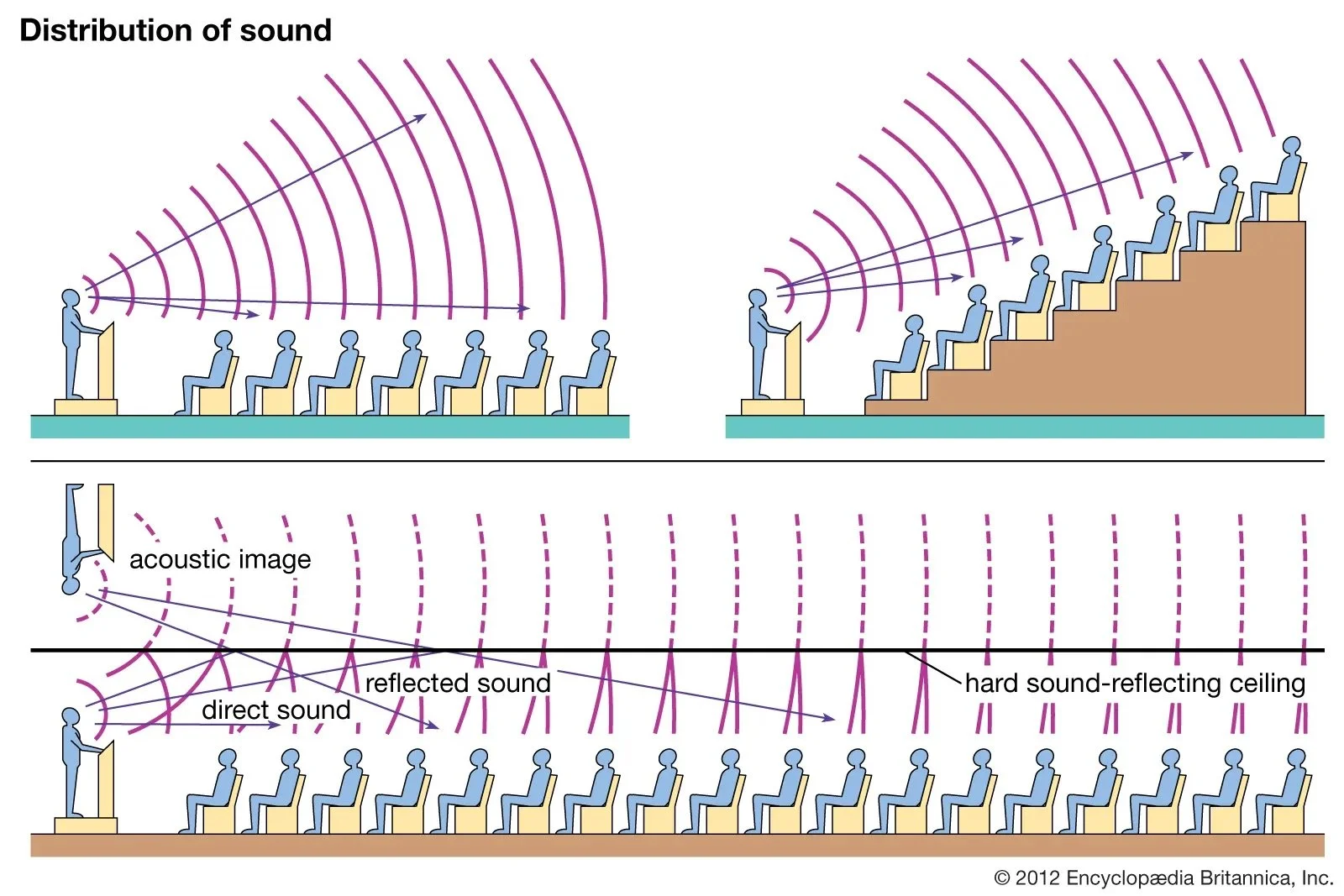
The seating bowl retained from 1993 creates a natural acoustic shell. Its gentle slope and curved layout focus sound waves toward listeners rather than letting them dissipate into the open sky. Architects Perkins&Will designed the new bandshell with a high load canopy for rigging modern lighting and speakers, plus protective wing walls that shield artists from afternoon alpine winds blowing off the reservoir.
Backstage upgrades include dedicated green rooms and expanded storage so touring crews can fine tune setups quickly. The result? Even distribution of sound across 3,656 seats (plus lawn overflow). Reviewers consistently praise the clarity: “You can understand every word from the top rows,” one attendee noted. Another called it “excellent acoustics” even from the farthest lawn spots.
At 9,050 feet, thinner air and dramatic temperature swings create unique challenges and opportunities. The lake acts as a natural reflector, while surrounding mountains can create subtle echoes that enhance certain frequencies without muddying the mix.
The Physics of Sound: How Waves Behave at Dillon Amphitheater
Sound is mechanical energy traveling as longitudinal pressure waves through air. Frequency (measured in Hertz, Hz) determines pitch low bass at 20–250 Hz, vocals around 85–255 Hz for males, high cymbals above 2,000 Hz. Amplitude determines volume, measured in decibels (dB).
In open air, sound follows the inverse square law:
I∝1r2 I \propto \frac{1}{r^2} I∝r21
where I I I is intensity and r r r is distance from the source. Double the distance, and intensity drops to one-quarter. Without walls to contain energy, Dillon’s sound engineers must compensate.
Air absorption also plays a role. Higher frequencies lose energy faster due to molecular friction especially in dry mountain air. Humidity and temperature affect speed:
v≈331+0.6T v \approx 331 + 0.6T v≈331+0.6T (m/s, where T T T is Celsius).
At Dillon’s elevation, lower air density slightly reduces density related attenuation, but temperature gradients dominate. Cool air over the warm reservoir at night can create inversion layers that duct low frequencies farther explaining why bass from heavy shows sometimes reaches Lake Cliffe Condominiums 50 feet away.
The venue’s bowl shape helps counteract natural losses. Curved surfaces reflect mid and high frequencies toward the audience, creating a natural “sweet spot” in the center seating. Wind from the lake can push or pull sound; the new wing walls mitigate afternoon gusts that once scattered notes.
Modern PA systems use line array speakers vertical stacks of precisely angled drivers that create a cylindrical wavefront. This maintains consistent volume and clarity from front row to back lawn, unlike older point source systems that weaken rapidly with distance.
Real Concerts, Real Sound Experiences
The String Cheese Incident’s 2018 reopening show remains legendary. Fans reported crystal clear mandolin and fiddle runs carrying across the reservoir without distortion proof the rebuilt stage and new rigging supported professional line arrays perfectly.
In 2025, Alison Krauss & Union Station delivered pristine bluegrass harmonies that cut through thin mountain air. Reviewers noted how the venue’s natural acoustics made every banjo pluck and vocal harmony feel intimate despite thousands in attendance.
Jam band favorites like Trampled by Turtles and Leftover Salmon (booked for multiple 2026 dates) thrive here. Their acoustic driven sets benefit from minimal electronic processing; the bowl naturally amplifies unplugged warmth while line arrays handle subtle dynamics.
Electronic acts like Lane 8 (June 6, 2026) or Dirty Heads test the low end limits. Heavy bass travels farther due to longer wavelengths resisting absorption exactly the phenomenon neighbors at Lake Cliffe have documented. Yet inside the venue, the sound remains tight and punchy thanks to careful EQ and the stage’s acoustic design.
The 2026 Sound Monitoring Revolution: Data Driven Acoustics
In early 2026, the Town of Dillon installed a state of the art sound pressure level monitoring system the most scientific approach yet to venue management. Events and Recreation Director Jessie Klefoth explained the upgrade measures readings at both the front of house mix position and the property line. Real-time displays show A-weighted (human hearing) and C-weighted (low frequency vibrations) decibels for instant transparency.

Current limits: 102 dB A-weighted at the property line (advertised to bands as 99 dB for safety margin). The new system lets staff tell artists to “turn it down” immediately rather than issuing fines later. Data collected throughout 2026 will determine whether a formal C-weighted limit is needed directly addressing bass-induced vibrations reported by the Neighbors of the Dillon Amphitheater group.
This isn’t guesswork; it’s applied acoustics. C-weighting captures the low frequencies that travel farther and cause walls to shake 50 feet away. By quantifying inside vs outside differences, Dillon is pioneering data backed sound management at high altitude venues.
Environmental Factors Unique to 9,050 Feet
Altitude changes everything. Lower air pressure means slightly faster initial sound travel in warm conditions, but rapid cooling after sunset creates temperature inversions over the reservoir. Sound bends downward, carrying bass farther science that explains both the venue’s reach and neighbor concerns.
Winds off the lake can create Doppler like shifts or scatter high frequencies. The 2018 wing walls and strategic speaker placement minimize these effects. Humidity from the water also reduces absorption compared to drier inland venues, keeping vocals bright even late into evening sets.
Pro Tips for the Best Sound Experience at Dillon Amphitheater
Sit mid bowl for optimal reflection balance.
Bring a blanket or low chair for lawn; sound remains clear but slightly softer.
Download the venue app for real time set times Mountain Music Mondays start gates at 5 p.m.
Pack earplugs for electronic shows; the system hits hard without distortion.
Check weather light rain doesn’t stop shows, but wind direction can shift perceived volume.
The Future of Sound at Dillon
With record attendance, new monitoring tech, and a 2026 lineup mixing jam, indie, reggae, and electronic, Dillon Amphitheater continues evolving. The Town of Dillon’s commitment to balancing world class sound with community respect sets a model for mountain venues everywhere.
Next time you hear Nitty Gritty Dirt Band’s harmonies or Lane 8’s pulsing beats echoing across the reservoir, remember: you’re experiencing applied physics at its most beautiful. The science of sound at Dillon Amphitheater Colorado isn’t just theory it’s the reason every concert feels magical.
Plan your visit at dillonamp.com. Whether you’re a physics nerd, music lover, or both, this venue proves that the best sound isn’t loudest it’s smartest.
Conclusion:
The Dillon Amphitheater stands as a shining example of how thoughtful design, natural geography, and modern engineering can create truly exceptional live sound. Perched at 9,050 feet beside the pristine waters of Lake Dillon, its bowl shaped seating, protective wing walls, and professional line array systems work in harmony with high-altitude physics thinner air, lake reflections, and subtle temperature inversions to deliver remarkably clear, balanced audio from front row to distant lawn.
Whether it’s the intricate bluegrass harmonies of Nitty Gritty Dirt Band and Molly Tuttle, the pulsing bass of Dirty Heads or Lane 8, or the timeless jam vibes of The String Cheese Incident, every note arrives with stunning detail and emotional impact. The Town of Dillon’s 2026 introduction of real time sound pressure level monitoring further proves their commitment: using precise A- and C-weighted data to balance world-class concert experiences with respect for nearby residents.
In the end, Dillon Amphitheater isn’t just a venue it’s proof that the best live sound isn’t the loudest, but the smartest: a perfect marriage of science, nature, and music that makes every show feel magical against the backdrop of the Colorado Rockies. Experience it for yourself. The science is real, the sound is unforgettable, and the next great night is waiting on the shores of Lake Dillon.
Loved diving into the science behind Dillon’s crystal-clear sound? Check out my deep dive on festival-level audio in ‘Ultra Music Festival Miami: Inside EDM Sound Systems’ for a look at how massive EDM rigs handle 165,000+ ravers
FAQ:
Q: Why does sound feel so clear and balanced at Dillon Amphitheater?
The natural bowl-shaped seating (retained from the original 1993 design) acts as an acoustic reflector, focusing mid and high frequencies toward the audience. Combined with the 2018 bandshell's wing walls (which reduce wind interference) and professional line-array speakers that create a consistent cylindrical wavefront, the venue minimizes rapid volume drop-off from the inverse square law. Thinner high-altitude air and lake reflections further enhance clarity, especially for vocals and instruments.
Q: How does high altitude at 9,050 feet affect concert sound?
Lower air density slightly reduces some attenuation, but the bigger factors are temperature gradients and humidity from Lake Dillon. Nighttime inversions can duct low frequencies farther (explaining occasional bass reach to nearby homes), while drier mountain air absorbs high frequencies more quickly making precise EQ and speaker placement essential for balanced mixes.
Q: What is the new sound monitoring system introduced in 2026?
Installed for the 2026 season, this advanced sound pressure level (SPL) monitoring system measures A-weighted (human-perceived loudness) and C-weighted (low-frequency emphasis) decibels in real time at the front-of-house mix position and the property line. It includes visible displays for transparency, allowing staff to address exceedances immediately (e.g., asking bands to lower volume) rather than issuing fines later. Data collected will help determine if limits need tweaking.
Q: What are the current sound limits at the venue?
The official limit is 102 dB A-weighted at the property line, though bands are told it's 99 dB as a safety buffer. No show has exceeded internal thresholds like 110 dB. The focus remains on preventing neighbor disturbances, particularly from bass vibrations reported by groups like the Neighbors of the Dillon Amphitheater.
Q: Do electronic or bass-heavy shows sound different here compared to acoustic acts?
Yes longer-wavelength bass travels farther and resists absorption better, which is why electronic sets (e.g., Lane 8 on June 6, 2026) or reggae-rock from Dirty Heads (June 26, 2026) can produce noticeable low-end outside the venue on calm nights. Inside, line arrays and careful engineering keep the sound tight and punchy without muddiness.
Q: What are the best seats for optimal sound quality?
Mid-bowl seats offer the best natural reflection balance and even coverage. Lawn areas still deliver clear audio but feel slightly softer. Avoid extreme edges if wind is a factor check forecasts, as lake breezes can subtly shift perceived volume.
Q: How can I stay updated on upcoming shows and sound policies?
Visit dillonamp.com for the full calendar (more 2026 dates, including Mountain Music Mondays, are announced rolling), follow @dillonamphitheater on social media, or subscribe to their newsletter. Ticketmaster and SeatGeek also list events like Nitty Gritty Dirt Band with Molly Tuttle (June 16, 2026) and Young the Giant (July 31, 2026).
Q: Are there any tips for first-time visitors regarding sound and experience?
Bring low-back chairs or blankets for the lawn, earplugs for high-energy shows, and arrive early for prime spots. Download the venue app for real-time info. Light rain rarely cancels shows, but wind direction can influence how sound carries embrace the elements for that authentic mountain vibe!
