 (585) 405-4375
 contact@echotonemusic.net




How AI Is Changing Music Production, Sound Engineers optimistic
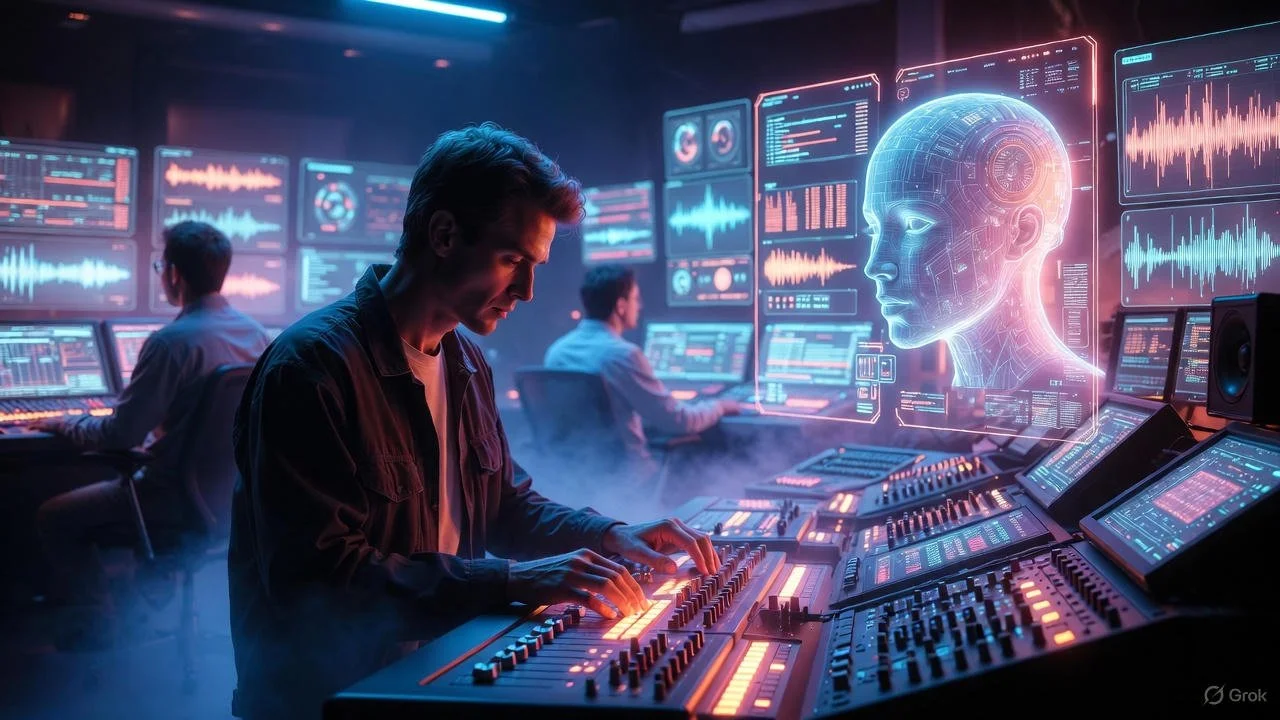
On a recent afternoon at a recording studio in Los Angeles, a young producer sat in front of his laptop watching an AI tool generate a fully formed chord progression in seconds. A few taps later, the program suggested drum patterns, offered vocal harmonies, and even created a rough mix of the entire session. He leaned back, impressed but not threatened.
“Cool,” he said. “But it still sounds like a robot. Now let me make it feel human.”
That moment captures where the music industry is right now standing at the intersection of intelligence and intuition. Artificial intelligence is reshaping the way producers create, mix, and experiment. Yet despite all the noise online about AI replacing musicians, the people actually working in studios every day aren’t panicking. If anything, they’re excited.
In studios big and small, engineers and producers are discovering that AI isn’t the enemy of creativity. It’s becoming the assistant that never sleeps, never gets tired of tweaking snare drums, and never complains about rendering stems at 3 a.m. But it still needs the one thing it can’t replicate human taste.
This is the story of how AI is quietly transforming modern production and why the people behind the console aren’t worried at all.
The Studio Has Always Evolved AI Is Just Another Step
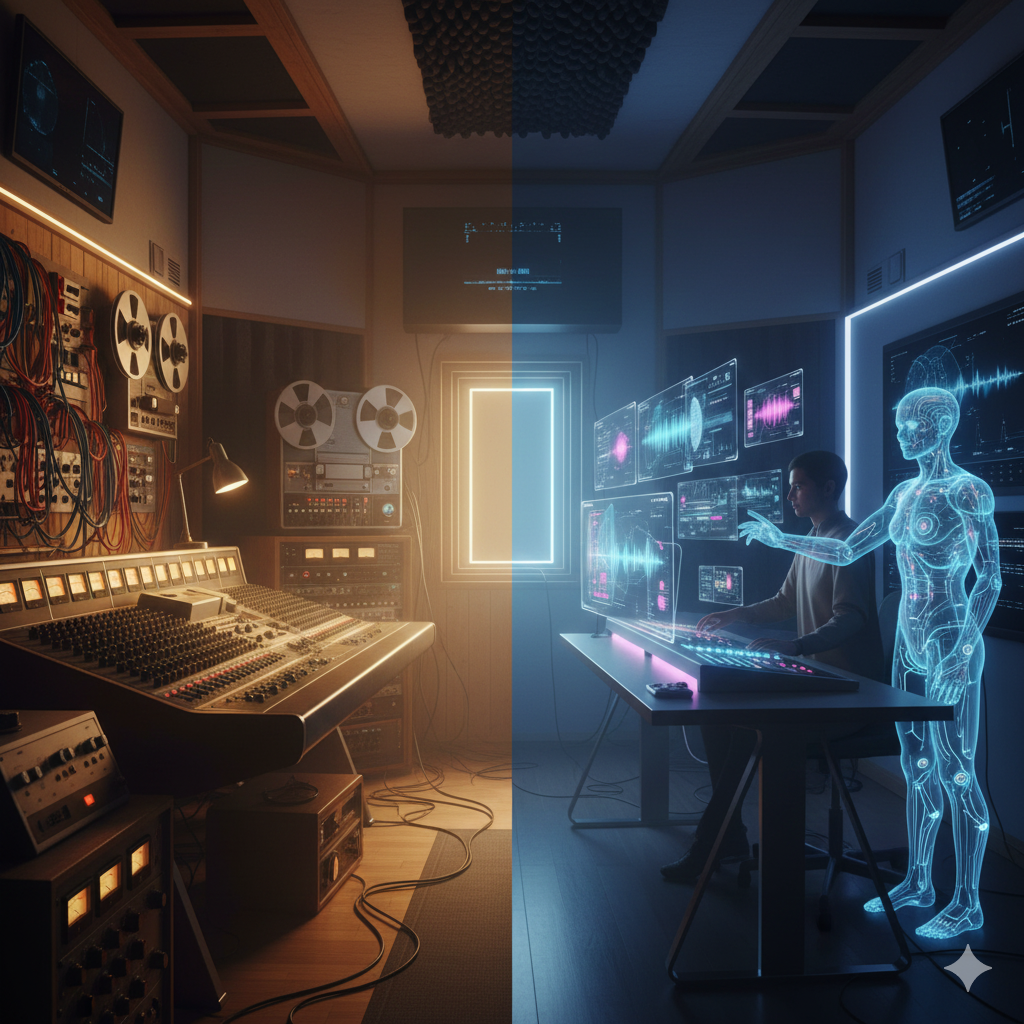
To understand why engineers aren’t scared of AI, you have to understand something about the people who run studios. They’ve lived through every technological revolution the industry has thrown at them.
The arrival of digital recording didn’t kill studios. Neither did drum machines. Neither did virtual instruments, sample packs, laptop studios, or DAWs that replaced half the equipment racks that used to fill entire rooms. Every generation of technology changed the workflow but none replaced the people who knew how to make great music.
AI is simply the next evolution. In the analog era, engineers battled noise floors, hums, and tape hiss. In the early digital era, they fought against sterile-sounding converters and clunky interfaces. Today, their biggest challenge is sorting through an endless ecosystem of plugins, tools, and presets. AI doesn’t remove engineers from the process it reduces the clutter and gives them more room to be creative.
Where a producer used to spend three hours auditioning kicks, an AI tool can sort through thousands of samples and find the one that fits the session in seconds. It’s not making artistic decisions for them. It’s just making sure they get to the good part faster.
AI Is Becoming the New Studio Intern
If you talk to producers who work with AI daily, they describe it the same way: “It’s like having an intern who knows every plugin ever created.” Need to clean up mouth clicks in a vocal? An AI tool will handle it. Need to remove a noisy guitar amp? AI can isolate the frequencies and rebuild the clean tone. Need to balance a rough mix before the final mix engineer takes over? AI gives you something listenable in minutes.
But here’s the important part: every engineer still goes back over it. They still shape the tone, adjust the dynamics, refine the spatial image, ride the vocals, and correct the emotional phrasing the AI could never understand.
One Nashville engineer explained it perfectly: “AI can tell you where the snare is. It can’t tell you why it needs to hit harder right before the chorus.” The soul of the song remains a human decision.
Where AI Is Making the Biggest Impact
Ask any modern producer where AI shines the most, and you’ll get a surprisingly consistent list. Not because AI is replacing musicians, but because it is taking over the jobs everyone hates.
1. Cleanup and Restoration:
Engineers no longer need to spend hours removing background noise, breath sounds, or room reflections. AI-driven restoration tools are faster and cleaner than ever.
2. Sound Matching and Tone Shaping:
Want your drums to sound like Billie Eilish’s “Bad Guy”? Or your guitars to feel like Tame Impala? AI tools can analyze references and recreate the vibe instantly—letting the producer focus on shaping the final sound.
3. Music Ideation:
When the creative spark is missing, AI can generate progressions, melodies, or textures that help artists break creative blocks. It’s a spark, not a song.
4. Mixing Assistance:
AI can build a “starter mix” by balancing levels and suggesting EQ curves. But nobody hears a finished record and says, “Wow, that sounds perfectly average”—which is why engineers still refine everything manually.
5. Workflow Efficiency:
AI can categorize samples, organize sessions, label stems, and clean up messy project files. For engineers who tackle multiple projects a week, this is priceless.
But none of this replaces the ear, judgment, and instinct of the person sitting in the chair.
Why Engineers Still Matter More Than Ever

The more AI enters the studio, the more it reveals what it cannot do. AI doesn’t understand fear before a performance.
It doesn’t feel the energy of a room during a live show. It doesn’t know why a producer gives an artist a five-minute break before re-cutting a vocal. It doesn’t hear emotion it hears data.
A compressor doesn’t care if a lyric saves someone’s life. A limiter doesn’t know when a voice cracks from heartbreak.
An AI mixing assistant doesn’t understand goosebumps. Engineers aren’t just technicians they’re psychologists, interpreters, and translators of feeling. AI can automate mechanics. It cannot automate meaning.
That’s why no matter how advanced AI becomes, artists continue to gravitate toward engineers who make them feel safe, confident, and understood. AI might help finish the track, but it will never guide an artist through the moment they find the sound that defines their career.
AI Gives More People Access to Professional Tools
One of the quiet revolutions happening right now is access. High-quality gear used to require studios with huge budgets and even bigger rooms. Today, AI-powered software is giving bedroom producers tools that were once exclusive to world-class engineers. This doesn’t cheapen professional engineering. It expands who gets to participate.
A producer working on a laptop in Brazil can now build a mix that competes with major releases in Los Angeles. A teenager in Bangladesh can access mastering tools that used to cost more than their entire setup. A songwriter in a dorm room can remove background noise before sending vocals to a mix engineer across the country.
More creators doesn’t threaten the professionals. It enriches the entire ecosystem.
Why AI Can’t Replace Taste
You can train an AI to analyze thousands of songs, but you can’t train it to understand why the wrong sound is sometimes the right one. Some of the greatest records in history were born from mistakes:
The distorted bass on “Billie Jean.”
The room reverb on “Hallelujah.”
The mis-hit snare on “Come As You Are.”
AI would have cleaned all of these up.
Engineers kept them because they felt right.
Taste isn’t programmable. Emotion isn’t replaceable. Imperfection isn’t something to eliminate—it’s something to shape.
And that will always be the engineer’s job.
The Future Isn’t AI vs. Engineers It’s Engineers Who Use AI vs. Those Who Don’t
Every industry eventually splits into two groups:
Those who adapt to new tools
And those who get replaced by people who did
The engineers who embrace AI are already moving faster, mixing more efficiently, and experimenting with sounds that would have taken weeks to build manually. They don’t fear the technology they drive it. The engineers who ignore AI aren’t protecting tradition. They’re simply giving competitors more room to grow. The future studio isn’t a machine without people. It’s people using machines in smarter ways. AI doesn’t make the studio less human. It gives humans more room to be creative.
The Music Still Belongs to the Artist
If there’s one truth the industry agrees on, it’s this Technology changes. Music doesn’t. Whether a song starts on a $100,000 console or a $500 laptop, the goal remains the same capture something honest. No plugin can force authenticity. No AI can write a lyric that comes from lived experience.
No algorithm can replicate the emotion in a vocal that cracks at the perfect moment. And that’s why engineers aren’t worried. Because at the end of the day, artists want someone who understands them not just their frequencies. They want someone who knows how to turn a feeling into a recording.
They want someone who can guide them through the messy, unpredictable process of making something meaningful. AI can assist with the process. But it cannot replace the relationship. Not now. Not ever
