 (585) 405-4375
 contact@echotonemusic.net




How Desert Festivals Design Sound Systems
Desert festivals operate in one of the harshest environments for live audio extreme daytime heat (often exceeding 100°F/38°C), abrasive silica dust storms, high winds, dramatic temperature swings at night, and vast open spaces with almost no natural acoustic boundaries. Sound must cut through these conditions while delivering chest pounding bass, crystal clear vocals, and even coverage across tens of thousands of dancing bodies without bleeding excessively between stages or damaging sensitive electronics.
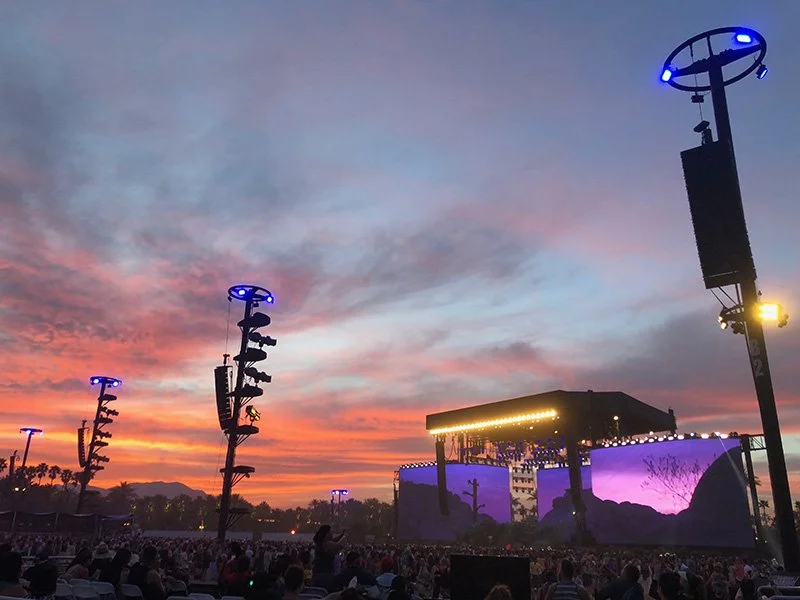
Major desert events like Coachella Valley Music & Arts Festival (Indio, California), Electric Daisy Carnival (EDC) Las Vegas (Nevada Motor Speedway desert grounds), and Burning Man (Black Rock Desert playa) have mastered these challenges through innovative engineering, rugged gear choices, strategic deployment, and real time optimization. Their approaches provide a blueprint for any outdoor producer facing similar conditions.
This case study style article breaks down how these festivals design, deploy, and tune massive sound systems, with real brands, models, people, and measurable techniques that turn punishing deserts into sonic paradises
Case Study 1: Coachella Precision Line Arrays in the Coachella Valley Heat
Coachella, held on the Empire Polo Club grounds in the Sonoran Desert adjacent valley, draws over 125,000 attendees daily across multiple stages. The main Coachella Stage and others like Sahara, Mojave, and Yuma face intense sun, dust, and wind.
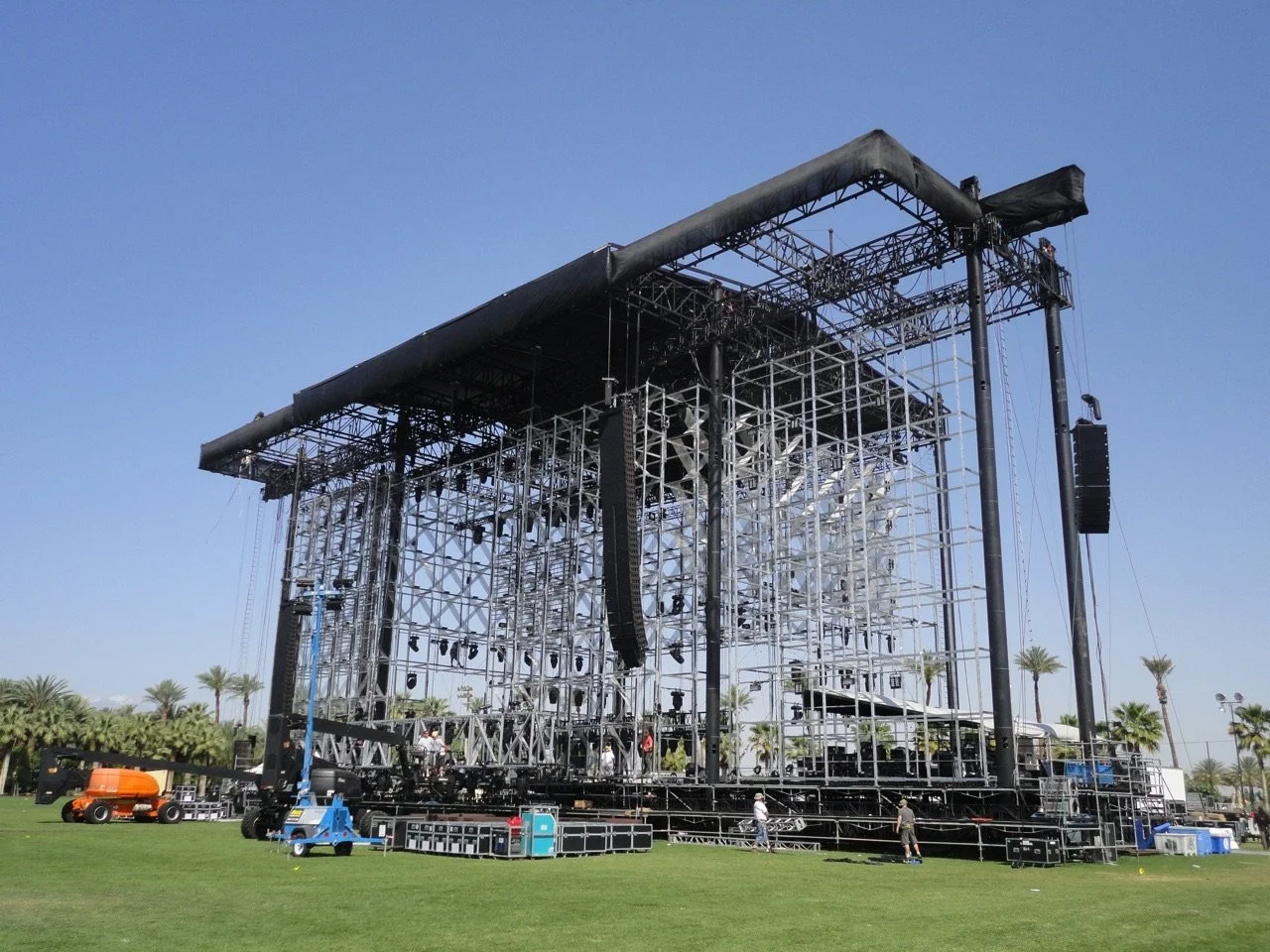
System Design Highlights (2024-2025 deployments):
Primary Provider: L-Acoustics, with support from RAT Sound Systems (a veteran integrator known for festival work). In recent years, Coachella deployed massive L-Acoustics rigs totaling over 800–1,000 speakers across stages.
Main Stage Example: K1 and K1SB line array elements combined with KS28 subs for powerful, controlled low-end. K2 and KARA fills/delays ensure even coverage. The system uses L-ISA immersive technology on select installations for hyper-real spatial audio.
. Cardioid Sub Arrays: To prevent bass spill (a common desert issue where low frequencies travel far on still nights), Coachella employs cardioid configurations with
KS28 subs. This directs energy toward the audience and cancels rearward sound by 10–20 dB or more.
Production teams angle mains downward and use delays to maintain clarity over long throws (hundreds of feet). Dust mitigation includes protective covers on electronics and strategic stage orientation to minimize wind interference on high frequencies.
Real Impact: Guest engineers and attendees consistently praise the "punchy yet clear" sound, even during peak heat when crowds generate their own "human noise." RAT Sound's team, working with L-Acoustics technicians, achieves tight vertical control so sound doesn't dissipate uselessly into the sky.
Bob McCarthy (Meyer Sound's Director of System Optimization and author of Sound Systems: Design and Optimization) has consulted on similar large-scale desert events, emphasizing dual channel FFT analysis (using Smaart) for alignment. At Coachella scale events, this ensures time of flight corrections keep phase coherent across the field, reducing comb filtering that wind and heat gradients can worsen.
Challenges Overcome:
Heat & Dust: Amps and DSP racks are often placed in shaded, ventilated enclosures or under stages. Gear like L Acoustics LA12X amplified controllers handle high temperatures better due to robust cooling.
Wind: Lightweight but rigid line array elements with adjustable splay angles combat deflection. Pre-event wind studies help position delay towers.
Night vs. Day: Sound travels farther after sunset; teams lower overall levels or tighten patterns to contain noise.
Case Study 2: EDC Las Vegas – Massive Power and Robotic Precision in the Mojave Desert
EDC, produced by Insomniac Events, transforms the Las Vegas Motor Speedway into a neon-lit desert wonderland with stages like kineticFIELD, bassPOD, and wasteLAND. It runs primarily at night to escape brutal daytime heat, but the open desert still demands extreme SPL (often 100+ dB average) with tight control.
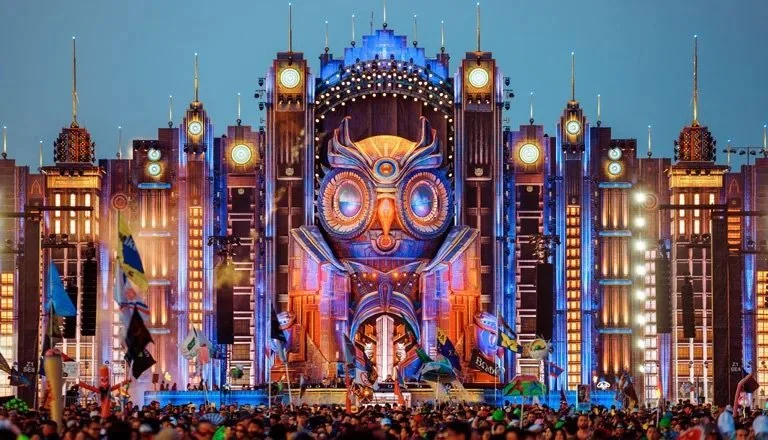
Key Deployments:
d&b audiotechnik Systems: Senior systems engineer Julio Valdez of 3G Productions specified over 750 d&b loudspeakers for recent editions, including the GSL System (high-output line array with advanced cardioid capabilities) for the Cosmic Meadow stage. Two towers with 10x GSL10 + 2x GSL8 per array, plus ground-stacked SL-SUBs, covered a 500 ft deep by 600 ft wide area evenly.
PK Sound Trinity Robotic Arrays: For bassPOD and wasteLAND, PK Trinity elements (with 3D Wavefront robotic control) allow individual box angles to be adjusted remotely. In 2019, two 16-element and two 15-element arrays delivered customizable coverage, paired with 104x CX800 dual-18" subs pushing down to 25 Hz.
Pioneer Pro Audio XY Series: Used on stereoBLOOM and campgrounds for natural, high-SPL sound with compact footprints critical where visuals and rides compete for space. Over 200,000 watts of Powersoft amplification powered one stage alone.
Design Philosophy: Insomniac maintains a large on-site audio staff for real-time adjustments. Sound bleed between stages is minimized through precise angling, delay towers, and cardioid subs. The goal: "a blanket of sound" without hot spots or dead zones across massive fields.
Data Point: At kineticFIELD, 368 speakers (including 146 subs) and 11 towers create immersive coverage. Engineers report smooth response thanks to advanced DSP that counters desert temperature inversions (which bend sound waves unpredictably).
Desert-Specific Tactics:
Night scheduling reduces heat stress on gear and crowds.
Misting and ground spraying (similar to Coachella) help control dust that can clog fans and cones.
Robust rigging withstands gusts; amps are protected in climate-controlled racks where possible.
Case Study 3: Burning Man – Decentralized, Rugged Sound Camps on the Playa
Burning Man in Nevada’s Black Rock Desert is radically different: no central "main stage," but dozens of sound camps and mutant vehicles creating a sonic city of 70,000+ people. Conditions include white-out dust storms, high winds, and total self-reliance (everything must be packed out).
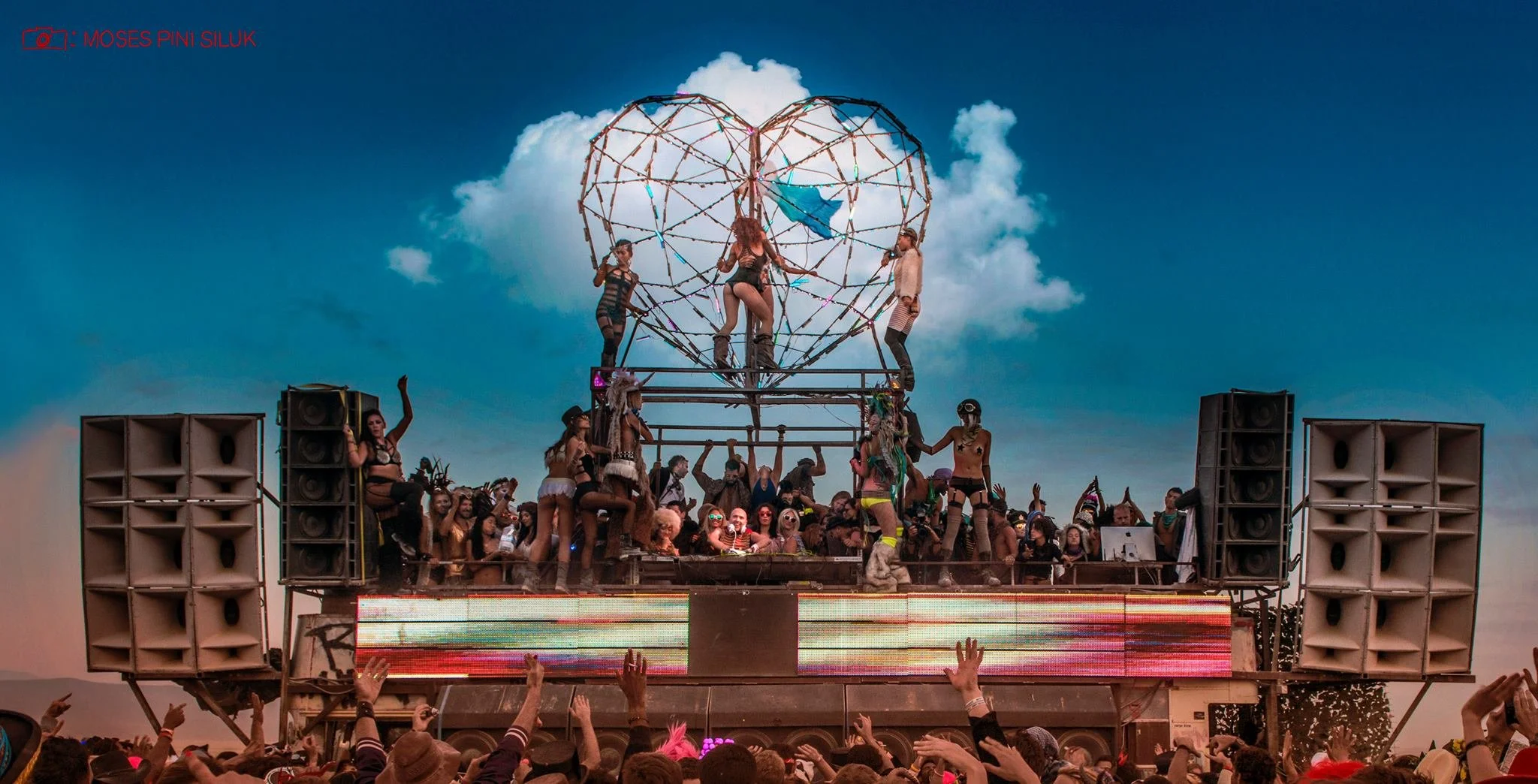
Notable Examples:
Opulent Temple: Led by Syd Gris for over 20 years, this camp features massive, reliable systems for their famous "white parties." Crews emphasize collaboration many DJs help build the rig. Sound must survive 24 hour dust storms; gear is heavily protected with sealed enclosures, air conditioned amp rooms, and dust filters.
PK Sound Deployments: Camp Questionmark has used PK Trinity or similar high-output systems. Earlier examples included robust line sources that maintain performance despite playa dust.
General Sound Camps (Root Society, DISTRIKT, White Ocean, etc.) These deploy everything from large L-Acoustics or d&b rigs to custom-built systems. Many use cardioid or end fire sub arrays to direct bass and reduce interference between nearby camps.
Burning Man Sound Policy: A 2023 update limited amplification in certain zones (max 300 watts producing ~90 dB at 20 feet) to promote harmony in the dense layout. Larger camps still deliver festival-level impact but with careful zoning.
Engineering Challenges & Solutions:
Dust Infiltration: The fine alkaline playa dust destroys unprotected electronics. Pros seal amps in air-conditioned "dog houses" with recirculating cool air or use IP-rated weatherproof gear. Speakers get protective grills and post-event deep cleaning.
Wind & Open Space: Sound propagates extremely well (or poorly) depending on conditions. Systems use tight vertical dispersion and ground-stacking strategies. Bicycle-based scouting (as noted by sound architect N. Sowers) helps map the evolving soundscape.
Power: Diesel generators are common but placed far away with long cable runs and barriers to minimize noise. Some camps experiment with solar for smaller setups.
Extreme Conditions: Crews like those at Opulent Temple iterate yearly—testing gear in advance and building redundancy. Jesse Houk (The Scumfrog) and others have highlighted how playa systems rival top clubs despite the environment.
Optimization: Many crews apply McCarthy-style techniques—pink noise measurements and alignment—adapted to the ever-changing playa layout. The result: immersive, powerful sound that feels organic within the radical self-expression ethos.
Common Best Practices Across Desert Festivals
Line Arrays + Cardioid Control: JBL VTX, L-Acoustics K/L Series, d&b GSL/SL, and PK Trinity dominate for even throw and bass management. Cardioid subs reduce rear spill by significant margins, crucial when sound carries miles on calm desert nights.
Weather & Dust Protection:
Shaded or enclosed amp racks with active cooling.
Dust-sealed electronics and regular maintenance.
Wind-resistant rigging and strategic speaker aiming (downward or audience-focused).
Measurement & Tuning: Tools like Smaart, Earthworks mics, and real-time analyzers. Teams perform daily alignments to account for temperature/humidity shifts that affect sound speed and propagation.
Power & Logistics: Massive generator farms or hybrid solar setups. Phased load-in around weather windows. Night-focused programming (EDC) or dust-suppression (Coachella misting).
Team & Iteration: Success relies on experienced integrators (RAT Sound, 3G Productions, Ayre) and in-house audio crews. Post-event debriefs drive yearly improvements.
Pro Tip from the Field: Start with coverage mapping using prediction software (like EASE or ArrayCalc). Factor in worst-case wind and dust. Always build in redundancy—backup amps, cables, and mics are non-negotiable.
Lessons for Your Next Desert or Outdoor Event
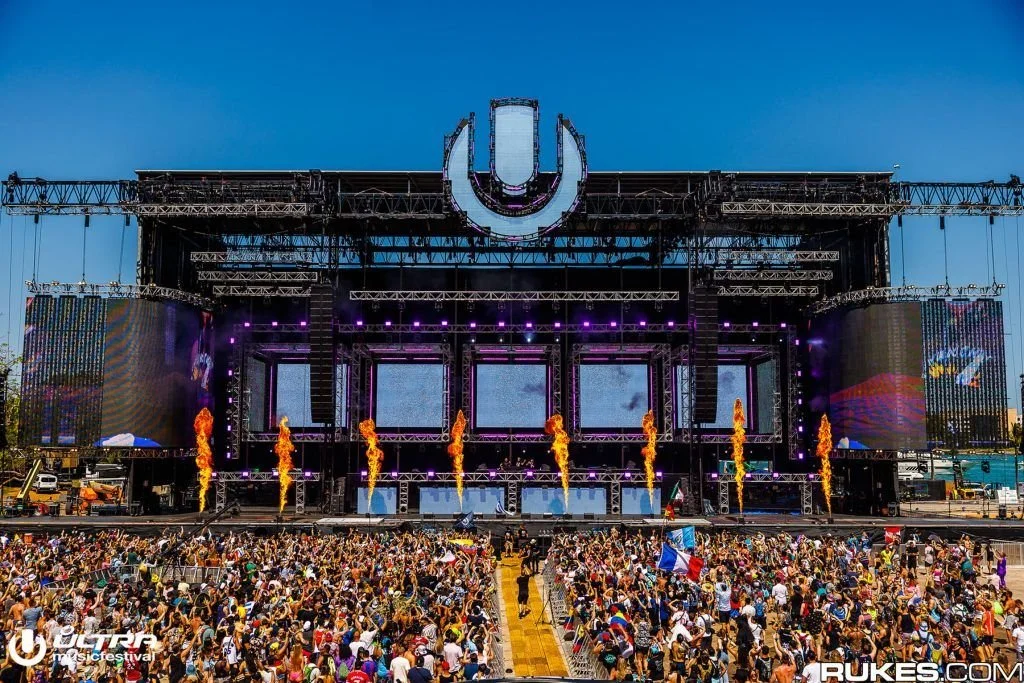
Whether scaling a 5,000-person regional desert rave or a full festival, adopt these principles:
Prioritize systems with proven environmental resilience (L-Acoustics, d&b, JBL VTX, PK Sound).
Invest in proper subwoofer patterning to control low end.
Schedule around peak heat; use misting and shade for gear and people.
Hire specialists early system techs versed in outdoor optimization (think McCarthy methods).
Measure everything before, during, and after to quantify improvements (aim for <3-4 dB variance across the audience area).
Desert festivals prove that with smart design, the same conditions that challenge audio can create unforgettable, larger-than life sonic experiences. The playa, polo fields, and speedway become cathedrals of sound where bass hits harder, vocals soar clearer, and crowds lose themselves completely.
From L Acoustics' precision at Coachella to d&b and PK's power at EDC, and the resilient ingenuity of Burning Man's sound camps, the formula is clear: respect the environment, engineer for extremes, and optimize relentlessly.
Your desert event can deliver the same magic. Start by auditing your site’s unique challenges—wind patterns, dust levels, throw distances and partner with proven festival audio teams. The beats will thank you, and so will the dancers under those endless desert skies.
Conclusion
Desert festivals like Coachella, EDC Las Vegas, and Burning Man prove that even the harshest environments can deliver unforgettable sonic experiences. Through rugged line arrays from L Acoustics, d&b audiotechnik, and PK Sound, smart cardioid sub configurations, and relentless real-time tuning, these events overcome extreme heat, dust storms, high winds, and vast open spaces.
From the precision K1 and KS28 systems at Coachella to the robotic Trinity arrays at EDC and the dust-proofed camps on Burning Man’s playa, success comes down to respecting the desert’s physics and engineering for extremes.
For any outdoor or desert event producer, the takeaway is clear: prioritize resilient gear, invest in proper acoustic prediction and daily optimization, and protect your system from heat and dust. When done right, sound doesn’t just fill the space it becomes part of the magic, turning dusty fields into cathedrals of bass and melody under endless desert skies.
The desert doesn’t forgive weak systems, but it richly rewards bold, intelligent design.
FAQ: Desert Festival Sound Systems
Q1: What are the biggest challenges when designing sound systems for desert festivals? The top challenges are extreme heat (over 100°F/38°C), fine abrasive dust that clogs fans and drivers, high winds that deflect high frequencies, dramatic day-to-night temperature swings, and vast open spaces with almost no natural acoustic boundaries. Sound travels much farther at night, making noise containment critical.
Q2: Which brands and models perform best in desert conditions? L-Acoustics (K1, K2, KS28), d&b audiotechnik (GSL and SL Series), PK Sound (Trinity robotic arrays), and JBL VTX are among the most trusted. They offer high output, tight pattern control, and robust build quality. For subs, KS28 and GSL subs in cardioid configurations are favorites for controlling low-end spill.
Q3: How do festivals control bass spill between stages? They use cardioid or end-fire subwoofer arrays, which can reduce rearward bass by 10–20 dB or more. Precise angling, delay towers, and advanced DSP help focus energy toward the audience while minimizing bleed to neighboring stages or camps.
Q4: What dust and heat protection measures are essential? Amplifiers and DSP racks are placed in shaded, ventilated, or climate-controlled enclosures (“dog houses”). Crews use dust filters, sealed speaker grills, protective covers, and regular post-set cleaning. Night-focused scheduling (as at EDC) also reduces daytime heat stress on gear and crowds.
Q5: How important is system tuning and measurement in desert events? Extremely important. Teams perform daily alignments using Smaart software, measurement mics, and pink noise to correct for temperature gradients, wind, and humidity changes that affect sound speed and propagation. Bob McCarthy’s optimization techniques are widely referenced for achieving phase-coherent coverage.
Q6: Can smaller desert events apply the same principles? Absolutely. Start with scalable systems like QSC or smaller L-Acoustics/Yamaha arrays. Use prediction software (EASE or ArrayCalc) for coverage mapping, implement basic cardioid subs, and hire a local outdoor sound specialist for tuning. Focus on even coverage and dust protection even at 2,000–5,000 capacity.
Q7: How much does a professional desert festival sound system typically cost? Main stages at large festivals can exceed $500,000–$2M+ in gear, rigging, and labor. Smaller events might invest $50,000–$250,000 depending on scale. Budget extra for protection, transport, generators, and on-site technical crew.
Q8: What’s one piece of advice for first-time desert event producers? Hire experienced festival audio integrators early and never skip proper site measurements and acoustic prediction. Test your rig in similar conditions if possible. The desert rewards preparation — a well-designed system can elevate your entire event from good to legendary.
