 (585) 405-4375
 contact@echotonemusic.net




Inside the NCAA Final Four Broadcast Audio at Lucas Oil Stadium
As the 2026 NCAA Men’s Final Four tips off on Saturday, April 4 at Lucas Oil Stadium in Indianapolis, basketball fans are gearing up for two thrilling national semifinal matchups: Michigan vs Arizona and UConn vs Illinois. One thing is certain: the drama won’t just come from the players on the court. It will explode through your speakers at home or hit you like a wave if you’re lucky enough to be in the stands. The broadcast audio production here isn’t just “good enough” for a basketball game it’s a masterclass in immersive sports sound design, blending the venue’s powerful JBL-powered permanent sound system and Biamp processing with cutting edge mobile broadcast rigs, precision microphones, and clever crowd enhancement.
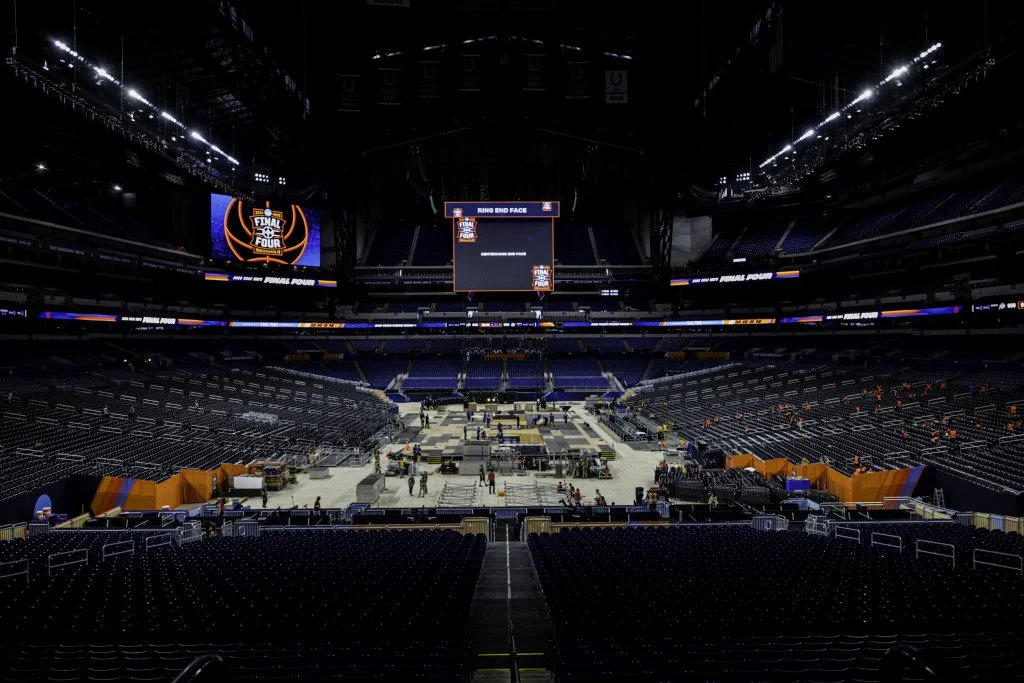
This isn’t your average arena mix. Lucas Oil Stadium, built with the Final Four in mind (this marks the venue’s fourth hosting), transforms from Colts football fortress to hardwood cathedral, and the audio team makes sure every sneaker squeak, ball bounce, and roaring cheer feels electric. Whether you’re a die hard audio engineer, a March Madness fan who notices how the broadcast “feels” different, or someone shopping pro audio gear on Echotone Music, this deep dive reveals the real brands, real names, and real tech making it happen. We’ll cover the sound system details, microphone strategies, broadcast workflows, and pro tips you can actually use.
The Venue That Was Built for This Moment
Lucas Oil Stadium isn’t just any football venue repurposed for basketball it was literally designed with multi event flexibility in mind, including the NCAA Final Four. Opened in 2008, the 63,000+ seat stadium (capacity swells with temporary seating for basketball) features a massive retractable roof and a layout that accommodates the custom hardwood court installation crews are finishing right now in late March 2026. General Manager Eric Neuburger has called it “unique” for exactly this reason: the infrastructure supports seamless switches between football, concerts, swimming trials, and now another Final Four.
Acoustically, the stadium was a game changer from day one. Consultants WJHW (Wrightson, Johnson, Haddon & Williams) designed the original audio and acoustic infrastructure. Their work included a progressive Harman Professional HiQnet networked sound system deployed by ESCO Communications, paired with Biamp AudiaFlex digital audio platforms for processing and distribution. This foundation handles everything from Colts game-day announcements to massive events like U.S. Olympic Swimming Trials (where DiGiCo SD12-96 consoles have been spotted in action). For basketball, the challenge is different: a temporary court on the football field means sound reflection changes dramatically, and the audio team has to fight echo while delivering crystal clear play by play and crowd energy. Early Final Fours here (like 2010) highlighted acoustic issues, leading to permanent treatments and hanging curtains lessons that paid off in 2021 and now 2026.
Fans in attendance get the full in stadium PA experience: powerful, distributed coverage from the main system augmented for basketball. The goal? Loud, clear, and directional so every section feels the game’s pulse without muddiness. Pro tip for audio nerds visiting: notice how the system maintains intelligibility even with 70,000+ screaming fans. It’s a testament to WJHW’s original design and ongoing tweaks by the Indianapolis Colts’ broadcast team.
Broadcast Audio Production: The Mobile Truck Nerve Center
While in stadium fans hear the live PA, millions at home experience the broadcast mix a completely different beast engineered for TV (CBS, TBS, TNT, truTV) and radio (Westwood One via Cumulus Media). Enter the mobile production trucks parked outside Lucas Oil. In past Final Fours here, teams like NEP Supershooter 9 and Game Creek’s Columbia unit have handled the heavy lifting. For 2026, expect similar high end setups with A1 (audio mixer) Dave Grundtvig at the helm.
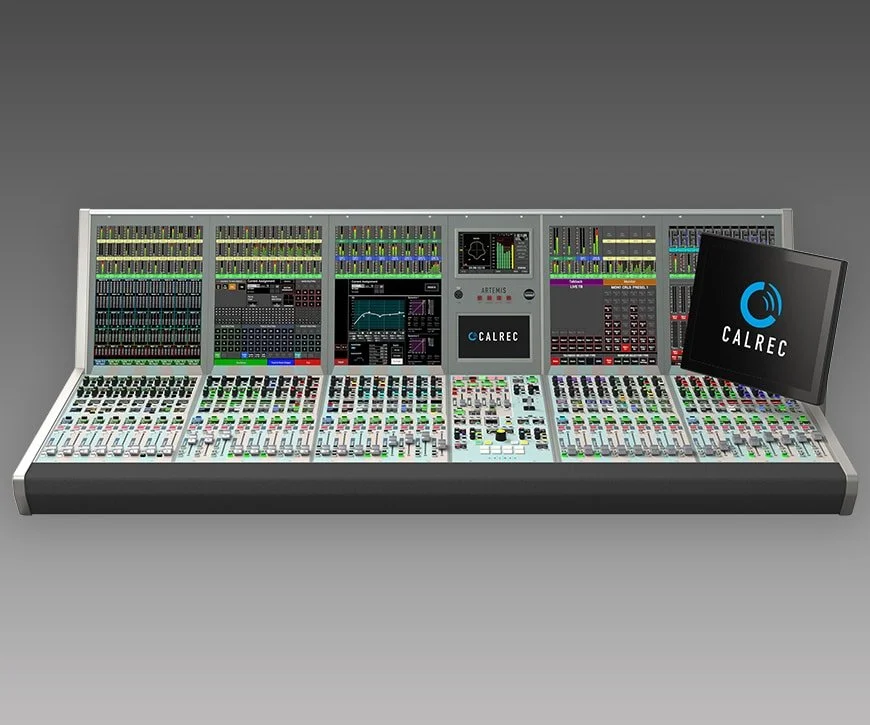
Grundtvig, a veteran sports audio engineer known for his work with TNT and NCAA events, mixes directly on a Calrec Artemis console. This British built beast is a broadcast legend scalable, ultra low latency, and perfect for surround sound (5.1 or higher). The Artemis handles dozens of inputs with pristine preamps, advanced dynamics, and routing that lets Grundtvig assign elements to left/right, surrounds, or effects buses on the fly.
The feed flows from courtside mics straight into the truck, where it integrates with video from multiple cameras, replay systems, and graphics. Indianapolis Colts Senior Broadcast Engineer Chris Buckley and his team play a crucial support role, providing venue integration, fiber links, and local expertise. As one production insider noted in past events, “We wouldn’t be able to do this without Chris and his team.” Buckley’s crew ensures the massive venue’s permanent infrastructure syncs perfectly with temporary broadcast gear no dropped packets, no latency nightmares.
For radio listeners, Westwood One delivers a dedicated clean mix, often with enhanced crowd and effects for that “you are there” feel on SiriusXM or terrestrial stations. It’s multiplatform magic: the same core audio elements customized for TV surround, radio stereo, and streaming.
Microphone Placement: Capturing the Heartbeat of the Game
Here’s where the magic happens up close. Broadcast audio isn’t just announcer mics and crowd roar it’s surgical capture of the game itself. Grundtvig and his team deploy an array that would make any pro audio enthusiast jealous:
Shure KSM32 large diaphragm cardioid condensers: Multiple units for general crowd and ambient pickup. These mics deliver warm, detailed sound with excellent off axis rejection ideal for isolating cheers without picking up PA bleed.
Shure KSM313 ribbon mics: Paired with KSM32s for room ambience. Ribbons add that silky high end smoothness and natural transient response, capturing the “air” of the stadium.
Shure VP88 stereo mics in mid-side configuration: Positioned strategically for band or sideline energy (college bands perform during timeouts).
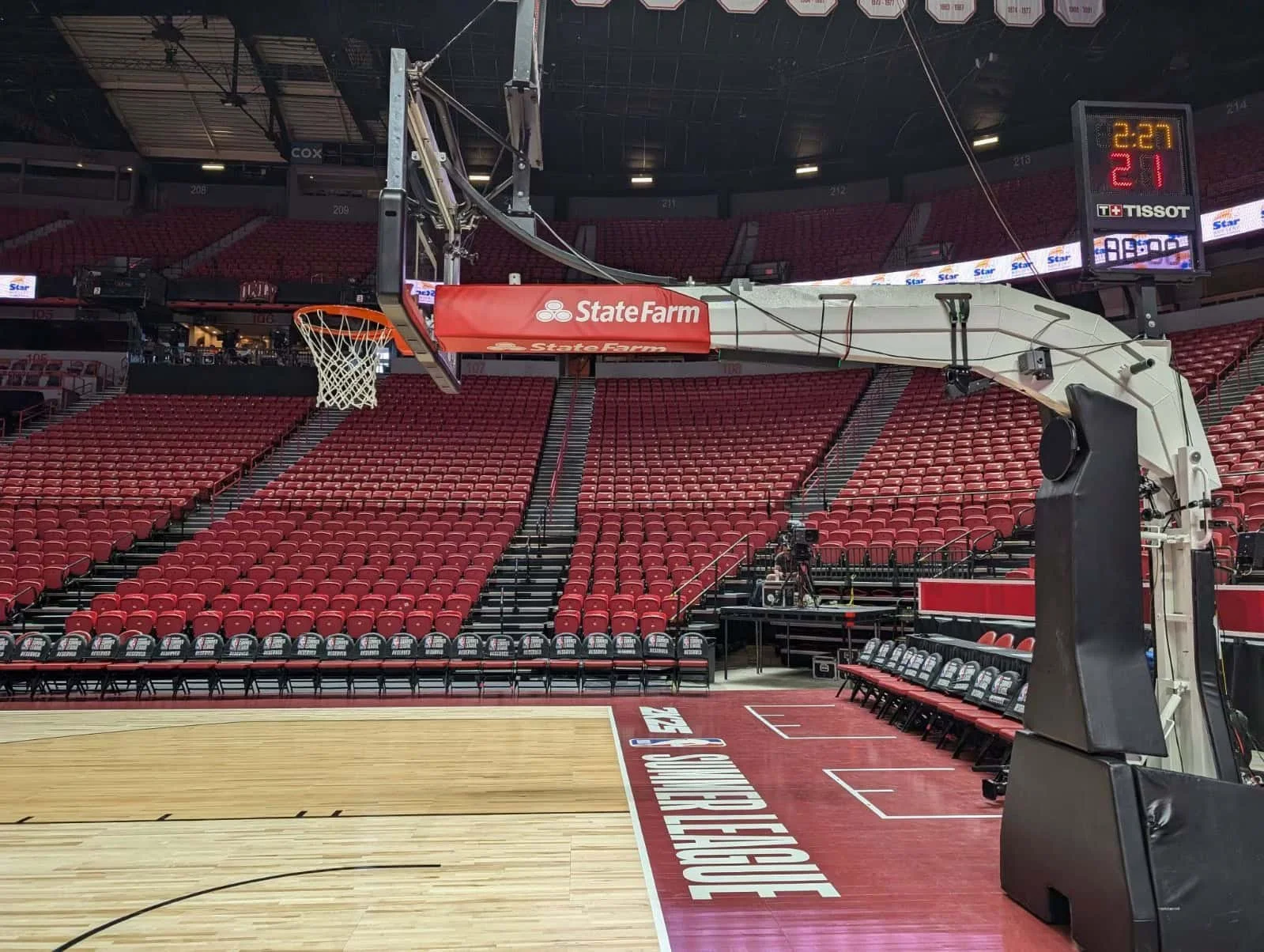
Custom piezo transducers under each basket: Taped directly to the court! These vibration sensors pick up ball bounces, sneaker squeaks, and player movement within about 8 feet of the hoop. The result? Intimate, visceral sounds that make viewers feel the physicality of the game. Grundtvig assigns these to left/right in the surround mix for pinpoint imaging.
In 2021’s bubble era Final Four at Lucas Oil (two courts divided by a curtain), Grundtvig used six ambience mics plus Firehouse Productions’ crowd system. The 2026 setup follows suit but with even more refinement for a full capacity crowd. Every mic feeds into the Calrec Artemis via Dante networking for flexible routing no analog snakes running across the massive floor.
Pro tip you’ll love: Next time you watch, listen for those subtle court mics. The piezo transducers turn a routine layup into an audible thud-squeak that heightens tension during close games. It’s the kind of detail that separates good sports audio from unforgettable.
Behind the Scenes: Whirlwind THS & THSPc Headphone Announcer Boxes The Crew’s Essential Communication Lifeline
While the main broadcast mix on the Calrec Artemis console captures every squeak, cheer, and play by play for millions of viewers, the production crew relies on a separate, ultra reliable intercom and talkback system to keep everything running smoothly. This is where the Whirlwind THS series of sports announcer and talkback headphone boxes shine and they’re one of the most trusted tools in big-league sports broadcasts like the NCAA Final Four.
At Lucas Oil Stadium, camera operators, sideline reporters, floor producers, and technical crew members use these rugged boxes for private, crystal-clear communication with the producer and director in the mobile truck — all without interrupting the main program audio. Need to quickly tell the truck “camera 3 is repositioning” or coordinate a replay cut during a timeout? A simple press of the talkback button gets the message across instantly while the main mic stays muted.
We proudly carry the full Whirlwind THS lineup at Echotone Music, including the popular Whirlwind THS 4 Talkback Headphone Box and the THSPc variant (often used in compact or powered configurations). These are true workhorses built specifically for demanding live sports and broadcast environments.
Key features that make the Whirlwind THS series perfect for Final Four productions include:
Separate main microphone output and dedicated talkback output
Latching Mic On/Off switch (with illuminated indicator) for the program mic
Momentary Cough and Talkback switches that automatically mute the main mic when activated
High-power headphone amplification capable of driving 30–600 ohm headphones cleanly
Multiple headphone inputs (XLR + 1/4" TRS) with independent level controls
36V phantom power support for condenser mics
Rugged metal desktop chassis that survives the chaos of a live event setup
In a high pressure environment like the 2026 NCAA Final Four at Lucas Oil Stadium, these boxes allow camera crew and support staff to stay in constant contact with the producer outside the main broadcast feed. No feedback into the program mix, no accidental hot mics just fast, professional coordination that keeps the broadcast flawless.
Whether it’s a quick cue during a fast break or coordinating between multiple camera positions on the temporary hardwood court, the Whirlwind THS and THSPc boxes deliver the reliability that top broadcast teams demand. That’s why you’ll find them in trucks from NEP, Game Creek, and major NCAA productions year after year.
Crowd Sound Sweeteners: Firehouse Productions Delivers the Energy
No Final Four broadcast relies solely on the live crowd especially with variable attendance or early round energy dips. That’s where Firehouse Productions (led by VP Mark Dittmar) steps in with “sweeteners.” Their system plays pre-recorded or triggered crowd effects (roars, chants, claps) that blend seamlessly with the real audience. These feeds hit both the broadcast mix and the in stadium PA, creating a unified experience.
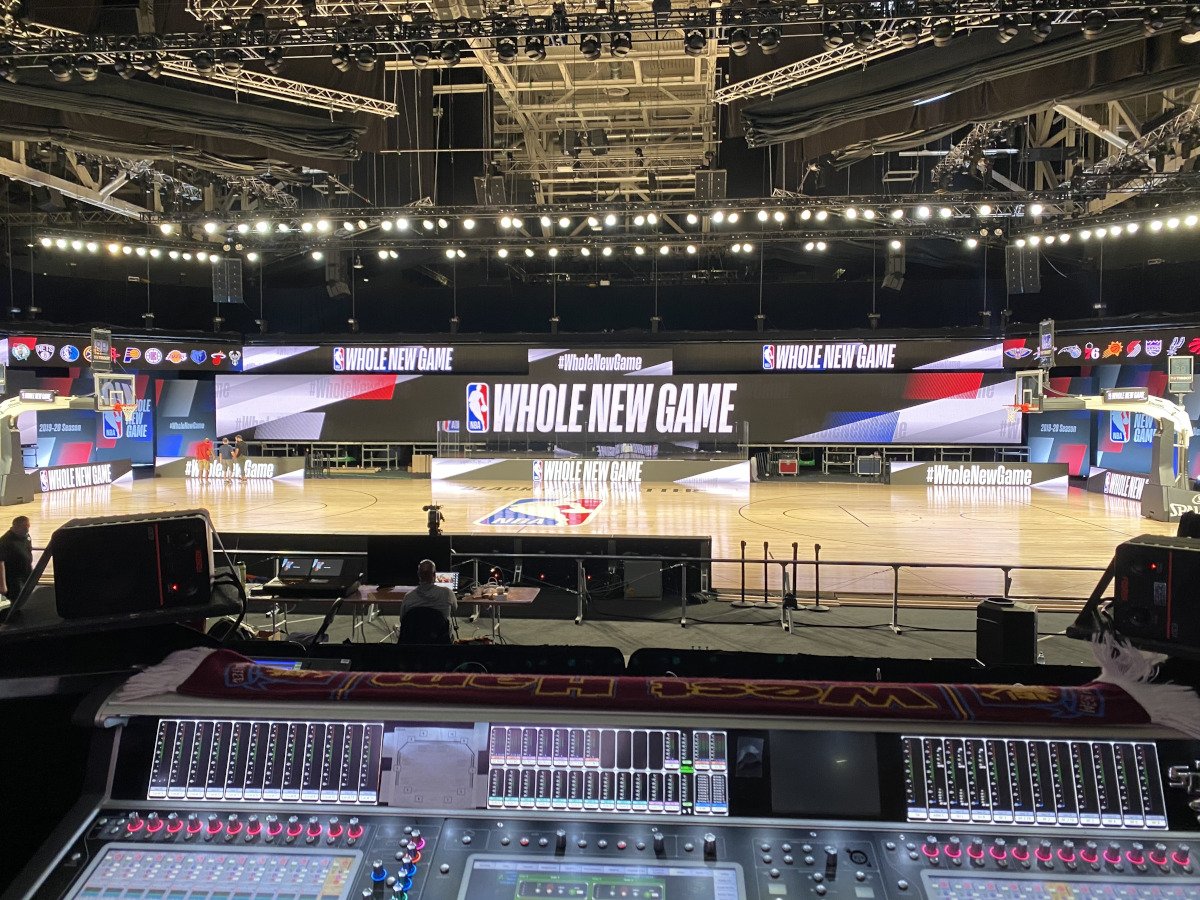
In past Lucas Oil setups, Firehouse’s mixers triggered cues rather than riding faders live, keeping things consistent across the two court early rounds or single-court Final Four. The result? A “loud and fun” atmosphere that feels organic. Dittmar’s team has perfected this for NCAA events, NBA bubbles, and more proving that modern sports audio often mixes real and augmented sound like a live concert engineer layers tracks. For fans attending: That massive roar you feel? Part real, part expertly augmented to fill every corner thanks to the stadium’s distributed PA.
In-Stadium PA and Fan Experience: Power Meets Clarity
While broadcast gets the spotlight, the 70,000+ fans inside get treated to Lucas Oil’s robust permanent system. The Harman Professional setup (JBL speakers, Crown amplification, Biamp processing) provides even coverage across tiers. For Final Four, temporary delays or fills might supplement near the court, but the core remains the WJHW designed infrastructure proven on everything from drum corps to concerts.
Mid-America Sound and other local pros often support bigger productions here, stocking gear like Yamaha, DiGiCo, L-Acoustics, and Shure wireless. During basketball, the PA prioritizes announcer clarity and music stings over raw volume, with acoustic curtains deployed to tame reflections off the temporary seating and court.
If you’re geeking out on gear, the Biamp AudiaFlex handles zoning and EQ dynamically. It’s the unsung hero keeping speech intelligible amid 100dB+ crowd noise.
Challenges, Innovations, and What Makes It Special
Acoustics in a football stadium for basketball is tricky hard surfaces create slap back echo. The 2012 Final Four prompted acoustic echo cancellation tech and material upgrades. Today, WJHW’s ongoing consulting (they’re also behind the recent video board refresh) ensures modern solutions like precise DSP and directional arrays keep sound focused.
Integration is key: Audio syncs perfectly with Daktronics video boards and SNA Displays upgrades. The Colts’ control room workflows (Grass Valley, Ross Video, Calrec) streamline everything.
Pro Tips and Why This Matters to Audio Enthusiasts
Listening at home? Crank up a 5.1 or Atmos setup you’ll hear the piezo mics panned hard left/right for that “in the paint” feel. Attending live? Download the NCAA app for enhanced audio feeds if available.
Events like this showcase why gear like Shure KSM series, Calrec consoles, and Biamp processors dominate. They deliver reliability under pressure. Thinking of upgrading your live rig? Study these techniques piezo contact mics or strategic ambience arrays can transform your next festival or corporate event mix.
Dave Grundtvig (A1 wizard), Chris Buckley (Colts broadcast lead), Mark Dittmar (Firehouse), and the WJHW team. These pros turn tech into emotion.
Conclusion:
The NCAA Final Four at Lucas Oil Stadium is more than just elite basketball it’s a masterclass in modern sports audio production. From the venue’s Harman Professional and Biamp-powered permanent sound system to the broadcast magic happening inside the Calrec Artemis console, every sneaker squeak, thunderous cheer, and buzzer-beater is captured and delivered with precision by industry veterans like Dave Grundtvig, Chris Buckley, and the Firehouse Productions team.
Whether you’re experiencing the game live in the stands or immersed in surround sound at home, the audio elevates the entire spectacle, turning raw emotion into unforgettable broadcast moments. The combination of Shure microphones, strategic piezo transducers, crowd sweeteners, and expert mixing proves why pro audio matters in big-stage events.
As tip-off approaches for the 2026 Final Four, take a moment to appreciate the invisible heroes behind the roar. The next time you hear that crystal clear court sound or feel the stadium shake with energy, you’ll know exactly what went into creating it.
FAQ: NCAA Final Four Broadcast Audio
Q1: When and where is the 2026 NCAA Men’s Final Four, and who is playing?
The 2026 NCAA Men’s Final Four takes place April 4–6 at Lucas Oil Stadium in Indianapolis. The national semifinals tip off on Saturday, April 4 with two exciting matchups: No. 2 seed UConn vs. No. 3 seed Illinois at 6:09 p.m. ET, followed by No. 1 seed Michigan vs. No. 1 seed Arizona at approximately 8:39–8:49 p.m. ET. The national championship game is scheduled for Monday, April 6.
Q2: What makes the audio production at Lucas Oil Stadium so special for the Final Four?
Lucas Oil Stadium features a permanent JBL-powered sound system combined with Biamp digital processing for clear, powerful coverage. For the broadcast, engineers blend this infrastructure with mobile truck gear, including the Calrec Artemis console, strategic Shure microphones, and piezo transducers under the baskets to capture sneaker squeaks and ball bounces. The result is an immersive experience whether you’re in the stands or watching at home in surround sound.
Q3: How do they capture the intimate court sounds during the game?
Broadcast audio teams use custom piezo contact transducers taped near the baskets, along with high-quality Shure KSM32 and KSM313 microphones for ambient crowd and sideline pickup. These signals are mixed precisely on the Calrec Artemis console so viewers feel the physicality of the game — every dribble, layup, and defensive stop comes through with incredible detail.
Q4: What are Whirlwind THS and THSPc headphone announcer boxes used for?
The Whirlwind THS series (including the THS 4 and THSPc models) are rugged talkback headphone boxes used by camera operators, sideline crew, and floor producers. They provide a dedicated main microphone output for program audio plus a separate talkback channel to communicate privately with the producer in the mobile truck — without bleeding into the broadcast mix. Features include silent mic switching, cough/talkback buttons, powerful headphone amps, and phantom power support.
Q5: Where can I buy the same pro audio gear used in big events like the Final Four?
You can find trusted broadcast tools like the Whirlwind THS Series Talkback Headphone Boxes, Shure microphones, JBL speakers, Biamp processors, and more right here at EchotoneMusic.net. We stock the professional-grade equipment relied on by top sports production teams.
Q6: Can regular fans hear the same high-quality audio at home?
Yes! Watching on CBS, TBS, TNT, truTV, or streaming services with a good 5.1 or Dolby Atmos setup lets you hear the detailed court mics, crowd energy, and announcer clarity that the
