 (585) 405-4375
 contact@echotonemusic.net




How Tyler, The Creator’s Live Crew Reinvents Hip-Hop Shows

An hour before doors open, the arena is almost silent. Thick cables run across the floor in perfect straight lines, lighting crews adjust the final fixtures, and the low hum of subwoofers warming up echoes through the empty seats.
At front-of-house, a small team studies a glowing console, running through their final checks as though preparing for a mission. No shouting, no frantic movement only calm, methodical precision.
This is Tyler, The Creator’s touring crew in their natural habitat. Anyone who has attended one of Tyler’s concerts knows that it isn’t a typical hip-hop show. His performances sit somewhere between theatre, punk, and storytelling, blending emotional intensity with chaotic energy.
Yet the real magic doesn’t come only from Tyler himself. It comes from the people behind him the crew responsible for shaping every note that tens of thousands of fans hear each night. They work quietly, often unnoticed, but they are the ones who turn his raw creativity into a living, breathing sonic experience.
For them, the show begins long before the crowd screams for the first time. To understand Tyler’s live sound is to understand the relationship between an artist who refuses to be predictable and a crew who has learned to thrive within that unpredictability.
Tyler’s Vision: More Than Just Music

Tyler has never approached music traditionally, and that philosophy extends to his live performances. Each tour is crafted with a cinematic mindset dramatic entrances, emotional shifts, and sudden blasts of explosive energy.
His shows are designed to feel like chapters, not just playlists. One moment he might whisper into the mic with unnerving intimacy; the next, he’s bounding across the stage with the power of a full rock band behind him.
To achieve this, the sound cannot simply be loud. It has to be dynamic. It has to breathe. It has to reflect every twist in the show’s emotional arc. His crew understands this better than anyone.
They say Tyler treats sound almost like a visual element. He talks in colors, textures, moods, sometimes describing the way a song should “feel in the room” rather than how it should technically sound.
For engineers who thrive on precision, this requires a different kind of listening not just to frequencies, but to intention. Tyler trusts his team to translate his language into reality. And they have learned to speak it fluently.
Meet the Crew: The Unsung Architects of the Experience
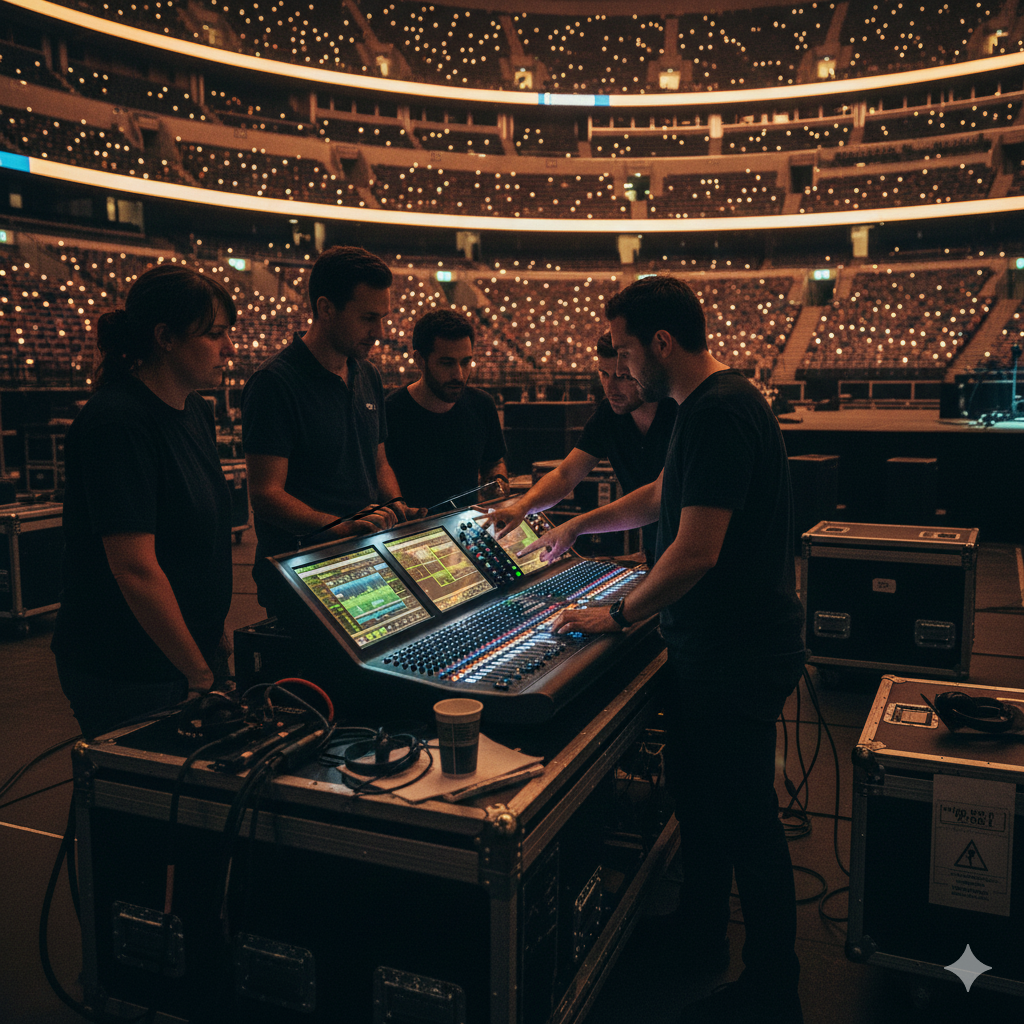
While fans focus on Tyler, the professionals behind the scenes shape every moment. The front-of-house engineer crafts the sound the audience hears. The monitor engineer ensures Tyler and the band can hear themselves on stage. The stage techs tune, prep, and troubleshoot the maze of equipment that gives life to the show.
Each night, the crew arrives long before the artist and stays long after he’s gone. They build the sound from the ground up, tuning each venue as though it were an individual instrument. They adjust every parameter vocal dynamics, instrument warmth, bass impact until the arena becomes a perfect shell for Tyler’s voice.
What makes this team unique is their ability to adapt. Tyler is unpredictable, which means the sound team must anticipate chaos. One engineer on the tour once joked that mixing Tyler is like “driving a sports car without brakes exhilarating, terrifying, and impossible to do casually.” But behind the joke is a truth they rely on instinct as much as training.
These engineers are not just technicians they’re interpreters, responding in real time to Tyler’s spontaneous decisions. When he suddenly turns a calm moment into a scream-along anthem, the crew reacts instantly.
\When he quiets the room with a stripped vocal, they know exactly how to bring out the fragility without losing power. Their work is invisible, and that’s the highest compliment. If the crowd only sees the artist, the crew has done their job perfectly.
Navigating the Chaos: A Performer Who Refuses to Stand Still
During most hip-hop shows, an engineer can expect predictable movement: the artist might walk the stage, interact with the crowd, maybe jump side to side. Tyler does none of that at least not predictably.
He sprints, dives, climbs, dances, shouts, whispers, and occasionally delivers monologues like a Broadway actor. His physicality is part of the storytelling, and the crew must follow him with precision.
One moment he’s leaning over the edge of the stage, inches from the crowd. The next, he’s sprinting to a platform halfway across the arena. His voice shifts with posture, distance, emotion, even his mood that day.
The engineer has to mix not just the artist but the personality driving the performance. This is where years of experience matter most. Engineers on Tyler’s tour often say mixing his show feels like handling several genres at once.
Songs like “EARFQUAKE” demand smooth, warm vocals; tracks like “Who Dat Boy” need raw aggression without distortion intimate moments like “See You Again” require space, depth, and controlled emotion. And he can flip between these moods in seconds. It isn’t just music it’s movement. It’s storytelling. And the crew treats it exactly as such.
Building a Show That Feels Alive
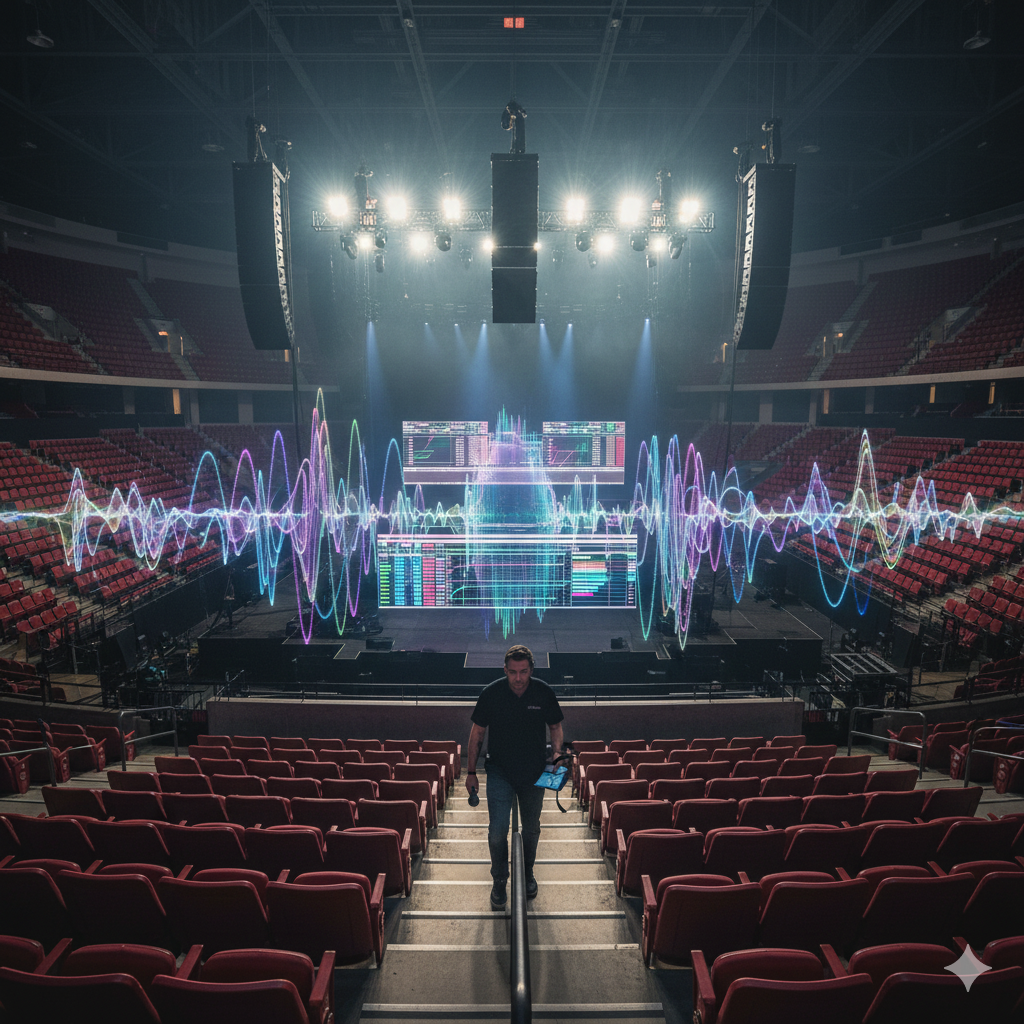
A concert is a living organism. Soundwaves bounce off walls, ceilings, bodies, and open spaces, creating a constantly shifting environment. No two venues behave the same. What sounds perfect in a theatre might collapse in an arena. A stadium’s concrete shell reacts differently than a club’s warm wood panels.
Each afternoon, the sound team begins the “tuning ritual.” They walk the empty seats, dialing in coverage and EQ so every fan—from the front row to the rafters experiences the same show. Test tracks fire through the system while they hunt reflections, dead spots, and rogue frequencies. Then, piece by piece, they sculpt the room like clay under a sculptor’s hands.
Tyler’s performances weave live instruments, playback, and vocals each layer placed with purpose. The engineers balance them so the music keeps its emotional honesty.
When the band erupts into a high-energy surge, the vocals still cut through clean. When everything drops to a hush, every whisper lands close enough to touch. The goal is simple: make thousands of people feel like Tyler is singing directly to them.
A Night That Became Legend
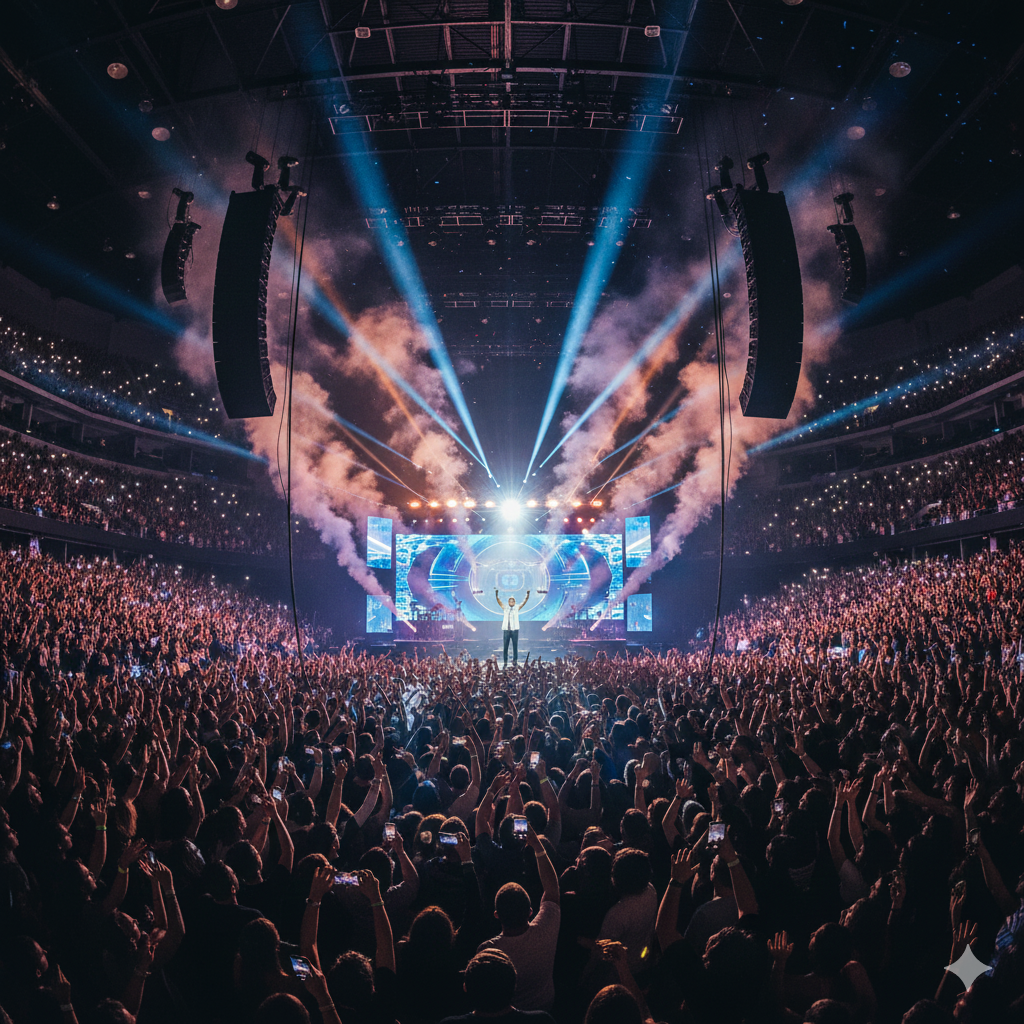
On every tour, there’s one show that becomes legend the story the crew retells for years. For Tyler’s Call Me If You Get Lost tour, that night was a sold-out arena in Chicago.
The crowd arrived louder than usual, humming with an energy that crackled like static. Even during line check, the room pulsed with anticipation. When Tyler finally hit the stage, the air itself felt charged.
Halfway through, on an already explosive track, the unexpected struck. A massive section of the crowd started chanting so loud it threatened to swallow the entire mix. For any crew, that’s a nightmare: the audience overpowering the show.
But the engineers moved instantly. With surgical calm they shoved Tyler’s vocal forward, tweaking compression and dynamics on the fly. The crowd roared harder, yet the sound stayed perfectly controlled. What could have been chaos turned into pure magic a rare moment where artist, fans, and crew fused into something unforgettable.
Backstage afterward, the team stood exhausted but buzzing, riding that irreplaceable live-show high. Tyler walked in, soaked in sweat, grin wide. “That was crazy,” he said. “Y’all kept that together.” Moments like that are why they do it. They don’t just work the show they live it.
Trust, Communication, and the Language of Live Music
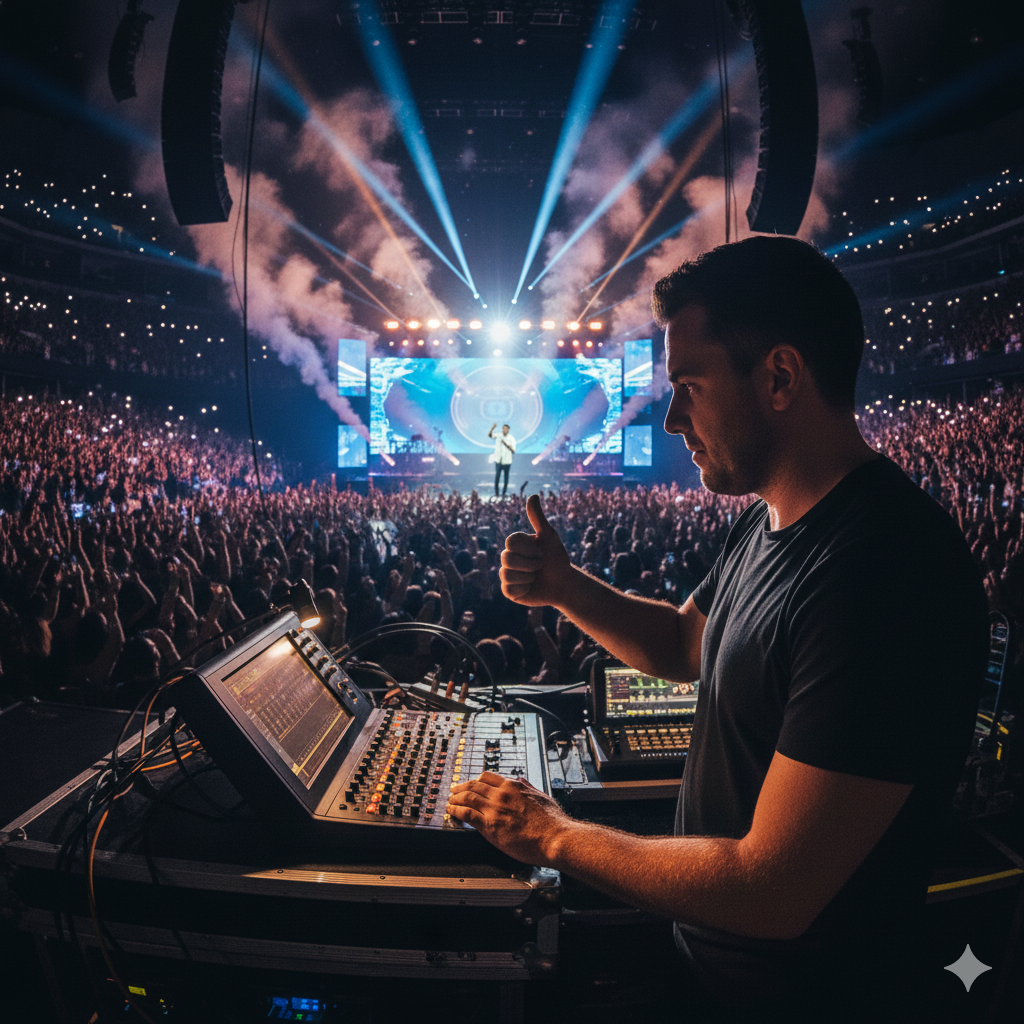
What makes Tyler’s team special isn’t the gear or the tricks. It’s trust years of it, hardened into instinct. Tyler speaks to them in shorthand now: a raised eyebrow, a quick hand signal, a half-second glance mid-song.
They read him the way a conductor reads a score. They anticipate. The second he coils for a scream, the channel’s already opening. When he’s about to drop into something fragile, the edges soften before he even breathes. When he suddenly goes silent, they let the whole room breathe with him.
This unspoken sync turns the show into something conducted in real time not just by the artist on stage, but by the engineers riding every impulse beside him. Sound stops being background; it becomes another character in the story, as vital as the lights, the moves, the set.
It’s built on professionalism, yes but more than that, on real respect. Tyler treats the crew like collaborators, not hired hands. And they treat every night like a masterpiece still being painted. That’s the difference.Changing the Direction of Modern Hip-Hop Shows
Hip-hop has evolved dramatically over the last decade. Artists now demand live instrumentation, theatrical narratives, and multi-layered storytelling. Tyler has been one of the driving forces behind this shift. His shows raised the bar, proving that hip-hop could be just as immersive, emotional, and sonically ambitious as any rock opera or experimental pop production.
Behind this evolution is a group of touring professionals rewriting the rules of what a hip-hop concert can sound like. Their work inspires younger artists and emerging engineers who look to Tyler’s shows as examples of what’s possible when creativity and technical mastery collide.
Fans walk away feeling something deeper not just excitement, but connection. And that connection is amplified, shaped, and carried by the precision of the sound team.
The Sound of a Movement
When the lights finally drop and the crowd pours out into the night, the crew starts the long teardown coiling cables, breaking down consoles, loading trucks under fluorescent hum. The arena empties in minutes, but the memory of what just happened still hangs in the rafters like a held note.
For the fans, it was a concert. For the crew, it was another night of building a world out of sound.
Tyler, The Creator’s live shows aren’t just concerts they’re movements. They keep rewriting what hip-hop can be, what it can feel like, tour after tour. And behind every boundary pushed, every impossible moment, stands a team that shapes it all with expertise, creativity, and heart.
Their names never hit the marquee. But their work is the foundation everything else stands on. For the thousands walking out forever changed ears ringing, chests full the sound of that movement (loud, raw, tender, explosive, alive will echo long after the stage goes dark.
