 (585) 405-4375
 contact@echotonemusic.net




Madison Square Garden Sound Design Secrets Revealed
Imagine stepping into the heart of New York City, where the roar of 20,000 fans echoes like thunder, and every note from a rock legend's guitar cuts through the air with crystal clear precision. That's the magic of Madison Square Garden (MSG), the World's Most Famous Arena. But behind the glamour of sold out concerts, NBA showdowns, and historic boxing matches lies an engineering marvel its sound design. This isn't just about blasting music or announcements it's a meticulously crafted audio ecosystem that turns a massive, multi purpose venue into an acoustic powerhouse. we'll unpack the insane intricacies of MSG's sound system, from its historical roots to the cutting edge tech that makes every seat feel like the best in the house.
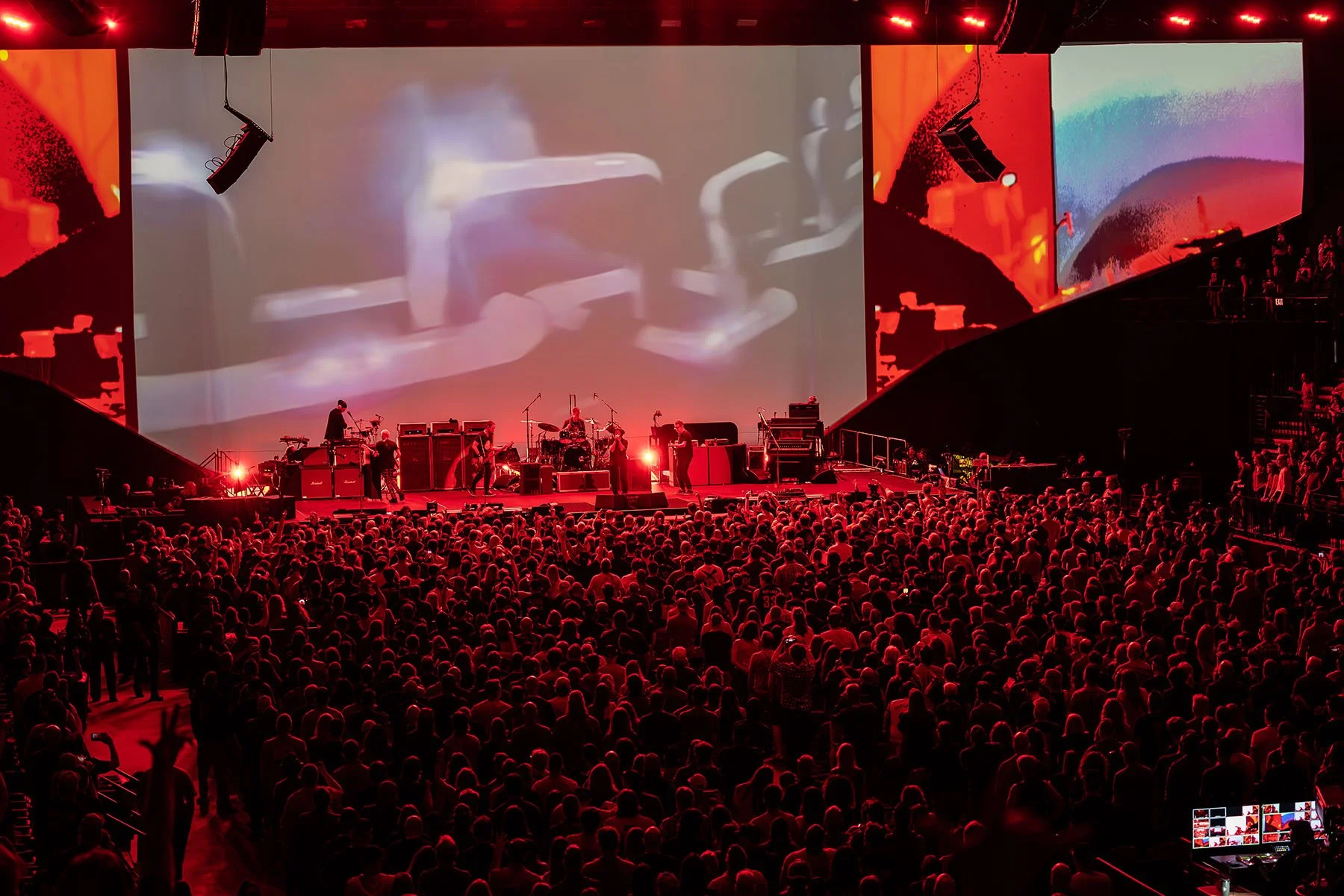
MSG's sound design is a testament to human ingenuity, blending physics, technology, and artistry to combat the inherent challenges of a circular arena. Whether you're a audiophile dissecting frequency responses or a casual fan wondering why Billy Joel sounds so epic live, this article will take you behind the curtains. We'll explore the evolution of the system, break down its components, delve into the acoustics, and even touch on real world applications during iconic events. By the end, you'll appreciate why MSG's audio setup isn't just "good" it's insanely sophisticated.
A Brief History of MSG and Its Sonic Journey
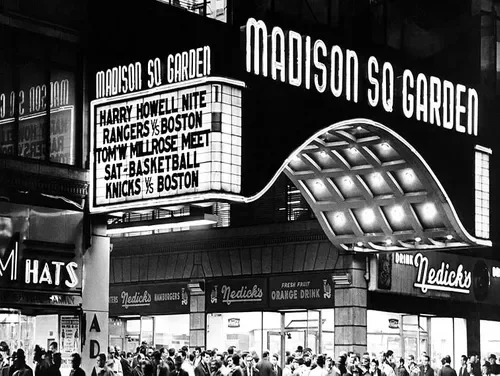
Madison Square Garden has been a cultural cornerstone since its current incarnation opened on February 11, 1968, atop Penn Station in Midtown Manhattan. This was the fourth version of MSG, following predecessors that dated back to 1879. From the start, the arena was designed for versatility hosting everything from circus acts and dog shows to political conventions and sports. But sound? In the early days, it was rudimentary at best. Amplification relied on basic PA systems that struggled with the venue's cavernous space and reflective surfaces, leading to muddy echoes and uneven coverage.
The turning point came in the late 1990s when management recognized that the aging sound system over a decade old by then was failing to meet modern demands. Parts were hard to source, maintenance was a nightmare, and the audio quality didn't match the prestige of acts like Elton John, who holds the record for most performances at MSG with 76 shows. Enter the first major overhaul around 2001-2002, spearheaded by acoustic consulting firm Wrightson, Johnson, Hadden & Williams (WJHW) from Dallas, Texas. WJHW, known for their work on world-class venues, designed a system that would set a new standard for arenas.

This upgrade included 180 speakers strategically placed throughout the main seating bowl, ensuring broad coverage. But the bass foundation was the star: 16 Bag End Quartz quad-18 loudspeaker systems, totaling 64 18-inch subwoofers. These weren't your average subs Bag End's Extended Low Frequency (ELF) technology allowed for flat response well below the audible range down to subsonic levels that you feel in your chest rather than hear. The project, installed by SPL Integrated Solutions amid post 9/11 challenges in New York, was completed on time and under budget. Jack Wrightson, principal at WJHW, emphasized the need for a tunable system: "We created presets for different events, allowing technicians to monitor and adjust in real-time."
This system transformed MSG's audio landscape, but the arena's ambitions didn't stop there. In 2011, MSG embarked on a $1 billion transformation project, dubbed "The Transformation," which spanned three phases over summers to minimize downtime. Audio was a key focus, with Diversified Systems (now Diversified) handling integration based on WJHW's redesign. The goal? Enhance fan experience without disrupting the venue's operations.
By 2013, the renovated system was unveiled, featuring updated drivers in existing components like the Bag End Quartz subs, EAW MQV series clusters for mid and high frequencies, and Renkus-Heinz TRAP40 downfills for precise coverage in the lower bowl. New additions included JBL Control 29/AV1 speakers as delay fills and JBL AM 5212/95 for upper seating delay rings, addressing dead spots in the north, south, and west sections—including the innovative seating bridges added during the reno.
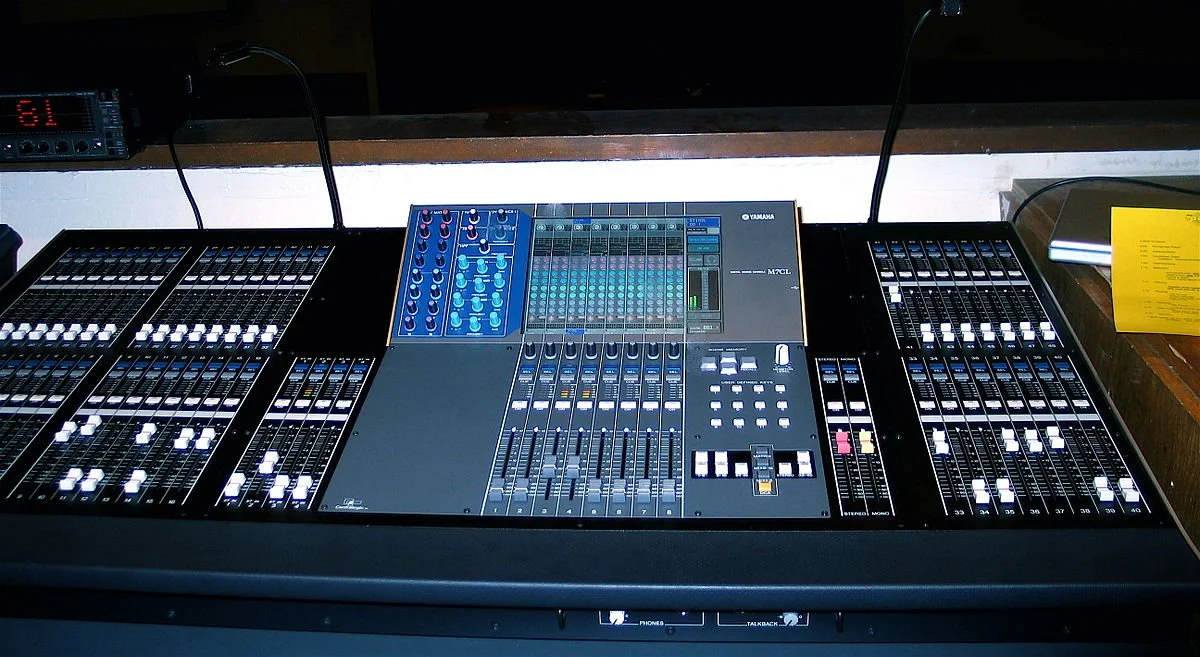
Amplification shifted to Crown CTS models, replacing older QSC units, while BSS London processors took over from Soundweb, introducing "Concert Mode" for seamless integration with touring rigs. A Yamaha M7CL 48 console became the front of house mixer, giving engineers granular control. Andy Prager, senior project engineer at Diversified, noted the complexity "The Garden can't close for more than four months, so we worked in phases, ensuring every element from broadcast cabling to IPTV synced with the audio."
Since then, MSG has seen incremental tweaks, but no full scale overhaul as of 2025. However, influences from sister venues like the MSG Sphere in Las Vegas boasting Holoplot's beamforming tech have trickled in. While Sphere Immersive Sound debuted at Radio City Music Hall in October 2025 with 3D differential beamforming for sculpted audio, MSG's core system remains rooted in its 2013 blueprint, optimized for its unique architecture.
The Technical Breakdown
MSG's sound design is a distributed system, meaning audio is delivered via numerous speakers rather than a few massive arrays. This approach combats the arena's circular shape, which can cause sound waves to bounce unpredictably. Let's dissect the key elements.
Speakers and Arrays
Main Clusters and Outfills: The backbone consists of EAW MQV1364 (single 15-inch woofer, dual 10-inch mids, dual 2-inch highs) and MQV2364 (dual 15-inch woofers) cabinets. These three-way systems handle the bulk of midrange and highs, providing even dispersion across the bowl. Drivers were upgraded in 2013 for better efficiency and longevity.
Downfills: Renkus Heinz TRAP40MH/6 full-range speakers cover the lower seating areas, ensuring fans close to the floor aren't overwhelmed or underserved. Their trapezoidal design minimizes reflections.
Delay Rings and Fills: To reach upper tiers and bridges, JBL AM 5212/95 (12-inch woofer, 1.5-inch high) and Control 29/AV1 speakers act as delays, time-aligned to the main system. This prevents echo and maintains phase coherence.
Subwoofers: The Bag End Quartz setup steals the show. Each Quartz cabinet houses four 18-inch ELF drivers, with 16 cabinets total. Specs include a frequency response down to 8 Hz (inaudible but felt), peak SPL over 140 dB, and a compact form factor that belies its power. Jim Wischmeyer of Bag End called it "the smallest high-output concert subwoofer," ideal for MSG's space constraints.
Amplification and Processing
Power comes from Crown CTS amplifiers, known for their reliability in high demand environments. Each channel delivers clean, distortion free output, with built in DSP for limiting and protection.
Signal processing is handled by BSS London BLU series units, which replaced older Soundweb models. These allow for advanced routing, EQ, and delay management. The "Concert Mode" feature is genius: it syncs house delays with visiting artists' line arrays, creating a hybrid system that feels unified. For example, during a concert, the west-end delays align temporally with the stage setup, reducing comb filtering.
The front-of-house console is a Yamaha M7CL-48, offering 48 channels of mixing with effects like reverb and compression. Engineers can preset configurations for sports (emphasizing speech intelligibility) versus concerts (boosting low-end punch).
Control and Monitoring
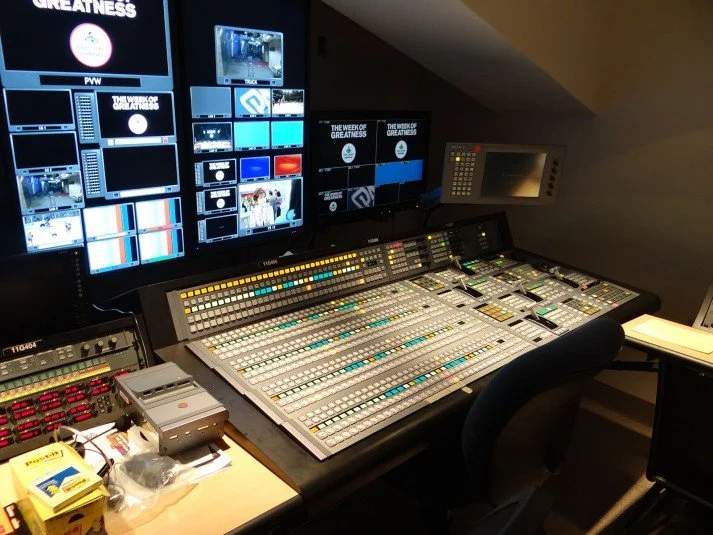
A state of the art control system monitors every speaker in real time, alerting techs to issues like blown drivers. Presets include "Basketball Mode" for Knicks games—focusing on clear announcements amid crowd noise and "Concert Mode" for music events. Equalization is tailored to cut through ambient sound without harshness, using filters to tame resonances around 200-500 Hz, common in arenas
Acoustics
MSG's acoustics are notoriously tricky. The round design, with a diameter of about 200 feet and height up to 150 feet, creates potential for reverberation and standing waves. Hard surfaces like concrete and glass exacerbate echoes, while the multi purpose setup means the floor changes from ice (for Rangers hockey) to hardwood (for Knicks) to staging (for concerts), altering reflections.
To counter this, WJHW employed acoustic modeling software during design, predicting how sound propagates. The distributed speaker layout ensures uniform sound pressure levels (SPL) across seats aiming for 95-105 dB for concerts, with variance under 3 dB. Beamforming elements, inspired by Holoplot tech (in which MSG invested 25% in 2018), direct sound precisely, reducing spill and improving clarity. Though full beamforming isn't implemented in MSG like in the Sphere, adaptive EQ and zoning mimic it.
For speech, the system prioritizes the STI (Speech Transmission Index) above 0.6, ensuring announcements cut through 80+ dB crowd noise. Music benefits from extended low end, making bass drops visceral without muddiness. Challenges remain upper seats can feel distant, but delays mitigate this. Compared to venues like the O2 Arena in London, MSG's system excels in versatility, handling 300+ events yearly without major reconfigs.
Behind the Scenes
The unsung heroes are MSG's audio team, led by house engineers who tune the system daily. Pre-event soundchecks involve walking the arena with SPL meters, adjusting for humidity (which affects high frequencies) and crowd absorption. For concerts, touring engineers integrate their rigs often L Acoustics or d&b audiotechnik arrays via the Concert Mode processors.
Take a hypothetical Billy Joel show The house system handles fills and subs, while his FOH mixer dials in vocals at 10 kHz for sparkle. Quotes from pros highlight the insanity: One engineer told Sports Video Group, "It's complex because the Garden never closes long, but the result is phenomenal coverage." User reviews on Tripadvisor praise the "pure music with no distortions," crediting speaker placement.
Case Studies
Let's apply this to real events. During Phish's annual New Year's run, the system's low end shines, delivering Trey Anastasio's guitar tones with fidelity. Fans on Reddit debate sections 210 vs. 225 but delays ensure consistency.
For Knicks games, the system amps up anthems like "New York, New York," with subs rumbling the floor. In boxing, like the 1971 Ali Frazier fight (though pre upgrade), modern iterations use zoned audio for commentary.
Eric Clapton's 2015 birthday concert exemplified the setup: Acoustics were "excellent," with even bass distribution. The system handles peaks without clipping, thanks to Crown amps.
The Future of MSG's Sound Design
As of December 2025, MSG eyes Sphere tech integration. The Las Vegas Sphere's Holoplot system, with 167,000 speakers and beamforming for personalized audio, could inspire upgrades. Imagine language-specific streams or haptic bass via seats. Sustainability is key: Newer components use efficient amps to cut power use. With AI tuning on the horizon, MSG could auto-adjust for crowds.
Conclusion
Madison Square Garden's sound design isn't just tech it's an art form that elevates experiences. From Bag End's thunderous subs to BSS's smart processing, every element fights acoustic chaos to deliver immersion. Whether catching a Rangers goal horn or Adele's ballad, the system ensures you hear and feel it all. For Echotone readers, MSG reminds us Great sound isn't accidental; it's engineered insanity. Next time you're there, listen closely the arena's whispering its secrets.
