 (585) 405-4375
 contact@echotonemusic.net




Pro Audio Gear Every World Tour Relies On
In the electrifying world of live music, world tours represent the pinnacle of performance artistry, where artists like Taylor Swift, Beyoncé, Bad Bunny, Metallica, and Oasis captivate millions across continents. Behind the scenes, however, the true magic lies in the audio gear that ensures every note, lyric, and beat resonates with crystal clear precision in massive stadiums, arenas, and outdoor venues.
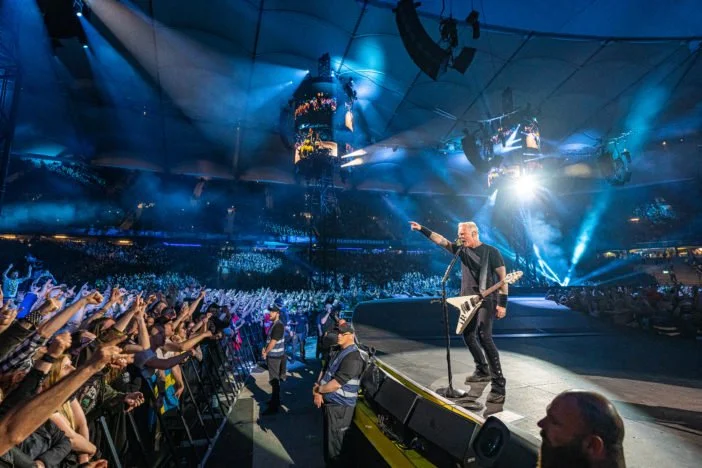
This comprehensive guide explores the 5 most common audio gear used on world tours, drawing from industry insights, case studies, and technical deep dives. From line array speakers that conquer vast distances to digital signal processors that fine tune every frequency, we'll uncover the history, types, brands, applications, technical specifications for each piece of equipment.
Whether you're an aspiring audio engineer, a touring musician, or a fan curious about the tech powering your favorite shows, this article provides an exhaustive look at the backbone of live sound. Prepare for a sonic journey that spans decades of innovation and real world triumphs.
1. Line Array Speakers
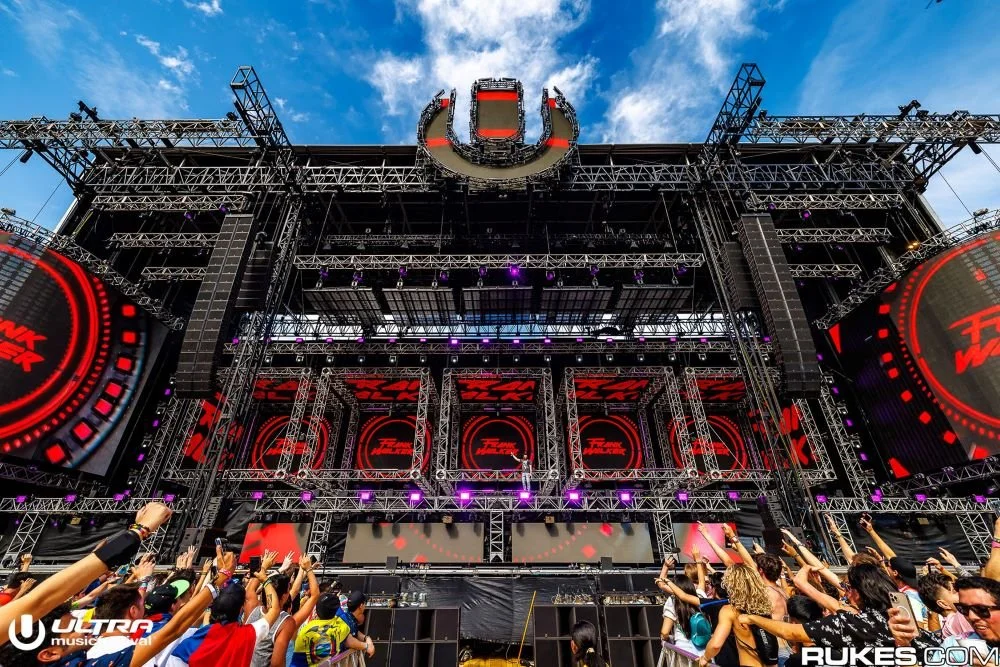
Line array speakers are arguably the most iconic and ubiquitous audio gear on world tours, revolutionizing how sound is distributed in large venues. These vertical stacks of speakers create a coherent wavefront, allowing sound to travel far without significant loss in quality or volume. On tours like Metallica's M72 World Tour or Oasis' Live '25, line arrays ensure that fans in the back rows experience the same intensity as those in the front pit.
History of Line Array Speakers
The concept of line arrays dates back to the 1950s, but it wasn't until the 1990s that they became standard for tours. Pioneered by companies like L-Acoustics with their V-DOSC system in 1992, line arrays addressed the limitations of point-source speakers, which suffered from interference and uneven coverage in large spaces. Early adopters included U2's PopMart Tour in 1997, where massive arrays helped fill stadiums with sound. Over the decades, advancements in waveguide technology and digital modeling software like L-Acoustics Soundvision have refined arrays, making them lighter, more powerful, and adaptable to various venue geometries. By the 2000s, tours like Coldplay's A Head Full of Dreams (2015-2017) showcased flown arrays curved to match audience planes, minimizing dead zones. Today, with immersive audio trends, arrays incorporate beam steering for 3D sound, as seen in Ed Sheeran's +–=÷× Tour.
The evolution also ties to materials science modern cabinets use composite materials for durability during global transport, resisting humidity in Asia or cold in Europe. Historical case studies, such as Pink Floyd's The Wall tours in the 1980s, used proto arrays, but modern iterations on Roger Waters' 2010-2013 The Wall Live tour deployed Meyer Sound arrays for precise imaging. This history underscores how line arrays have enabled artists to scale performances from intimate theaters to 100,000 capacity festivals like Glastonbury.
Types of Line Array Speakers
Line arrays come in several types, tailored to tour demands. Constant curvature arrays, like JBL VTX A12, offer fixed vertical dispersion for medium venues, simplifying setup on tours with varying stage sizes. Variable curvature arrays, such as d&b audiotechnik XSL, allow adjustable angles for custom coverage, ideal for asymmetrical stadiums on tours like Taylor Swift's Eras Tour. Compact line arrays, e.g., L-Acoustics K3, suit smaller rigs or side fills, while large-format ones like Meyer Sound Panther handle massive throws over 300 feet.
Active vs. passive: Active arrays have built in amps, reducing cabling on tours, as in Beyoncé's Renaissance World Tour. Passive require external amps but offer flexibility. Hybrid systems combine point sources for near field with arrays for far-field. Sub-array configurations, like cardioid subs integrated into mains, control low end directionality, preventing stage bleed on high energy shows.
Popular Brands and Models
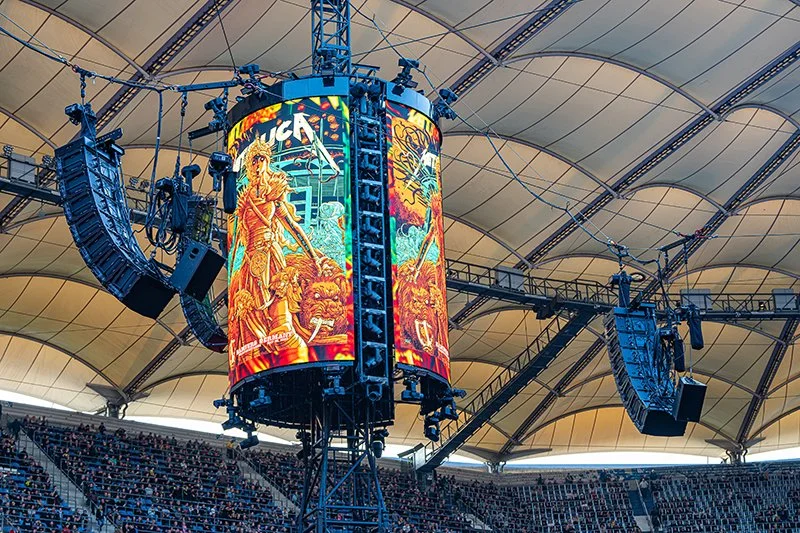
Leading brands dominate: L-Acoustics K1/K2, used on Oasis' reunion tour for its high SPL (up to 149 dB) and Panflex technology for adjustable dispersion. Meyer Sound Leopard/Panther, featured on Metallica's M72, with Leopard's compact design (22 kg per box) for easy rigging. d&b audiotechnik SL Series, on Adele's Weekends with Adele residency, excels in noise control. JBL VTX, on Linkin Park tours, offers VTX V25-III with waveguide tech for coherent sound. RCF HDL, budget-friendly for mid-tier tours, provides HDL 50-A with 140 dB SPL.
Models vary by power: K1 (L-Acoustics) at 10,000W, Panther (Meyer) with Class-D amps for efficiency. Brands like EAW Anya use adaptive tech for electronic steering, reducing physical adjustments on fast-paced tours.
Applications on World Tours
On Metallica's M72, Meyer Panther arrays (over 300 boxes) created 360-degree sound in-the-round, with delays for uniform coverage. Oasis' Live '25 used L-Acoustics K Series for rock clarity. Taylor Swift's Eras deployed d&b for precise vocals amid pyrotechnics. Bad Bunny's Most Wanted used Clair Cohesion CO10 for 360 arenas. Challenges include wind in open stadiums, addressed by array curvature.
Technical Specifications
Typical specs: Frequency range 35 Hz-20 kHz, SPL 140-150 dB, dispersion 70-110° horizontal/5-15° vertical per box. Power 2,000-10,000W RMS, impedance 8 ohms. Rigging IP-rated for weather, weight 50-100 kg per box. DSP integration for time alignment, e.g., via Lake Controller.
2. Digital Mixing Consoles
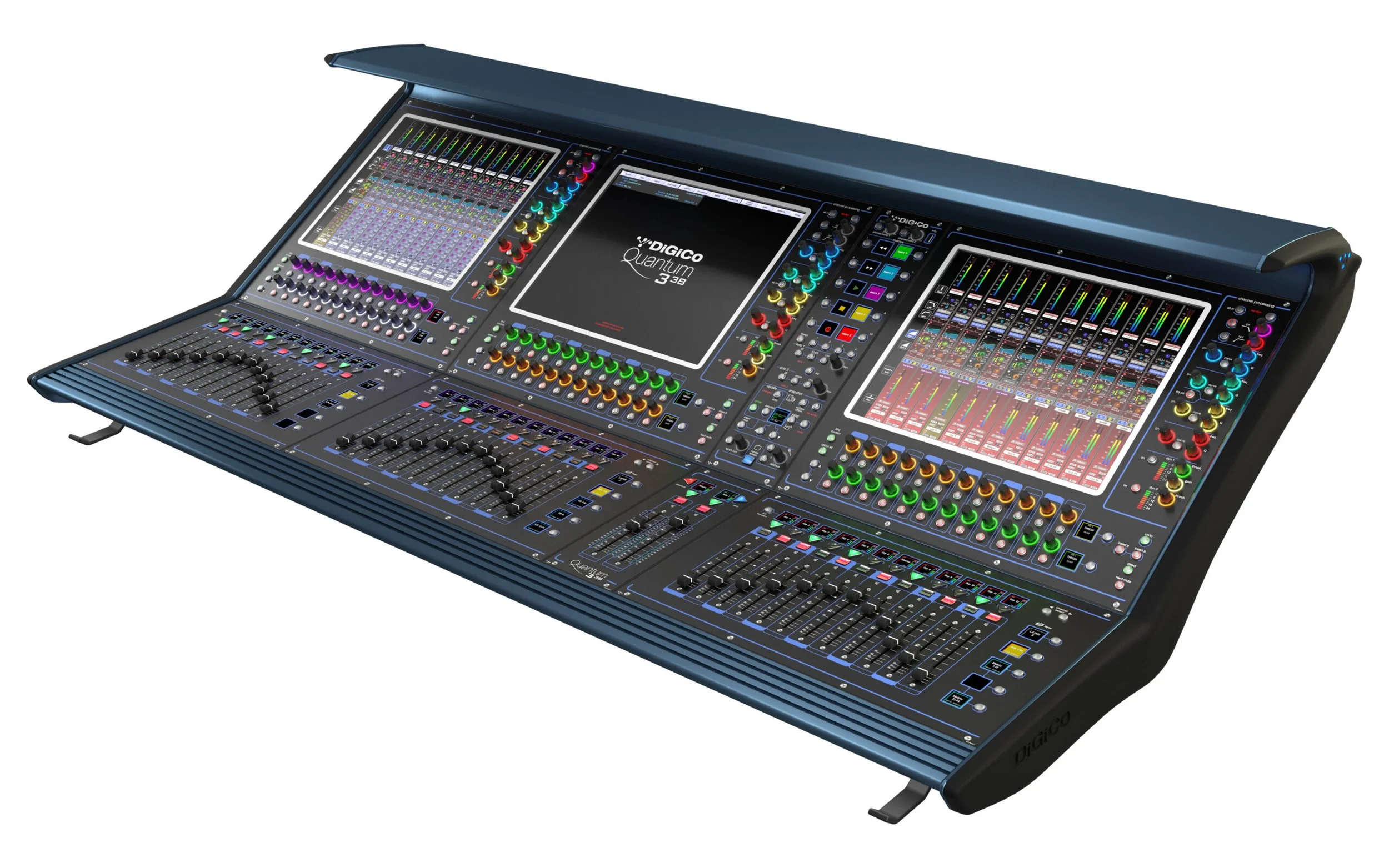
Digital mixing consoles serve as the nerve center of modern world tours, empowering sound engineers to manage and blend hundreds of audio channels in real time with precision and flexibility. These advanced systems deliver pristine sound quality, instant recall of settings, and seamless integration with networked audio protocols. For instance, on Charli XCX's ongoing Brat Tour (extending into 2025), front-of-house engineer Mat Collis relies on a DiGiCo Quantum 338 for its increased channel count, bright screens, and reliable routing options, perfectly suited to handling complex playback tracks and live vocals for global audiences.
History of Digital Mixing Consoles
Analog consoles ruled live sound until the early 1990s, when digital technology began to emerge. Yamaha pioneered the shift with the DMC1000 in 1992, one of the first fully digital mixers designed for professional use. The breakthrough for live touring came in 2002 with DiGiCo's D5 Live, which introduced groundbreaking FPGA-based processing for superior audio quality and flexibility. By the 2010s, digital consoles had become standard on major tours; for example, U2's Innocence + Experience Tour (2015) utilized Avid VENUE systems to leverage recallable snapshots for consistent mixes night after night. The post-COVID era brought further innovations, including remote mixing capabilities via apps and enhanced networking for distributed setups.
Types of Digital Mixing Consoles
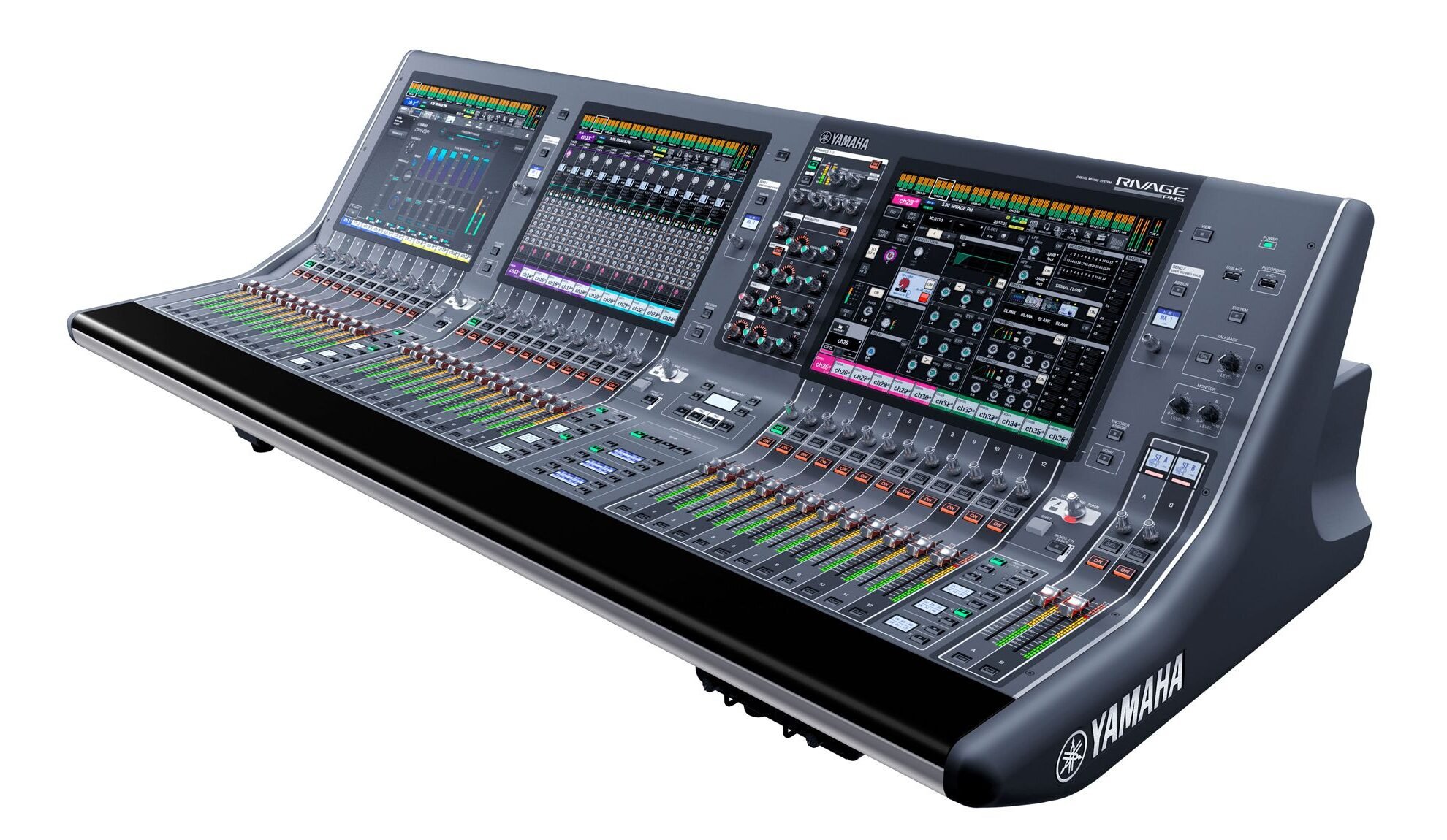
Digital consoles come in various formats to suit different production scales:
Compact: Ideal for smaller tours or opening acts, such as the Yamaha TF series, offering portability without sacrificing core features.
Large-Format: Built for stadium spectacles, like the Solid State Logic (SSL) Live L650, providing extensive fader banks and processing power.
Modular: Systems like the Allen & Heath dLive allow expandable I/O racks and stageboxes for ultimate scalability in dynamic touring environments.
Popular Brands and Models
Leading manufacturers dominate the touring landscape:
DiGiCo Quantum Series: Versatile and powerful; used on tours like Abel Pintos' residencies (Quantum 338) and Charli XCX's Brat Tour.
Avid S6L: Known for Pro Tools integration and robust plugin support; a staple for high-profile rock and pop productions.
Yamaha Rivage PM Series: Praised for natural sound and intuitive workflow; frequently chosen for intricate mixes on large-scale tours.
SSL Live Series: Delivers legendary SSL analog character in digital form; favored for its dynamics and clarity in demanding live scenarios.
Applications on World Tours
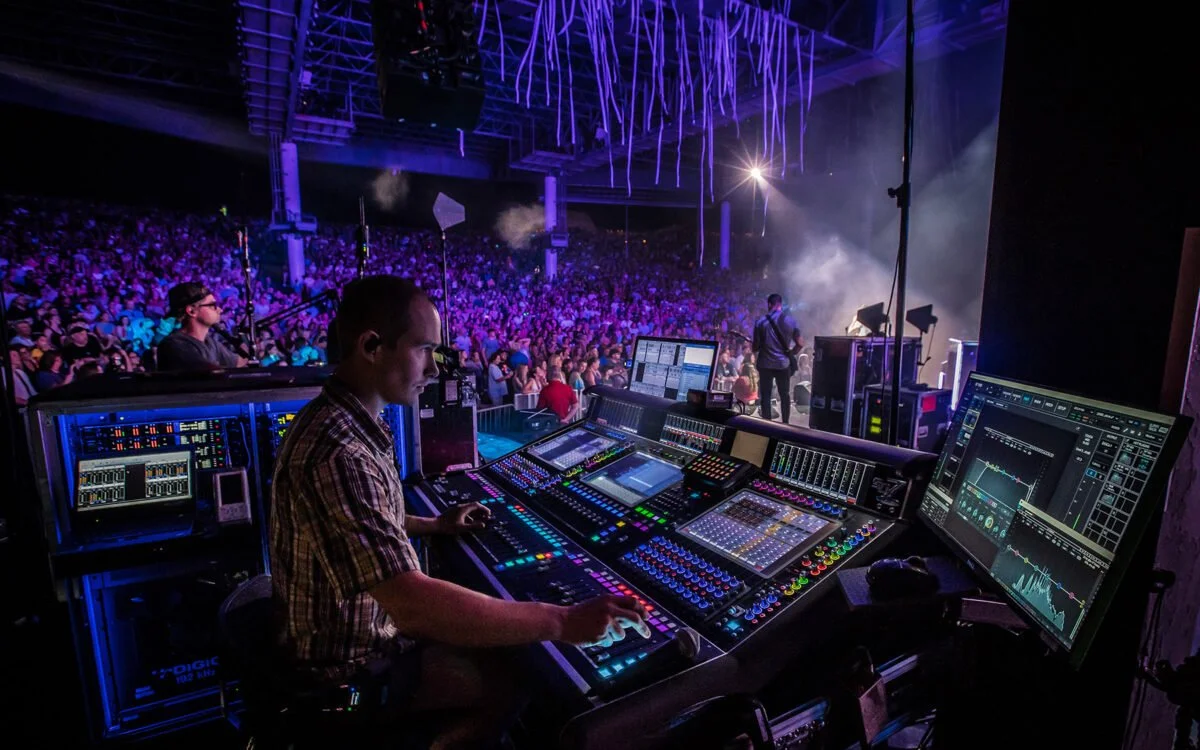
Digital consoles excel in high pressure touring environments, handling massive channel counts and complex routing. On Pink's Beautiful Trauma World Tour (2018-2019), DiGiCo SD7 consoles managed over 120 channels at front of house and monitors, ensuring flawless delivery amid aerial stunts and elaborate staging. Challenges like RF interference from wireless systems are mitigated through built in redundancy, snapshot automation, and protocols like Dante for reliable signal distribution.
3. Wireless Microphones
Wireless microphones have transformed live performances, allowing artists complete freedom of movement while delivering pristine audio. Gone are the days of tripping over cables performers can now dance, leap, and engage with massive crowds seamlessly. This technology shines in high energy shows, such as Taylor Swift's Eras Tour, where advanced systems handle complex choreography without a single dropout, or Beyoncé's tours, which demand rock-solid reliability amid elaborate productions.

A Brief History
Wireless microphone technology traces back to the 1950s with early VHF systems, but it gained traction in the 1970s when UHF bands offered improved range and reduced interference. Companies like Nady Systems introduced affordable UHF options in the 1980s, making them standard for professionals. The shift to digital transmission in the 2000s and 2010s brought greater spectrum efficiency, lower latency, and superior sound quality, enabling dense channel counts in crowded RF environments.
Types of Wireless Microphones
Different designs cater to various performance styles:
Handheld: Popular for lead vocalists, with dynamic capsules like the classic Beta 58 for handling high sound pressure and rejecting feedback.
Lavalier (Clip-On): Small, discreet mics attached to clothing, ideal for theater, speeches, or situations requiring hands-free operation.
Headset/Headworn: Securely fitted around the head, providing stability for intense movement—perfect for dancers and energetic singers.
Leading Brands and Models
Professional tours rely on flagship systems known for unmatched reliability:
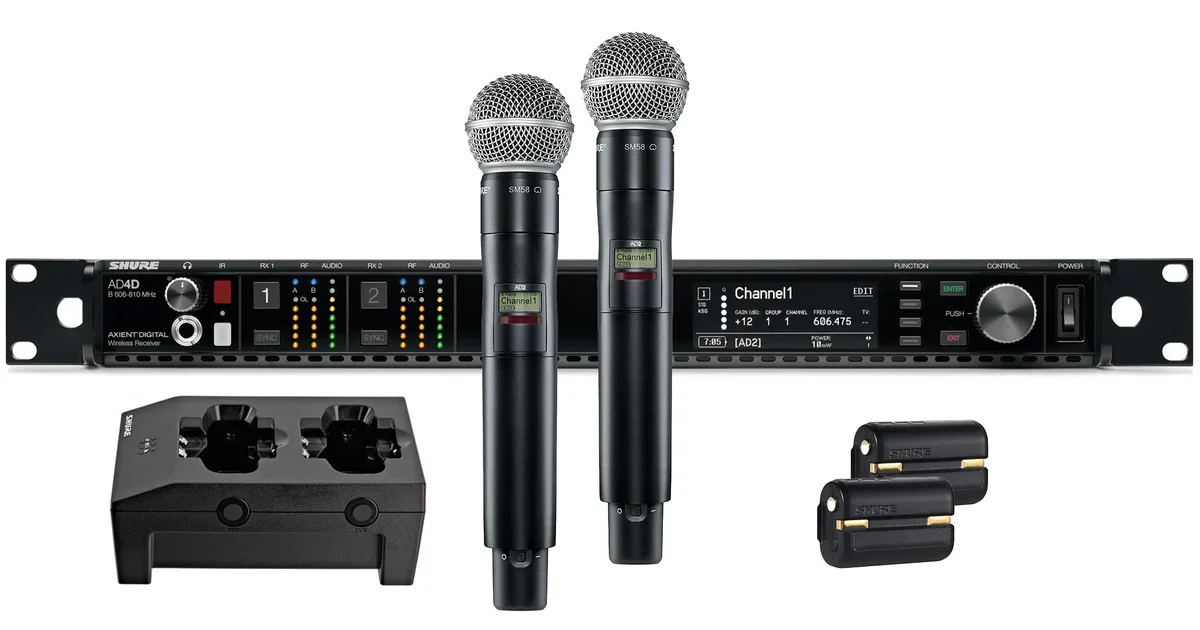
Shure Axient Digital: Features advanced frequency diversity, quadversity reception, and remote control via ShowLink—widely used for its interference-free performance in massive stadiums.
Sennheiser Digital 6000: Employs an equidistant frequency grid to maximize channel count without intermodulation, paired with high-quality audio codecs for transparent sound.
Applications in High-Profile Performances
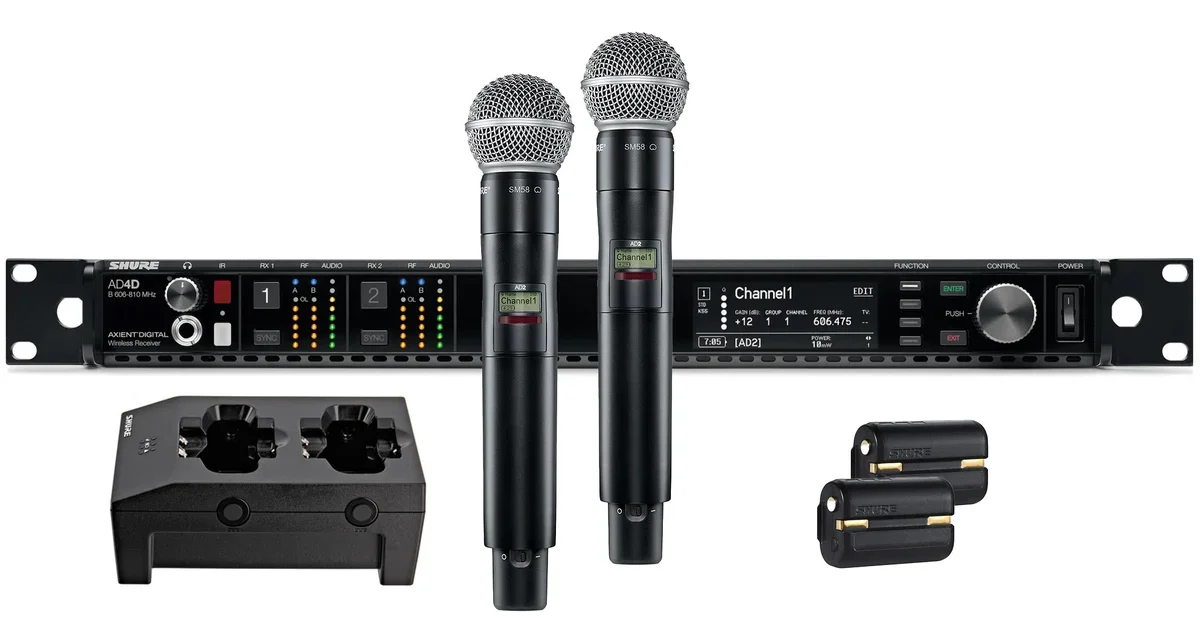
On tours like Taylor Swift's Eras, systems deploy frequency hopping and multiple antennas to support dozens of channels simultaneously, ensuring crystal clear vocals through elaborate stage setups. Beyoncé's productions similarly leverage top-tier digital wireless for dynamic, high-intensity performances where every note must cut through perfectly.
Key Specifications
Typical professional-grade systems include:
Range: Around 300–500 feet (100–150 meters) in optimal conditions.
Battery Life: 8–12 hours on rechargeable packs.
Frequency Range: UHF bands such as 470–698 MHz (subject to regional regulations).
Wireless microphones continue to empower artists, blending cutting-edge RF engineering with flawless audio to create unforgettable live experiences.
4. In-Ear Monitors (IEMs)
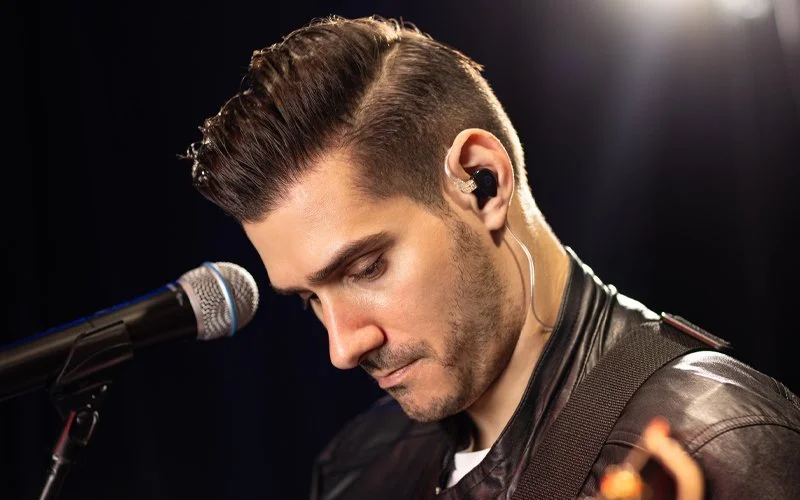
In ear monitors (IEMs) deliver customized, high fidelity audio mixes directly to performers' ears, revolutionizing stage monitoring by replacing bulky wedge speakers. They provide precise control over what each artist hears, excellent noise isolation, and protection from loud stage volumes. Professional systems like the Shure PSM series are staples on major tours, enabling intricate personal mixes for every band member.
A Brief History
IEMs emerged in the 1980s as wired systems for better hearing protection and mix clarity amid rising stage volumes. The 1990s saw the transition to wireless technology, pioneered by companies like Shure and Future Sonics, allowing freedom of movement while maintaining reliable transmission. Today, advanced digital wireless systems dominate professional use.
Types of In-Ear Monitors
IEMs are designed for comfort, fit, and sound quality:
Custom Molded: Made from ear impressions for a perfect seal, offering superior isolation and comfort during long performances—exemplified by brands like Ultimate Ears.
Universal Fit: Pre-shaped with multiple ear tip sizes for broad compatibility, ideal for shared use or quick setups—like Sennheiser's IE series.
Shure PSM 1000: A robust wireless system with dual-channel diversity reception, known for rock-solid RF performance in demanding environments.
Westone UM Pro Series: Renowned for balanced armature drivers and ergonomic design, delivering detailed, accurate sound for stage monitoring.
Applications in High Profile Performances
Bands like Metallica rely heavily on IEMs for superior isolation in high-volume settings, allowing clear hearing of individual mixes even during thunderous shows—essential for tight synchronization and vocal protection.
Key Specifications
High-end IEMs typically feature:
Drivers: 1 to 8 (or more) balanced armature drivers per ear for detailed frequency separation.
Frequency Response: 20 Hz–20 kHz, capturing full-range audio with clarity and extension.
In-ear monitors have become indispensable for modern live sound, offering artists personalized control and hearing safety in the most intense performance environments.
5. Subwoofers
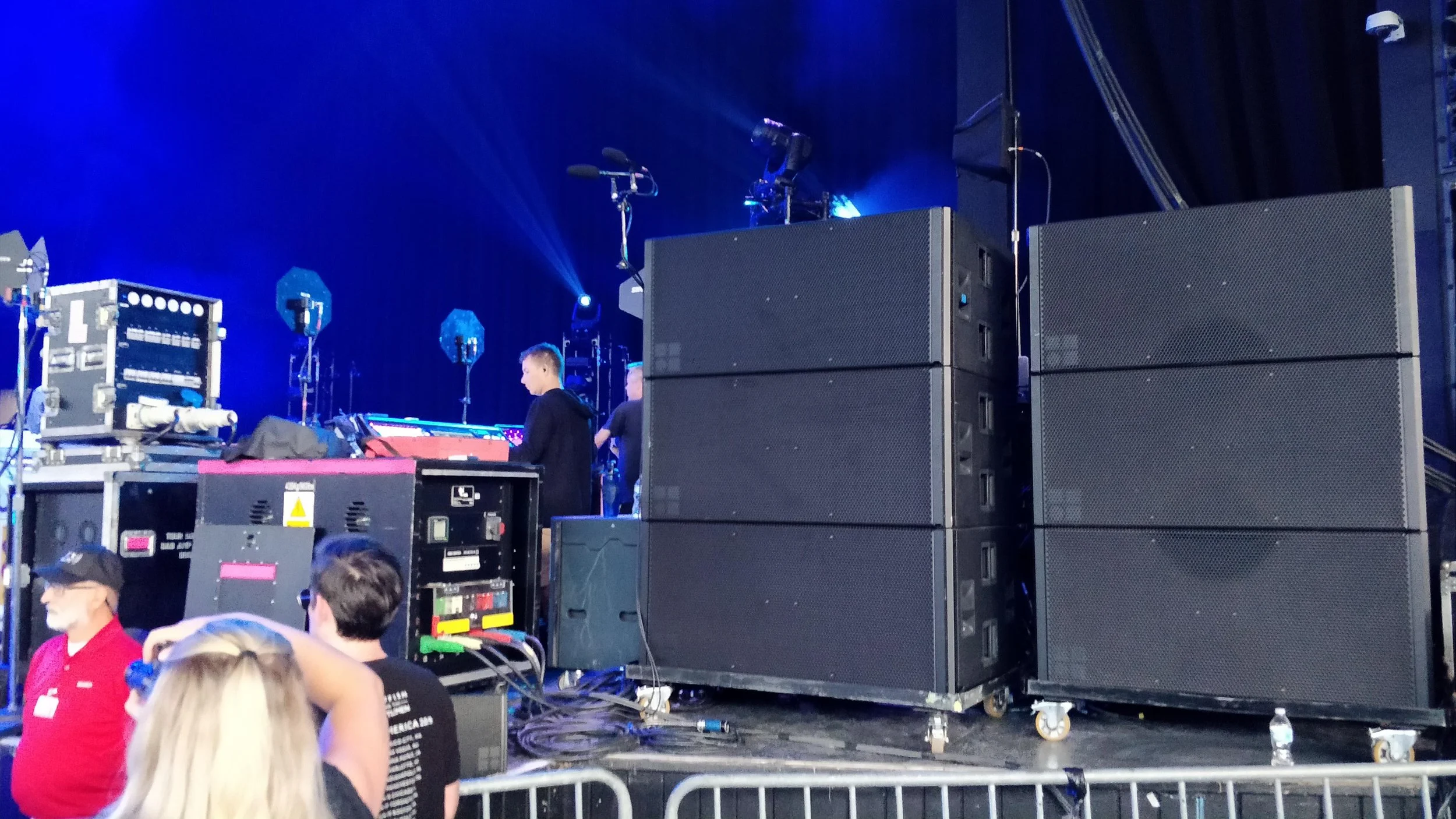
In the world of large scale live sound reinforcement, subwoofers are the undisputed kings of the low end, delivering the visceral thunder that makes audiences feel the music in their chests. Models like the L-Acoustics KS28 have become staples on stadium tours, providing earth-shaking bass that cuts through massive venues with clarity and power.
History
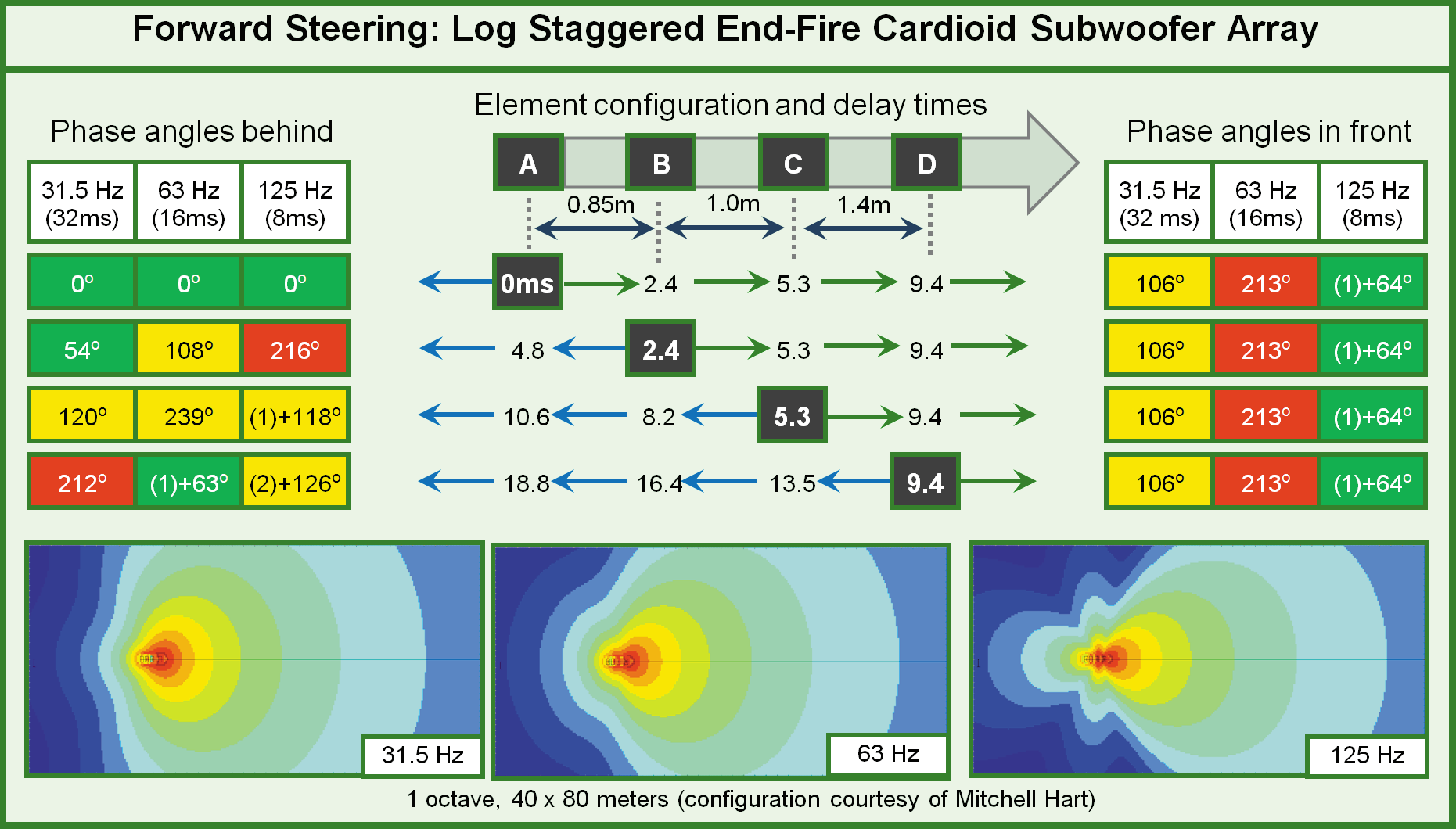
The roots of dedicated subwoofers trace back to the 1950s and 1960s, when early designs often incorporated horn loaded enclosures to efficiently reproduce deep bass in live and cinema applications. Horn loaded subs dominated early concert sound due to their high efficiency and directional control. The modern era began in the 1960s with patented separate subwoofer systems aimed at augmenting stereo hi-fi setups, extending down to ultra low frequencies like 15-20 Hz. By the 1970s and 1980s, advancements in driver technology and amplification made direct radiating subs more practical for touring. A major leap came with the development of cardioid configurations first theorized in the late 1950s and practically implemented by engineers in the 1990s and 2000s allowing controlled dispersion to minimize stage bleed and rear radiation.
Types
Subwoofers in professional touring come in several deployment styles:
Flown: Hung alongside or integrated with line arrays for even coverage and reduced floor clutter.
Ground-stacked: Placed on the stage or ground in arcs or blocks for maximum coupling and impact in front loaded setups.
Cardioid: Configured (via physical arrangement, DSP, or built-in design) to focus energy forward while canceling rear output, ideal for reducing low frequency buildup on stage or in reflective venues.
Brands/Models
Top tier manufacturers dominate stadium level tours:
L-Acoustics KS28: A flyable dual-18" reference sub with cardioid capability.
Meyer Sound 2100-LFC: Innovative single 21" driver design for linear, high-output performance in a compact package.
d&b audiotechnik J-SUB: Triple-18" cardioid sub, known for precise dispersion in flown or stacked arrays.
Applications
Subwoofers shine in bass heavy genres like EDM, hip-hop, and reggaeton. On Bad Bunny's Most Wanted Tour, systems featured massive deployments such as 48 L-Acoustics KS28 subs to deliver pounding low end for sold out arenas, ensuring the rhythmic drive of reggaeton hit every seat with intensity.
Specs
Modern high-end touring subs typically operate in the 25-100 Hz range with peak SPLs exceeding 140 dB:
L-Acoustics KS28: Down to ~25 Hz, peak SPL 143 dB.
Meyer Sound 2100-LFC: 30-125 Hz extension, comparable output to dual-18" designs.
d&b J-SUB: 32-100 Hz, peak SPL 139 dB.
These beasts transform concerts into immersive experiences, where the low-end thunder isn't just heard—it's felt.
Conclusion
These five essential gears line arrays, subwoofers, mixing consoles, wireless microphones, and in ear monitors form the unbreakable core of world tour sound. Together, they deliver crystal clear, powerful, and balanced audio to tens of thousands of fans night after night, no matter the arena, stadium, or festival grounds.
From the thunderous bass drops that shake the earth (powered by massive subwoofers in setups like those at outdoor festivals) to the pristine vocal clarity that lets every lyric soar through wireless mics, this symphony of technology has evolved dramatically to meet the demands of global spectacles.
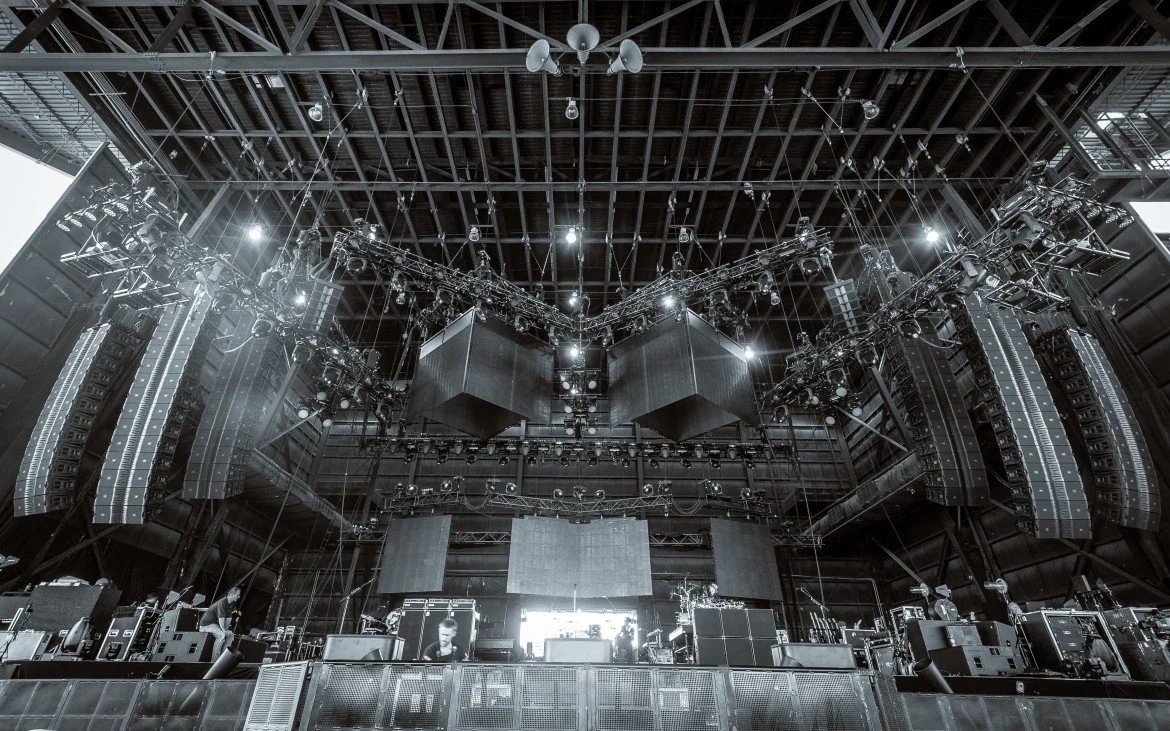
Major tours in 2025, such as Beyoncé's stadium runs, Billie Eilish's Hit Me Hard and Soft extension, and Metallica's M72 World Tour with Meyer Sound systems, have pushed boundaries with scalable, high-fidelity setups that adapt to every venue's unique acoustics.
As technology races forward, the future promises even greater immersion. Spatial and 3D audio systems, like Sphere Immersive Sound using beamforming and wave field synthesis, are already transforming concerts placing sounds in a full 360 degree field and wrapping audiences in layers of music that feel alive and directional. Artists and venues worldwide, including innovations at Radio City Music Hall and the University at Buffalo's immersive spaces, are pioneering object based mixing for truly enveloping experiences.
Behind every flawless show stands the unsung hero: the tour sound engineer, commanding digital mixing consoles to sculpt the perfect mix in real time. The symphony of tour audio is far from finished it's only getting louder, richer, and more immersive. As innovations in spatial sound, AI assisted mixing, and sustainable power continue to unfold, the next generation of world tours will transport fans into the heart of the music like never before. The stage is set, the speakers are humming, and the show... is just beginning.
