 (585) 405-4375
 contact@echotonemusic.net




Radio City Music Hall: Secrets of Iconic Sound in NYC
Nestled in the heart of Midtown Manhattan, Radio City Music Hall stands as an enduring symbol of New York's vibrant cultural landscape. This architectural marvel, often hailed as the "Showplace of the Nation," has captivated audiences for nearly a century with its unparalleled music experiences.
From the high-kicking precision of the Rockettes to blockbuster concerts by global superstars, Radio City has hosted it all, but what truly sets it apart is its legendary sound. The acoustics here aren't just good they're iconic, turning every note, every whisper, and every roar into an unforgettable auditory journey.
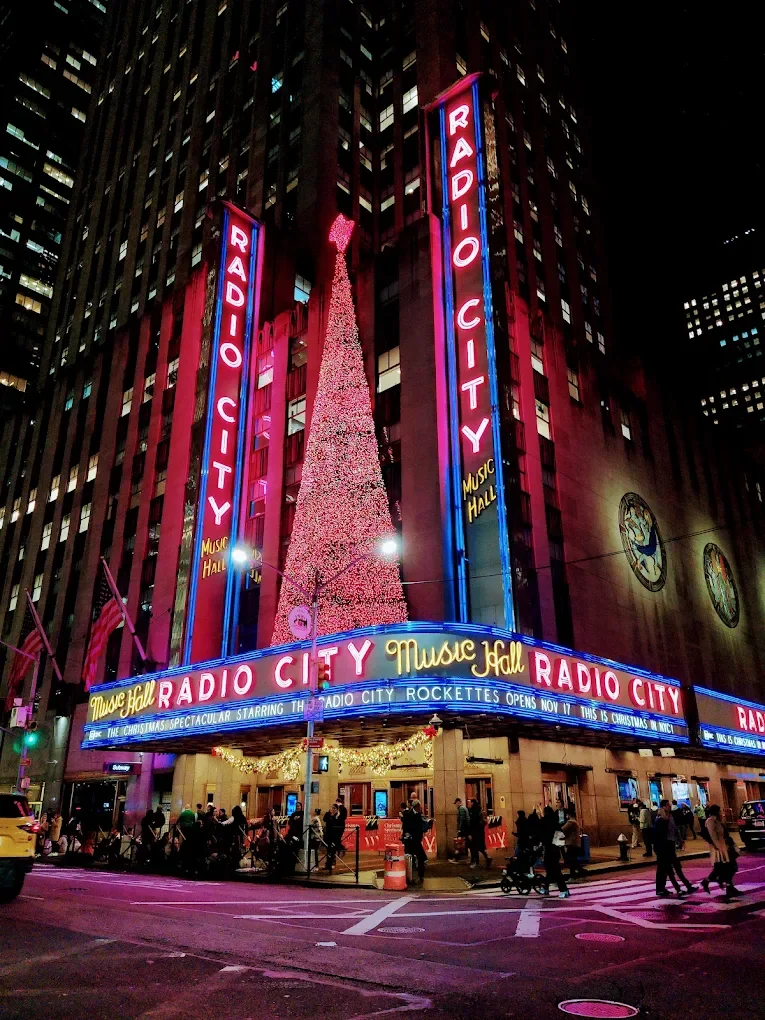
Built in 1932 as part of the ambitious Rockefeller Center project, Radio City Music Hall was designed to be a palace for the people blending film, stage shows, and live performances in one grand venue. Over the decades, it has evolved into a premier spot for concerts, Broadway style spectacles, and special events, drawing millions of visitors annually. Its history is intertwined with New York's cultural heartbeat, from Depression era escapism to modern-day extravaganzas like the Tony Awards and MTV Video Music Awards.
In this post, we'll dive deep into the secrets behind Radio City Music Hall's iconic sound. We'll explore its rich history, the architectural genius that enhances acoustics, the cutting edge sound systems that blend old and new, the techniques sound engineers use to perfect live performances, the challenges of maintaining such excellence, and tips for visitors to make the most of their experience. Whether you're an audiophile, a music lover, or just planning a trip to NYC, understanding Radio City Music Hall sound will make you appreciate why it's considered one of the best concert venues NYC has to offer. Let's uncover what makes this place a sonic legend.
History of Radio City Music Hall
Radio City Music Hall's story begins in the early 1930s, amid the Great Depression, when visionary industrialist John D. Rockefeller Jr. leased land from Columbia University to create Rockefeller Center a sprawling complex meant to revitalize Midtown Manhattan. Originally conceived as a new home for the Metropolitan Opera, the plans shifted due to financial constraints, transforming into a mass media hub spearheaded by RCA (Radio Corporation of America).
Samuel "Roxy" Rothafel, a legendary theater impresario, played a pivotal role in envisioning two venues the larger International Music Hall, which became Radio City Music Hall, and the smaller RKO Roxy Theatre.
Construction kicked off in December 1931, with the building topping out in August 1932. It set engineering records, incorporating 15,000 miles of copper wire and 200 miles of brass pipe, reflecting the era's technological optimism.
The grand opening on December 27, 1932 was a spectacle in itself a four hour variety show featuring stars like Ray Bolger and Martha Graham. However, the lavish production flopped due to its excessive length and mismatched acts, leading to a quick pivot to a film and stage spectacle format by January 1933 after incurring a $180,000 loss.
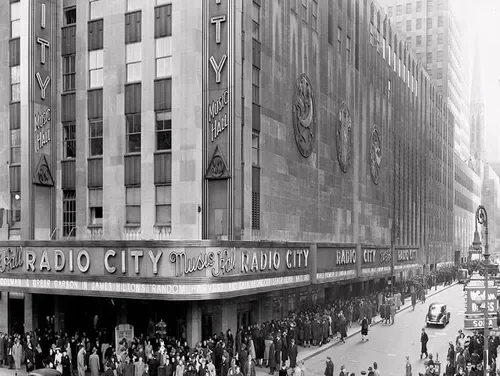
As one of the famous New York theaters, Radio City quickly became a cultural powerhouse. In its early years, it premiered over 700 films, including classics like King Kong (1933) and The Lion King (1994). It hosted the Rockettes' debut in 1932, and their Christmas Spectacular became an annual tradition starting in 1933. During World War II, the hall supported the war effort with fundraisers and morale boosting shows, such as a 1941 event that raised $25,000 for Britain.
The post war boom saw Radio City thrive, but by the 1970s, declining attendance and financial woes threatened its existence. In 1977, it attracted only 1.5 million visitors far short of the 4 million needed to break even. Plans to demolish it sparked outrage, leading to its designation as a New York City Landmark in 1978 (interior on March 28, exterior on April 23) and addition to the National Register of Historic Places on May 8, 1978. Public campaigns, including efforts by the Showpeople's Committee, saved it, and a 1979 renovation shifted focus to concerts and live events.
The 1980s and 1990s brought further evolution. It hosted the Grammy Awards in 1980 and 1998, the Tony Awards from 1997 to 2019 (and again in 2022 and 2025), and multiple MTV Video Music Awards. A major $70 million restoration in 1999 revived its Art Deco splendor, including new seats and curtains. Leased to Madison Square Garden Entertainment in 1997, it weathered the COVID-19 pandemic, closing in 2020 and reopening in June 2021 with vaccine mandates.
Today, as a cornerstone of NYC concert halls, Radio City continues to host diverse events, from the NFL Draft (2006–2014) to concerts by artists like Adele (2015) and Britney Spears (2018). Its history underscores its importance in NYC cultural history, blending nostalgia with innovation to remain a global entertainment icon.
Design and Architecture That Enhance Sound
Radio City Music Hall's acoustics are no accident they're the result of meticulous Art Deco design that prioritizes sound quality. Designed by architect Edward Durell Stone for the exterior and interior designer Donald Deskey, the venue embodies the 1930s' modernist ethos, where form and function harmonize to create an auditory paradise.
The auditorium's oval shape was a deliberate choice, endorsed by acoustic experts of the time for optimal sound distribution. Unlike traditional rectangular theaters, this curved form minimizes echoes and dead spots, ensuring clarity across its 5,960 seats.
The ceiling, with its eight telescoping bands evoking the "northern lights," not only adds visual drama but also helps diffuse sound waves evenly. Fabric silhouette patterns on the walls, depicting performers and motifs by Ruth Reeves, further absorb unwanted reflections while maintaining aesthetic elegance.
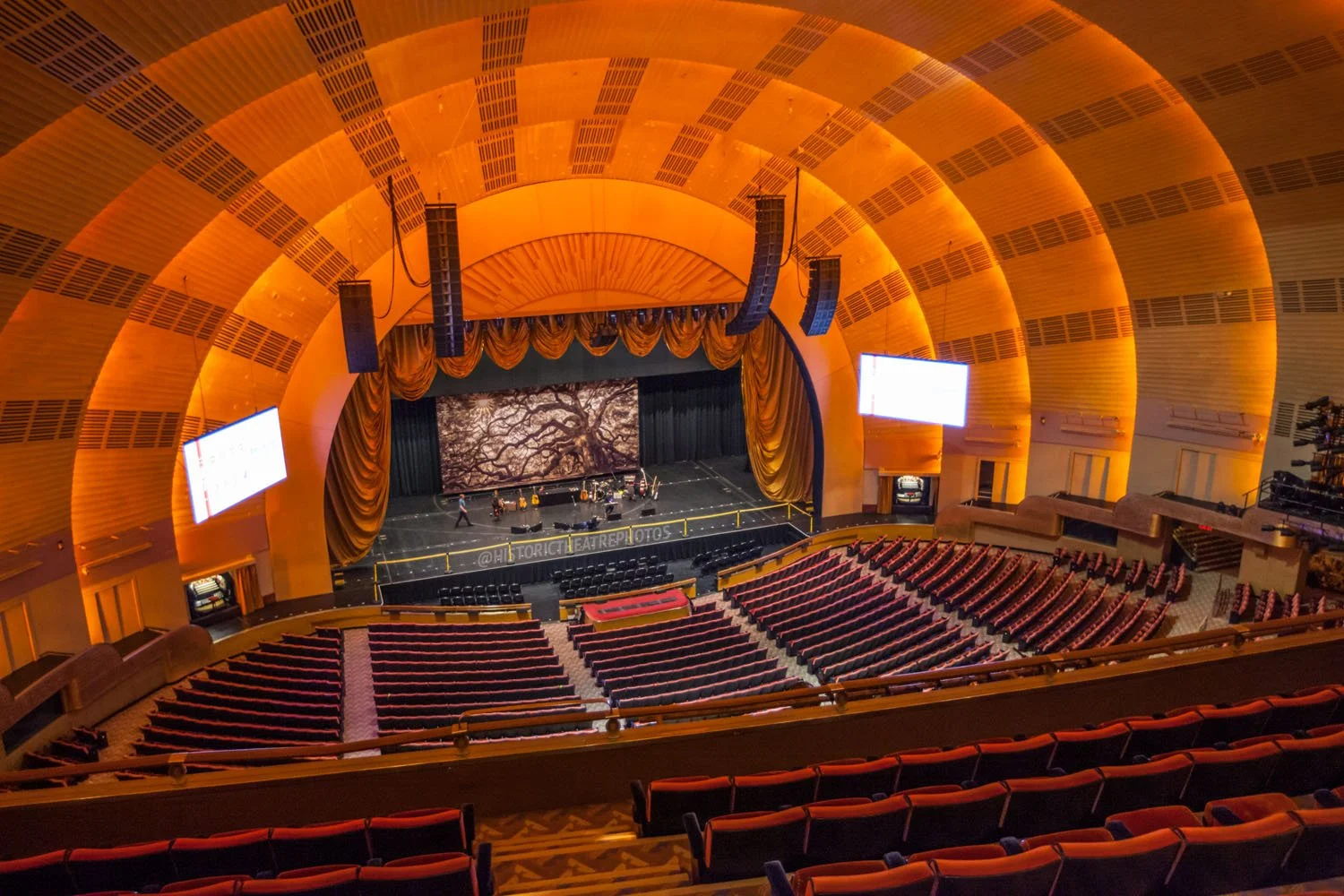
Ceiling height plays a crucial role: the proscenium arch soars 60 feet high and 100 feet wide, allowing sound to project naturally from the stage. The raked seating arrangement 3,500 orchestra seats plus three shallow mezzanines ensures line of sight and sound line alignment, with no obstructive balconies or boxes. Materials like plush red upholstery (insisted upon by Roxy Rothafel), terrazzo floors, and marble walls were selected for their acoustic properties they reflect high frequencies for brightness while absorbing lows to prevent muddiness.
Art Deco elements extend to practical acoustics. Grilles in the arches conceal air conditioning vents, amplifying equipment, and organ pipes, integrating technology seamlessly. The Grand Foyer, with its 165 foot length and Ezra Winter's massive mural, uses mirrors and balconies to create spatial depth that subtly enhances ambient sound. Even the lounges and restrooms incorporate geometric designs in glass, aluminum, and chrome, which contribute to overall sound control.
This theater design for sound has made Radio City a benchmark for best sound architecture NYC. Its hydraulic stage recognized as an ASME Historic Mechanical Engineering Landmark in 2001 allows for dynamic setups that adapt to acoustic needs, from intimate solos to full orchestras. A space where sound travels with precision, making every performance feel intimate yet grand. As one expert noted in a 1932 Architectural Forum, the oval roof trend was unanimous among acoustics pros for theaters like this.
Over the years, these features have been preserved through restorations, ensuring the original Radio City Music Hall acoustics remain as vibrant as ever. It's a testament to how architecture can elevate sound to iconic status.
State of the Art Sound System
Radio City's audio prowess combines historical charm with modern innovation, creating an iconic theater sound that's unmatched in pro audio NYC. At its core is the Sphere Immersive Sound system, introduced in October 2025 by MSG Entertainment, marking a $7 million upgrade that propels the nearly century old venue into the future.
This system, powered by Holoplot technology, features over 7,000 individually amplified loudspeaker drivers, enabling 3D audio beamforming and wave field synthesis. Unlike traditional setups, it "sculpts" sound digitally, directing precise audio to every seat without distortion. Artists can optimize mixes for specific zones, ensuring consistency from the pit to the third mezzanine. Supplemented by L-Acoustics surrounds and fills, it's the world's most advanced concert audio system, debuting with the 2025 Christmas Spectacular starring the Rockettes.
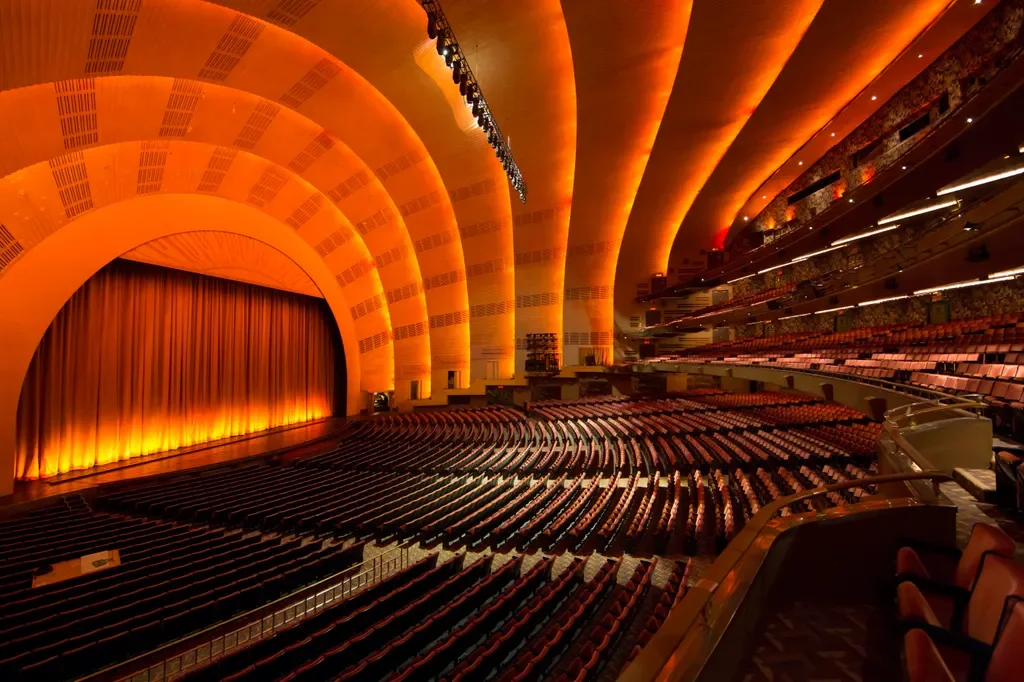
Historically, Radio City's sound evolved from its original Wurlitzer organs the largest ever built by the company, with 58 ranks and 4,178 pipes. Installed in 1932, these provided rich, orchestral tones for broadcasts and shows, controlled from twin consoles. By the 1950s, upgrades supported 3D films, and in the 2010s, a Meyer Sound LEO Family system was added for reinforcement. The 2025 Sphere integration blends this legacy with cutting edge tech, using directional beams to overcome the hall's vast scale.
the ability to host "two concerts simultaneously" in theory, thanks to pinpoint audio delivery. Amplifiers and mixers are state of the art, with digital consoles allowing real time adjustments. Speakers are hidden behind screens and arches, preserving Art Deco aesthetics while delivering immersive experiences. This fusion of old and new makes Radio City Music Hall audio system a model for other venues, ensuring every performance resonates with clarity and power.
Secrets Behind Perfect Live Sound
The magic of Radio City Music Hall live sound lies in the hands of its sound engineers, who employ advanced techniques to tailor acoustics for diverse events. For concerts, they leverage the Sphere system's 3D beamforming to create spatial audio, where instruments feel like they're surrounding the audience. This involves mapping the venue digitally and adjusting waves to minimize phase cancellation, ensuring bass thumps evenly and vocals cut through.
For Broadway style shows like the Christmas Spectacular, tuning shifts to natural reinforcement. Engineers use wave field synthesis to enhance dialogue and choreography sounds, blending mics with the hall's inherent acoustics. Pre show calibrations account for crowd absorption, with tools like SMAART software analyzing room response.
Adele's 2015 live recording captured intimate vocals flawlessly, thanks to precise mixing. The Grateful Dead's 1980 shows benefited from the Meyer system, delivering psychedelic jams with clarity. During the 2025 New York Philharmonic concert, the inaugural Sphere use showcased beamforming's ability to isolate sections for orchestral depth.
Other techniques include delay towers for upper levels, subwoofer arrays for low end control, and AI assisted monitoring to combat feedback. This makes Radio City one of the iconic music venues for concert acoustics NYC, where sound isn't just heard it's felt.
Challenges in Maintaining Iconic Sound
Maintaining Radio City's sound involves balancing vintage architecture with modern demands. The 1930s design, while acoustically brilliant, poses issues like uneven reflections in the vast space. Crowd noise up to 6,000 people can muddy mixes, requiring constant EQ adjustments.
Upgrades like the 2025 Sphere system address this but challenge integration without altering landmarks. Historical organs, once muffled in the 1990s, needed repairs, as in 1965 1966. Financial woes in the 1970s led to deferred maintenance, risking sound quality.
1979 shifted formats, 1999 added tech, and ongoing calibrations ensure consistency. Engineers use absorptive materials and digital tools to tackle acoustic challenges NYC venues face, preserving the hall's legacy while evolving.
Visitor Experience
For an unforgettable audio experience at Radio City Music Hall, aim for the center Orchestra rows 8–10 or the front Mezzanine. These seats make the most of the hall’s legendary acoustics, delivering clear, balanced sound. Seats on the far sides of sections 100 or 700 may experience slight audio distortion, so plan accordingly.
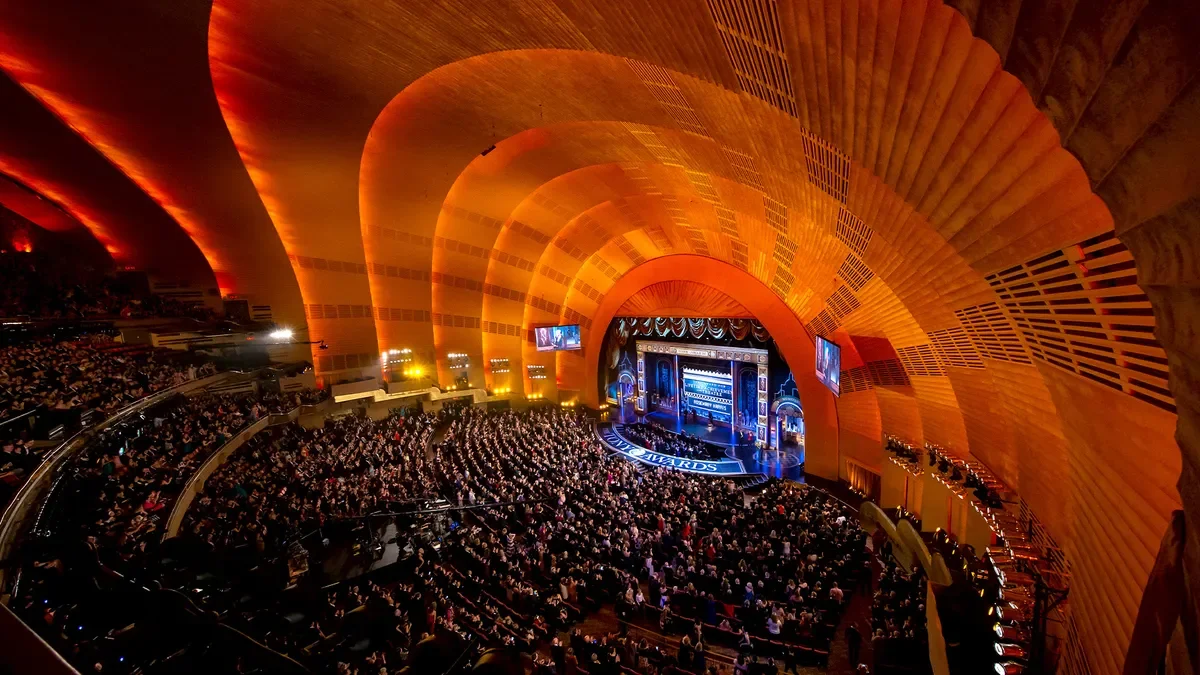
Arrive early to catch behind the scenes tours, which reveal the hall’s hidden acoustic secrets. Audiophiles often highlight the hall’s immersive sound, and performers including the New York Philharmonic praise its unmatched precision. Thanks to advanced Sphere technology, nearly every seat delivers top-tier sound quality, living up to NYC’s high theater standards.
Conclusion
Radio City Music Hall stands as a testament to the perfect fusion of history, architecture, and cutting edge audio innovation. From its iconic Art Deco design to the 2025 Sphere technology upgrade, the venue continues to deliver legendary sound experiences that captivate audiences from around the globe.
Next time you’re in New York City, don’t miss the chance to experience the world-renowned acoustics of Radio City Music Hall firsthand where every note feels unforgettable.
