 (585) 405-4375
 contact@echotonemusic.net




The Hidden Audio Tech Behind Tomorrowland’s Mainstage
Tomorrowland, the iconic electronic dance music festival held annually in Boom,Belgium is more than just a gathering of music lovers it's a symphony of sensory experiences where sound reigns supreme. Since its inception in 2005, Tomorrowland has grown into one of the world's largest and most revered EDM events, attracting hundreds of thousands of attendees from across the globe. At the heart of this spectacle lies the Mainstage, a colossal structure that not only serves as the visual centerpiece but also the acoustic epicenter of the festival. The sound engineering behind it is a marvel of modern technology, blending cutting-edge audio systems, meticulous design, and innovative solutions to deliver an immersive auditory experience that matches the festival's fantastical themes.
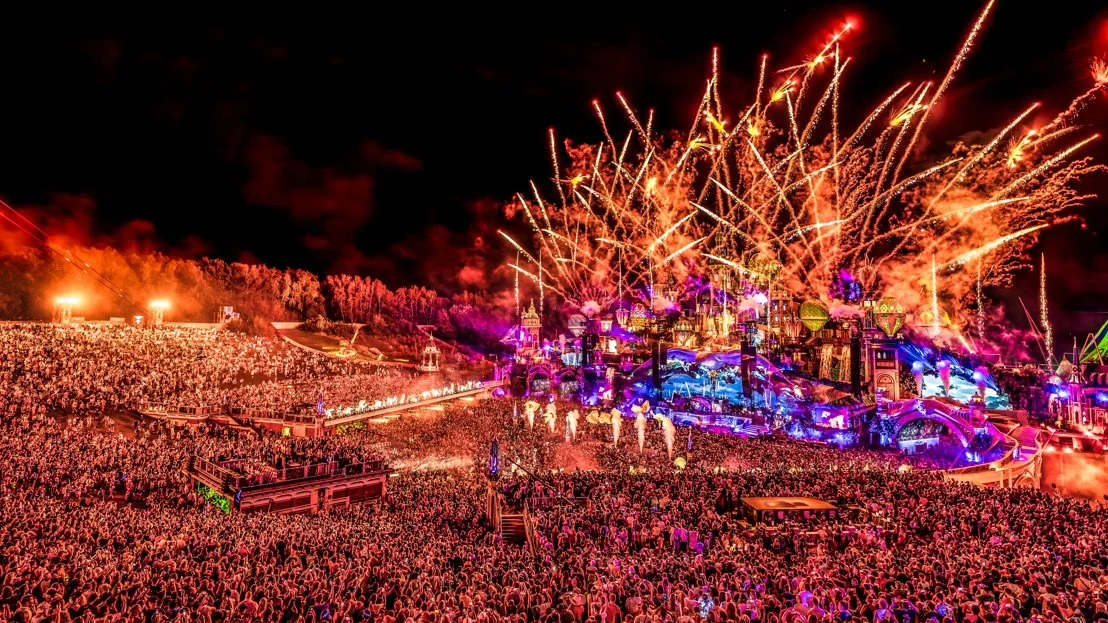
In this in depth blog post, we'll dive deep into the intricacies of Tomorrowland's Mainstage sound engineering. From the historical evolution of its audio setups to the technical specifications of speakers and amplifiers, the challenges posed by massive crowds and environmental factors, and even the dramatic events of the 2025 edition, we'll uncover what makes the sound at Tomorrowland not just loud, but legendary. Whether you're an aspiring sound engineer, a festival aficionado, or simply curious about how music festivals achieve that bone-rattling bass and crystal-clear highs, this exploration will provide a comprehensive look at the artistry and science behind the beats.
The Foundations of Festival Sound Engineering
Before delving into Tomorrowland specifics, it's essential to understand the basics of sound engineering in large scale outdoor festivals. Sound systems at events like Tomorrowland must contend with unique challenges vast open spaces, unpredictable weather, noise regulations, and the need to provide uniform audio coverage to tens of thousands of people spread over hundreds of meters.
At its core, festival sound engineering revolves around the Public Address (PA) system, which amplifies and distributes audio from DJs, live performers, and orchestral elements. Key components include:
Speakers and Arrays: These are arranged in line arrays (vertical stacks) or point source configurations to project sound efficiently. Line arrays are particularly popular for their ability to control dispersion and achieve long throws distances over which sound remains coherent and powerful.
Amplifiers: These power the speakers, ensuring they can handle high sound pressure levels (SPL) without distortion. Modern amps often include digital signal processing (DSP) for fine tuning.
Subwoofers: Dedicated to low frequencies, subs deliver the thumping bass that's synonymous with EDM. Configurations like cardioid or end-fire arrays help direct bass energy forward while minimizing rearward bleed.
Monitoring and Control: Engineers use software like Soundvision for modeling coverage and tools like LA Network Manager for real-time monitoring and adjustments.
Immersive Technologies: Emerging systems like L-ISA provide spatial audio, making listeners feel enveloped by sound rather than bombarded from a single direction.
Festivals must balance SPL—often peaking at 100-110 dB—to excite the crowd without causing hearing damage or violating local laws. Tomorrowland exemplifies excellence in this field, partnering with industry leaders like L-Acoustics to push boundaries.
A Brief History of Sound at Tomorrowland
Tomorrowland's sound engineering has evolved dramatically since its early days. In the festival's inaugural year, the setup was modest, relying on basic PA systems suitable for a few thousand attendees. As the event scaled reaching over 400,000 visitors across two weekends by the 2010s the audio demands grew exponentially.
By 2011, Tomorrowland began a long term collaboration with L-Acoustics, a French audio manufacturer renowned for high-fidelity systems used in concerts and festivals worldwide. This partnership marked a turning point, introducing professional grade K Series line arrays that could handle the Mainstage's expanding size and crowd capacity.
In 2016, for instance, the Mainstage featured a robust setup with four arrays two main hangs of four K1-SB and 16 K1 each, plus two 'off' hangs of three K1-SB and 18 K1 each. This was complemented by 48 SB28 subwoofers for low-end support. KARA cabinets filled nearfield gaps, ensuring even distribution across the sloping terrain of De Schorre park. Power came from 66 LA12X amplifiers for the Main and Opera stages, with additional LA8 and LA4X units handling delays and other areas.
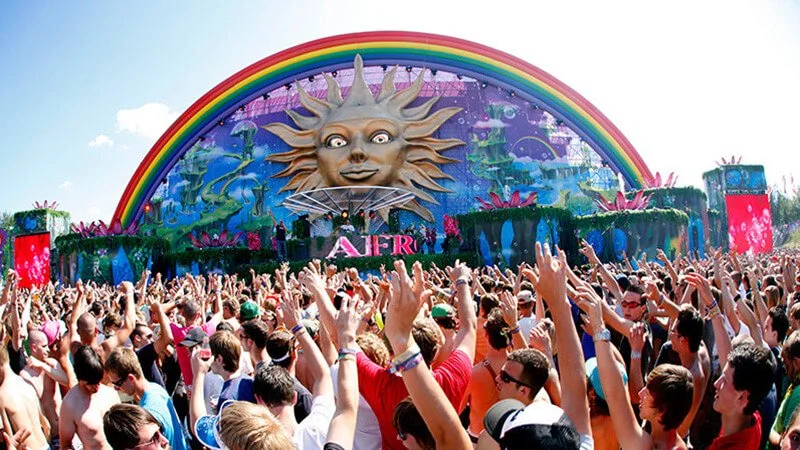
This configuration allowed for precise coverage prediction using L-Acoustics' Soundvision software, which simulates acoustics based on venue geometry. The result? Consistent SPL from front to back, minimizing hot spots and dead zones.
Fast forward to 2018, and Tomorrowland experimented with immersive sound on the Atmosphere Stage, deploying L-ISA technology for a 20.1 surround system. While not on the Mainstage, this innovation hinted at future possibilities, offering a 360 degree experience that enhanced EDM's dynamic range.
By 2019, the Mainstage audio had reached new heights. Over 600 L Acoustics cabinets were deployed across stages, with the Mainstage alone boasting 116 K1 cabinets, 86 KS28 subwoofers, 76 SB28 subs, and more. Subwoofers were flown in end-fire configurations to achieve a 160 meter throw, addressing décor constraints that prevented central placement. This setup reduced noise complaints by 95% through exceptional directivity control, where sound beams could be precisely stopped to avoid spillover.
The 2020s brought further refinements, with the 2024 Mainstage incorporating 230 speakers and subs amid a structure 160 meters wide and 36 meters high. This era emphasized sustainability, with efficient amplifiers reducing power consumption while maintaining peak performance.
The Technical Backbone
The Mainstage's sound system is a testament to engineering precision. L-Acoustics' K Series dominates, known for its high SPL output (up to 149 dB per cabinet) and controllable dispersion.
Speaker Types and Arrays
K1 and K1-SB: These form the core of main hangs, providing long-throw capabilities. In typical setups, mains include 16-18 K1 per array, with K1-SB for extended low frequency control.
K2 and Kara: Versatile for side fills and delays, K2 offers variable directivity (70° to 110° horizontal), ideal for wide coverage. Kara, lighter and more compact, handles nearfield and monitoring.
Subwoofers (KS28, SB28, SB18): Crucial for EDM's bass heavy tracks. Configurations like end-fire (speakers aligned with phase delays) create directional bass, reducing rearward energy that could interfere with backstage areas or neighbors.
For a 160-meter crowd, arrays are flown high, with additional boxes angled downward. Delays secondary arrays midway through the field ensure rear attendees hear the same quality as those up front, with only a 10 dB SPL drop across the distance.
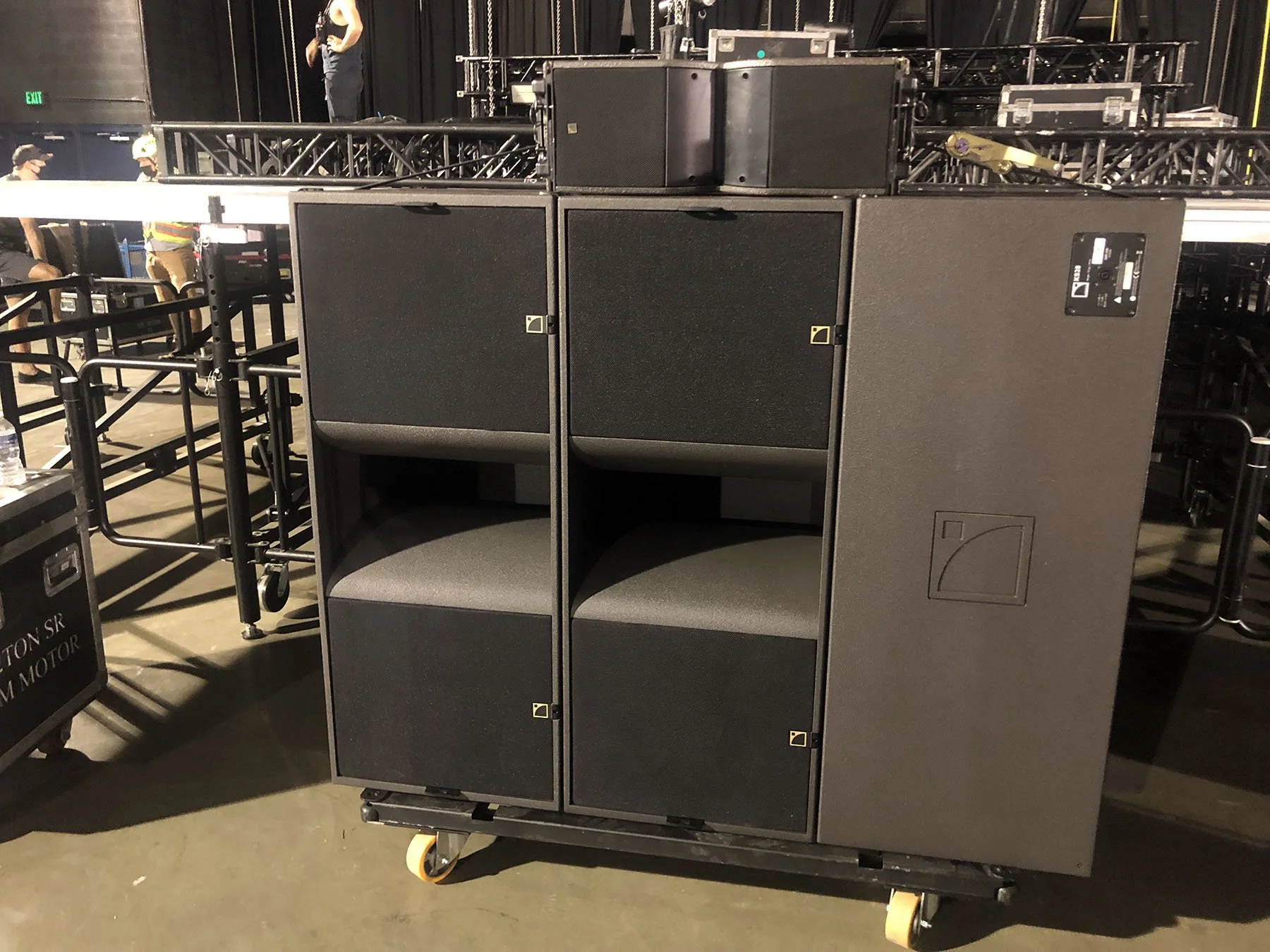
This image showcases the impressive array of L-Acoustics speakers towering over the Mainstage, illustrating the scale and density of the setup.
Amplifiers and Power Management
Amplifiers are the unsung heroes, converting electrical signals into acoustic power. Tomorrowland uses L-Acoustics' LA series:
LA12X: High power (up to 12,000W), with DSP for EQ, limiting, and protection. In 2016, 66 units powered the primary stages.
LA8 and LA4X: For secondary systems, offering efficient Class D amplification.
These amps are networked, allowing engineers to monitor temperatures, loads, and faults remotely. Power efficiency is key; modern designs minimize heat and energy waste, aligning with Tomorrowland's eco friendly initiatives.
Directivity and Coverage Control
Directivity how sound is focused is critical. L-Acoustics' WST (Wavefront Sculpture Technology) ensures coherent wavefronts, reducing comb filtering (phase interference). Tools like Autosolver in Soundvision automate array splay angles for optimal coverage, achieving results manual tuning can't match.
Pieter Dom of NoizBoyz praised this: "Leveraging the Autosolvers tools in Soundvision made a surprising difference in the coverage... it’s that fine-tuning that we simply cannot achieve manually in a festival setting."
Immersive Sound Innovations
While the Mainstage traditionally uses a mono configuration for even coverage avoiding stereo imaging issues over large distances Tomorrowland has pioneered immersive audio elsewhere, influencing future Mainstage designs.
In 2018, the Atmosphere Stage featured L-ISA, a 20.1 system with 18 arrays of four Kara each in a 270-degree circle, plus eight K1 per side and 24 KS28 subs. This allowed spatial panning, where effects could move around the audience, enhancing immersion.
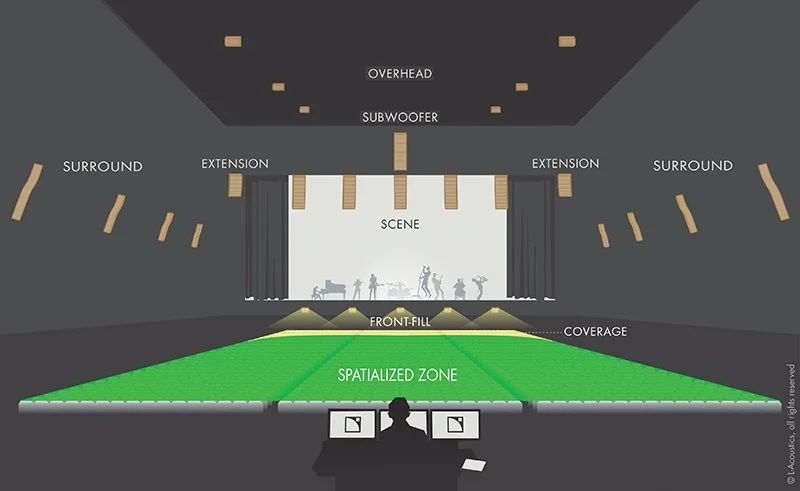
Benefits include "deeply vibrant beats" and a "full on 360 degree experience," as noted by engineers. Bart Revier of 3AM Media said, "We felt like kids in an undiscovered world with endless possibilities when we created the custom made audio for L-ISA."
Though not yet standard on the Mainstage, L-ISA's success suggests potential integration, perhaps for special sets or hybrid mono immersive modes.
Here, you can see the intricate speaker hangs from a 2016 setup, highlighting the evolution toward more advanced systems like L-ISA.
Challenges in Sound Engineering at Tomorrowland
Delivering pristine sound to 50,000+ attendees in an open-air mega-festival like Tomorrowland is a technical balancing act. Behind the magic lies a series of complex engineering challenges that demand precision, experience, and world class audio systems.
Crowd and Venue Dynamics
Tomorrowland’s Mainstage field features natural slopes, requiring sound to project uphill without losing clarity or impact. As crowds grow denser, human bodies absorb high-frequency energy, forcing engineers to compensate by subtly boosting treble in relay zones.
To maintain phase accuracy and sonic coherence across vast distances, engineers rely on mono reinforcement systems with relay lines rather than traditional delays a method widely discussed and endorsed in professional sound engineering circles.
Noise Regulations and Neighboring Communities
With residential areas located as close as 20 meters from the festival perimeter, Tomorrowland operates under strict noise regulations. Engineers use flown subwoofers and highly directional speaker arrays to control low-frequency dispersion.
These techniques dramatically reduce sound spill beyond the site, cutting noise complaints while preserving the festival’s legendary on site energy.
Weather Conditions and System Reliability
Outdoor festivals face unpredictable elements. Rain, wind, and temperature shifts directly affect sound propagation humidity alone can alter the speed of sound and impact timing accuracy.
All audio systems are fully weatherproofed, with redundant signal paths, backup amplifiers, and fail safe processing in place. Amplifiers feature advanced thermal protection to prevent overheating during Tomorrowland’s marathon sets.
Power Supply and Large-Scale Logistics
Powering hundreds of amplifiers, processors, and control systems demands industrial grade generator infrastructure. While modern audio designs focus on efficiency, redundancy remains non negotiable.
Multiple generator backups ensure uninterrupted sound, safeguarding performances from outages and maintaining consistency from the first drop to the final encore.
The Dramatic 2025 Edition
2025 tested Tomorrowland's mettle when a massive fire destroyed the original Mainstage just days before opening. The 45 meter high, 160 meter wide structure two years in the making was reduced to ashes, threatening the event.
In a remarkable turnaround, nearly 200 workers rebuilt a smaller stage (70 meters wide, 8 meters high) overnight, starting at 2 a.m. No fireworks were used, but the show went on. Crucially, Metallica lent parts from their tour, including speaker arrays, ensuring audio quality wasn't compromised.
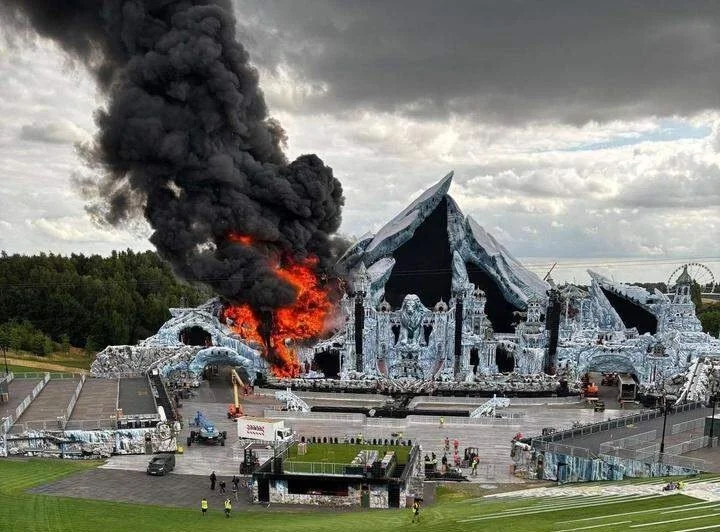
The new setup featured nearly 100 sound boxes, each valued around €45,000, highlighting the financial stakes. Engineers adapted quickly, maintaining mono configuration for coverage. Attendees and artists alike praised the resilience; one X post noted, "I am without words for how fucking impressive the @tomorrowland prod team is."
This incident underscored the human element: sound engineers like those from NoizBoyz and Phlippo Productions worked tirelessly, proving that behind the tech are dedicated professionals.
This close up from a video capture reveals the L-Acoustics speakers in action, a staple even in the rebuilt 2025 stage.
Behind the Scenes
Sound engineers at Tomorrowland are maestros of chaos. Teams from NoizBoyz design systems, using modeling software for predictions. On site, FOH (front of house) engineers mix live, balancing levels for genres from techno to trance.
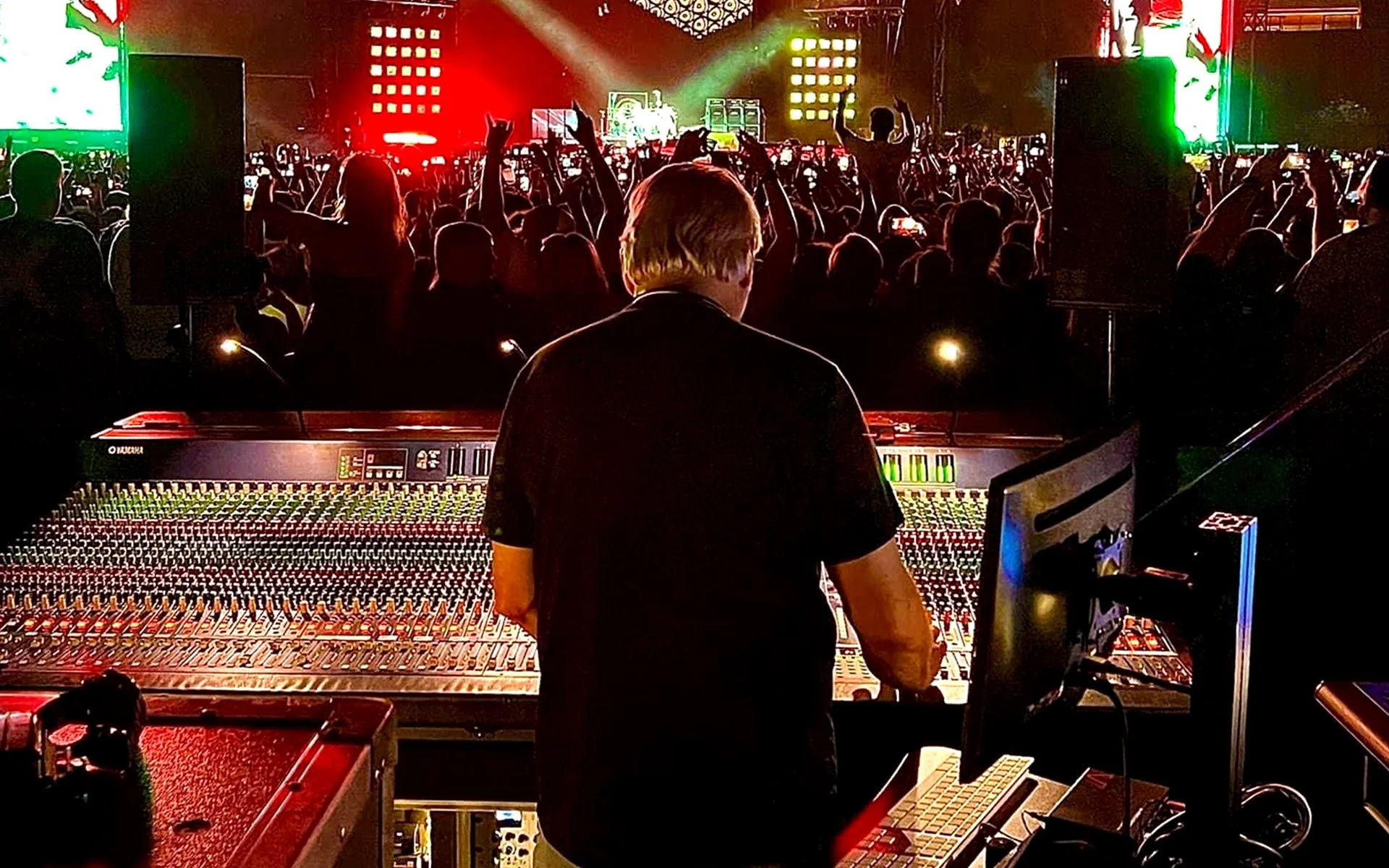
Interviews reveal the passion: Pieter Dom emphasized reliability: "We know we can rely on the K2. It has exceptional directivity control." Joost Machiels of Phlippo noted L-ISA's potential: "I think there is a lot more to discover and that’s really exciting."
Training involves acoustics, electronics, and software proficiency. Safety is paramount rigging speakers high requires certified technicians.
The Future of Sound Engineering at Tomorrowland
Looking ahead, Tomorrowland's sound will likely embrace more AI-driven optimizations, like adaptive EQ based on real-time crowd data. Expanded immersive audio could make the Mainstage a spatial wonderland. Sustainability will drive lighter, more efficient gear.
With themes evolving yearly, sound will integrate more with visuals synced lasers, fountains, and audio for multisensory bliss.
Conclusion
The sound engineering behind Tomorrowland's Mainstage is a blend of art, science, and sheer determination. From L Acoustics' precision arrays delivering 160-meter throws to innovative L-ISA immersion, it's designed to unite crowds in euphoric harmony. Even amid 2025's fire, the festival's audio prowess shone, proving that great sound isn't just heard it's felt.
