 (585) 405-4375
 contact@echotonemusic.net




Bad Bunny, the trailblazing Puerto Rican artist Benito Antonio Martínez Ocasio, has revolutionized live performances in Latin urban music. From the beach themed extravagance of the World's Hottest Tour (2022) to the intimate yet explosive 360 degree setups of the Most Wanted Tour (2024), the groundbreaking No Me Quiero Ir de Aquí residency in Puerto Rico (2025), and the ongoing Debí Tirar Más Fotos World Tour (starting late 2025), his concerts pack stadiums and arenas with electrified crowds.
These events deliver thunderous reggaeton beats, trap intensity, and orchestral fusions to tens of thousands. The true heroes? Audio engineers who mastermind systems conquering vast spaces, unpredictable weather, and genre demands for bass heavy lows and razor sharp vocals. This comprehensive exploration reveals the technologies, teams, and techniques powering Bad Bunny's sonic spectacles, drawing from tours supported by Clair Global's Cohesion systems and regional adaptations like L Acoustics.
The Evolution of Bad Bunny's Live Sound Systems
Bad Bunny's audio journey parallels his ascent to global stardom. Early arena tours built foundations, but the World's Hottest Tour (2022) marked stadium dominance, grossing over $435 million and setting Latin tour records. Clair Global provided Cohesion PA, with configurations like 32 CO12 mains per side, 40 CP-218 subs, and delay towers for coverage in venues like SoFi Stadium or Yankee Stadium.
The Most Wanted Tour (2024) shifted to 360-degree arenas, demanding uniform sound in all directions. Clair Global deployed a massive 220 box Cohesion system ten clusters of sixteen CO10 mains (160 total), six clusters of six flown CP218 II+ subs (36 total), and 24 CP6+ fills. This setup excelled in vertical coverage for tiered seating and medium throws typical of arenas.
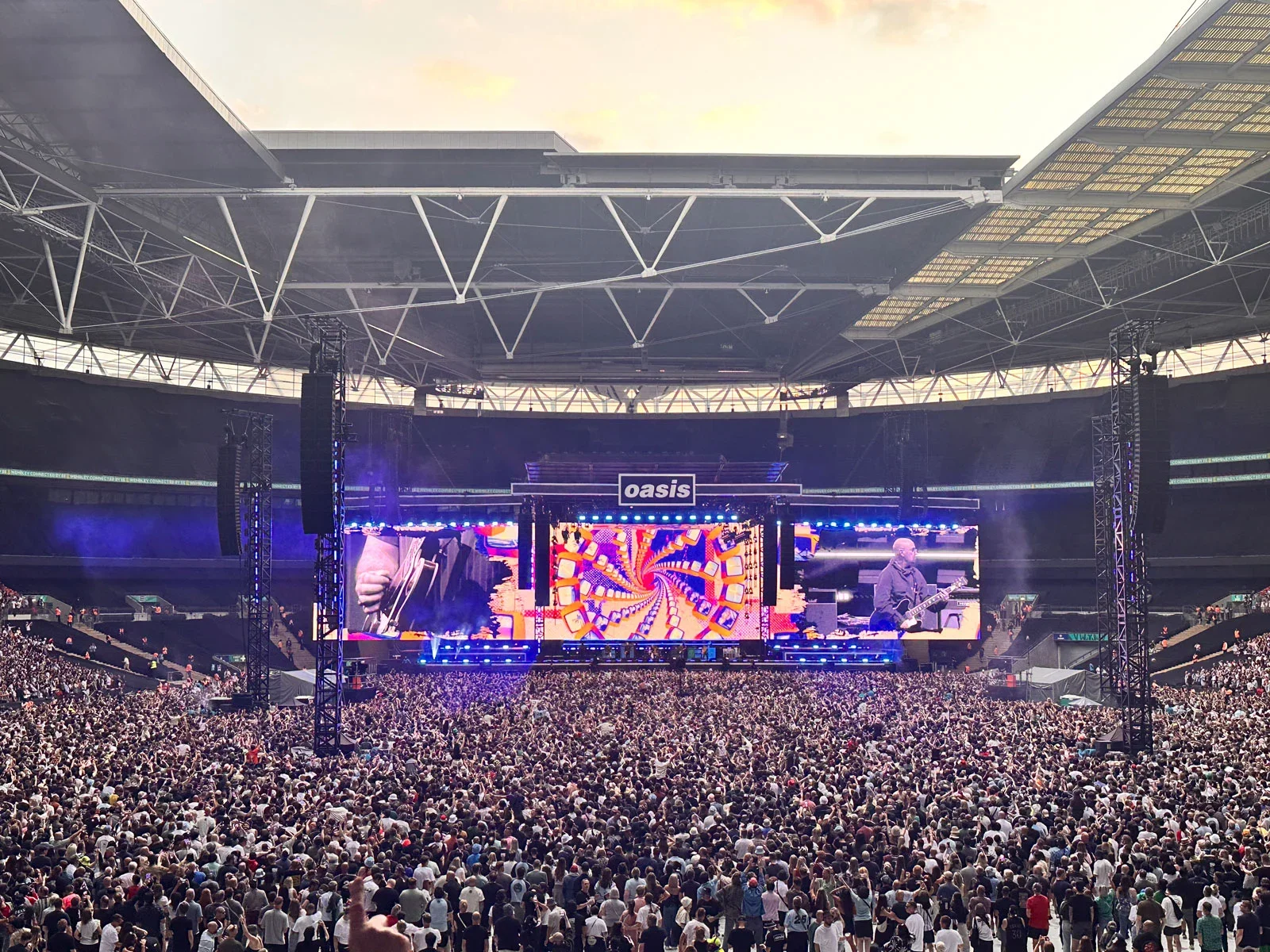
In Puerto Rico's historic three night Choliseo finale (2024), the team switched to L Acoustics for the in the round format ten hangs including K2 and Kara II arrays, plus 48 KS28 subs delivering thunderous bass praised for reggaeton's needs.
The 2025 No Me Quiero Ir de Aquí residency pushed boundaries further with a unique ceiling mounted Cohesion setup 128 CO12 speakers in circular hangs 84 feet high, preserving sightlines around a massive mountain stage set and jíbaro homestead. Innovative horizontal rigging without pull-backs created consistent distance and immersive sound.
The ongoing Debí Tirar Más Fotos World Tour continues Clair Global's partnership, adapting Cohesion for global stadiums.
Core Technology: Line Arrays, Subwoofers, and Dispersion Control
Modern stadium tours like Bad Bunny’s depend on large-format line array systems not simply for volume, but for coherent wavefront generation, phase consistency, and controlled dispersion across extremely wide and deep audience areas. Line arrays allow engineers to predict how sound will behave over distance, making them essential for open air stadiums and complex arena geometries where uncontrolled reflections can quickly destroy clarity.
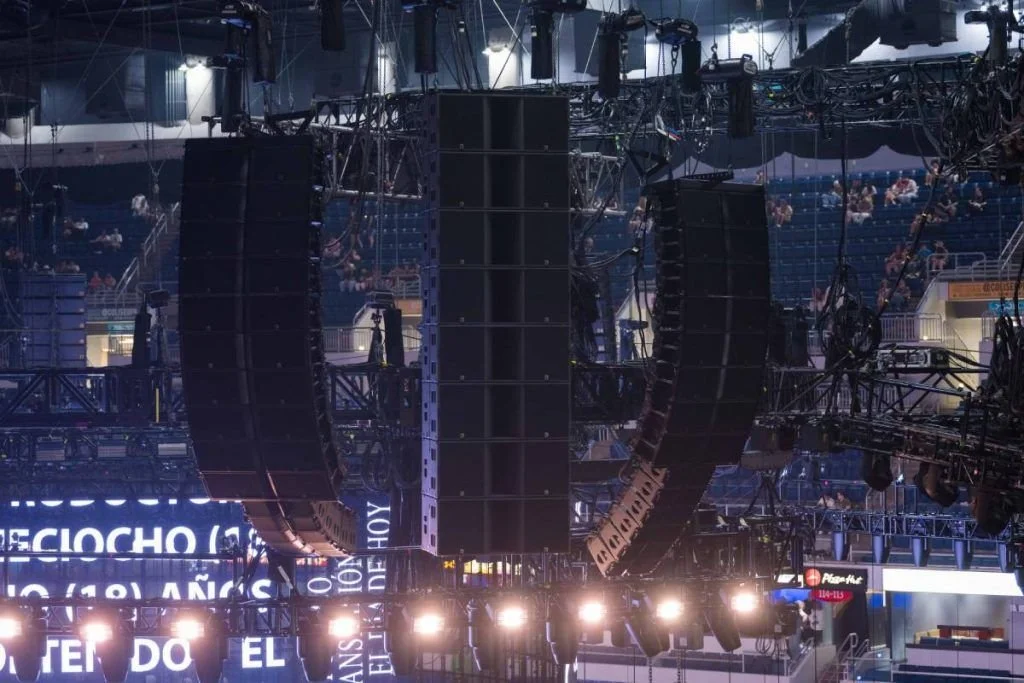
Systems such as Cohesion CO10/CO12 and L-Acoustics K2 or Kara II are commonly deployed in multi hang configurations to maintain tonal consistency from the front rows to the upper tiers. Advanced horn designs in the Cohesion series help minimize feedback and unwanted spill critical when Bad Bunny performs on extended bridges or in front of PA clusters, where microphones are exposed to high SPL and complex reflections. The CO10’s tight 10-degree vertical dispersion is especially effective in steep arena rakes, allowing engineers to precisely aim energy at the audience while avoiding ceilings, back walls, and reflective structures.
In 360 degree or near in the round setups, coverage becomes even more demanding. Multiple evenly spaced cluster mains, side hangs, and delays are required to achieve homogeneity. Technologies like Panflex enable on site adjustment of horizontal and vertical dispersion, allowing the system to be tuned to the venue’s exact layout rather than relying on fixed coverage patterns. This adaptability helps maintain consistent frequency response and intelligibility throughout the space, even as seating elevation and audience density change.
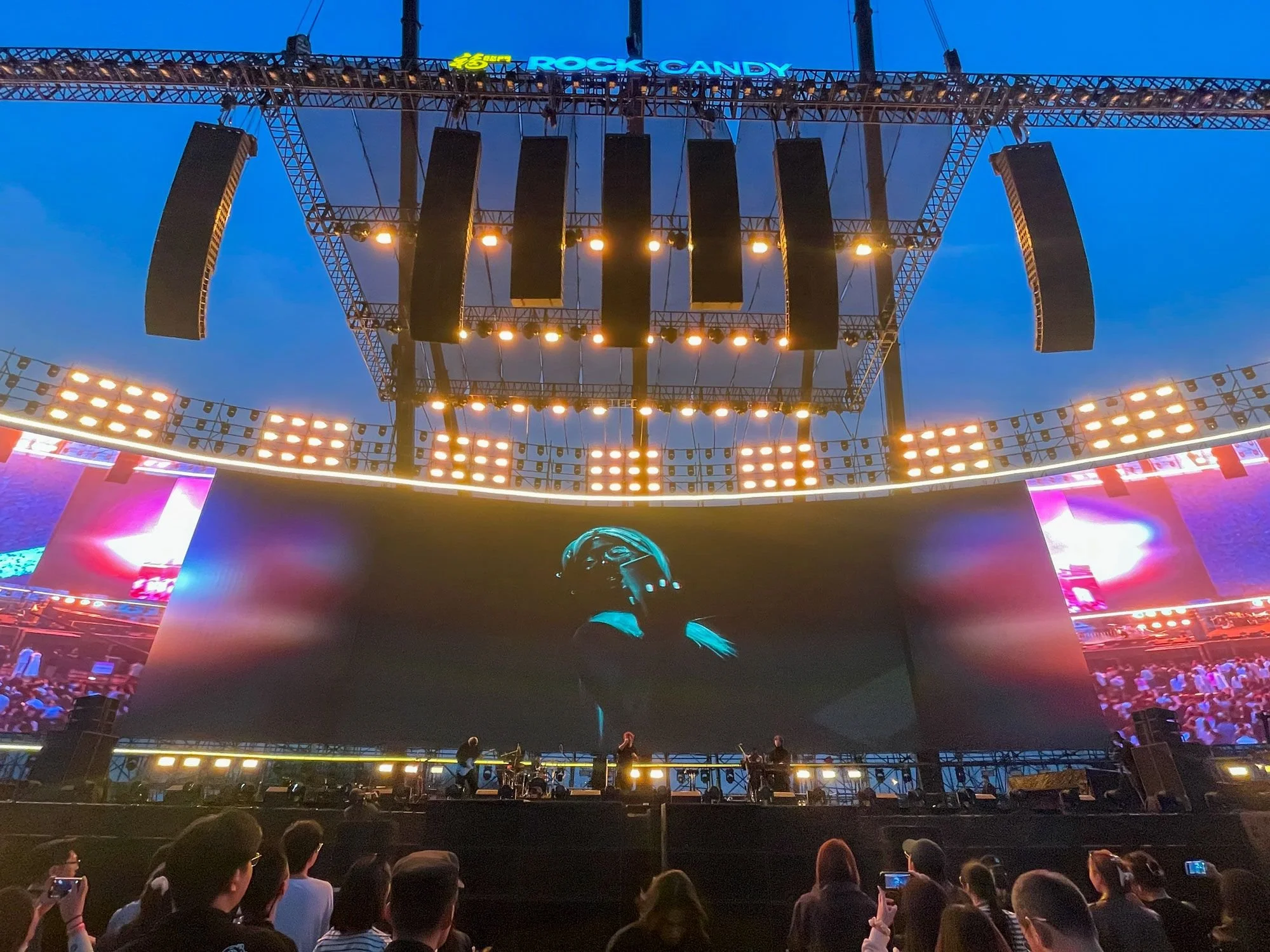
Low frequency reproduction demands special attention due to the dominance of 808s and sub-40Hz energy in reggaeton and dembow. To manage this, engineers deploy cardioid subwoofer arrays, often flown or carefully ground stacked, using systems such as KS28 or CP218 II+.
These configurations focus bass energy forward while canceling rear radiation, reducing stage bleed and low-end buildup that can mask vocals and midrange detail. End-fired and gradient sub arrays are frequently used to extend infrasonic impact while keeping the low end tight and controlled rather than overwhelming.
All of this is tied together through digital audio networking like Dante, which allows large channel counts to be routed redundantly over lightweight Ethernet with full remote control of DSP, timing, and system optimization. High power touring amplifiers provide the required headroom while continuously monitoring load, temperature, and signal integrity, ensuring reliability throughout long, high energy performances where system failure isn’t an option.
FOH Engineers and the Art of Mixing Reggaeton Live
At the center of Bad Bunny’s live sound is longtime front of house engineer Luis “Peewee” Velázquez, whose role goes far beyond balancing faders. Mixing reggaeton at stadium scale requires managing extreme low end energy, dense playback stems, live instrumentation, and constant stage movement all without sacrificing vocal clarity or emotional impact. Velázquez is known for his “extreme feel” approach, favoring physical impact and immediacy while maintaining control over a highly complex signal chain.
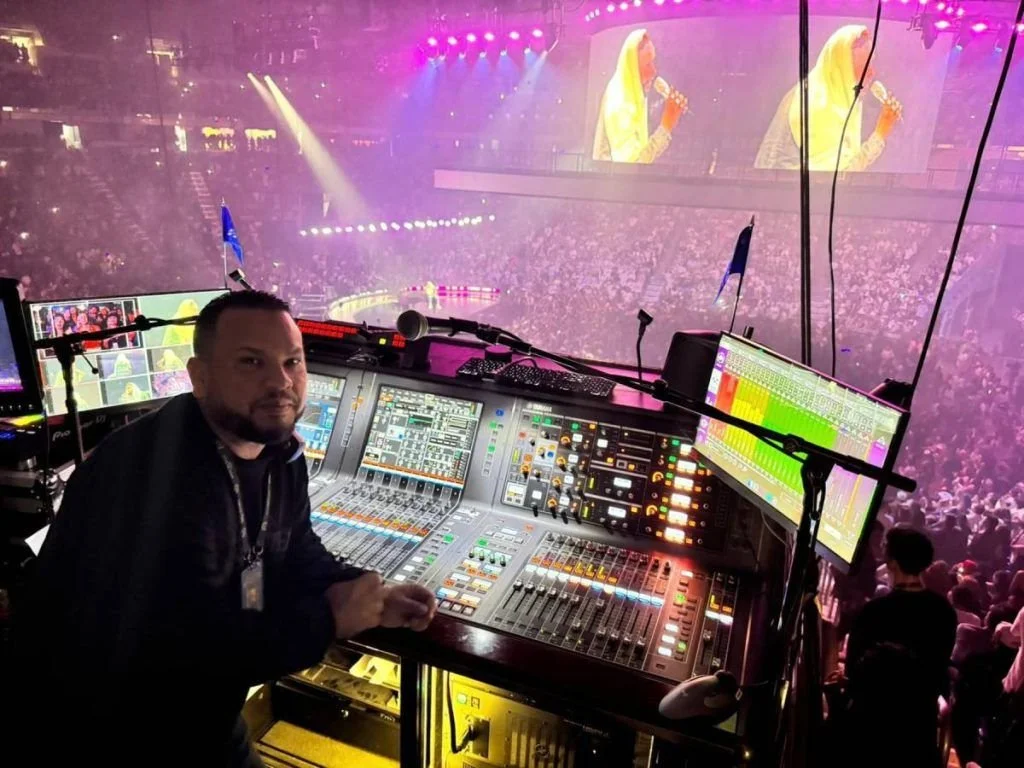
Working on high end consoles such as DiGiCo or SSL, Velázquez routinely manages 100+ input channels, blending live band elements, sequenced playback, guest vocals, and effects returns. Vocals are treated as the emotional anchor of the mix, with careful emphasis in the 2–5kHz midrange to cut through massive sub-bass and crowd noise. Dynamic control is critical during two to three hour performances, requiring constant rides on compression, EQ, and effects to maintain consistency without fatiguing the audience.
Stage design adds another layer of difficulty. When Bad Bunny performs on catwalks or elevated bridges directly in front of PA arrays, feedback risk increases dramatically. This is where system design and mixing discipline intersect advanced horn-loaded boxes and controlled dispersion allow Velázquez to push vocal presence without fighting runaway feedback, even at extreme SPL.
On the monitoring side, Brian “El Brian” Martinez crafts highly personalized in ear monitor mixes, balancing isolation with energy. Ambient microphones are blended into the IEMs to preserve crowd interaction and spatial awareness, preventing the sterile feel that can disconnect artists during large scale shows. Meanwhile, system engineer Ricardo Barragán ensures the PA behaves as a single, unified instrument, aligning arrays, optimizing phase response, and maintaining consistency night after night. Barragán has frequently highlighted the reliability and predictability of Cohesion systems, particularly under demanding touring conditions.
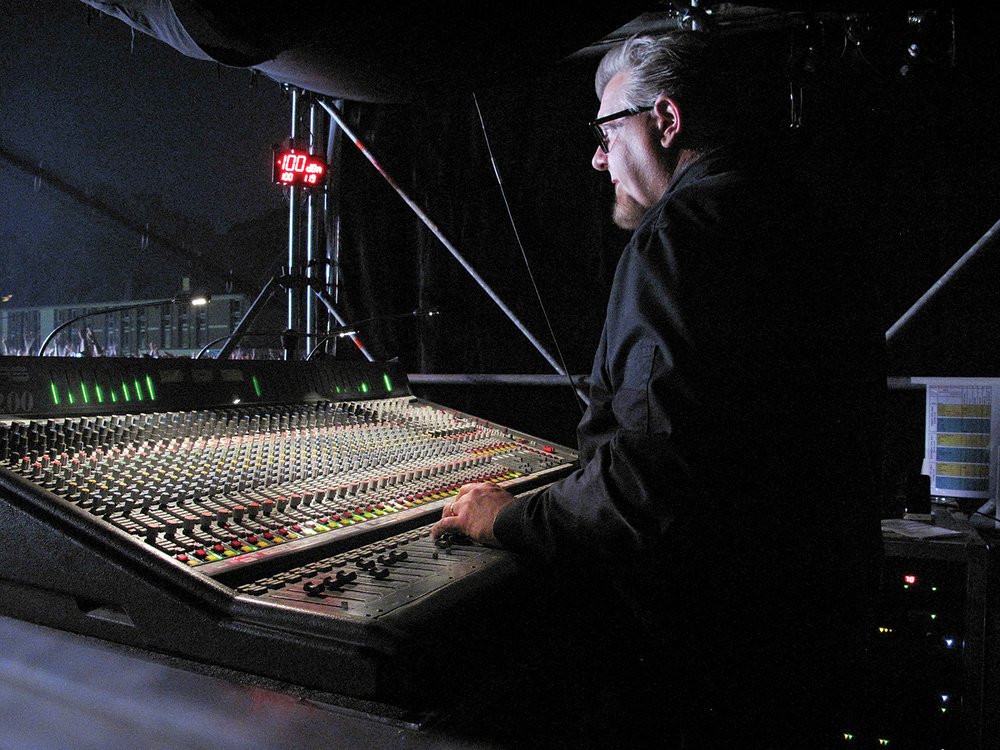
Preparation is as important as performance. The team relies heavily on virtual soundchecks, offline console sessions, and real time analysis using tools like Smaart during detailed “room walks.”
These measurements allow adjustments for temperature, humidity, wind, and venue geometry before the audience ever enters. For specialized moments such as orchestral intros featuring the 24-piece Philharmonic Orchestra Project high resolution microphones like DPA condensers are used to capture detail and dynamics, carefully blended into the urban production without losing musical nuance.
Genre Challenges: Bass Impact, Vocal Clarity, and Hybrid Elements
Reggaeton/trap requires physical bass feel, but open stadiums dissipate lows. Engineers counter with high sub counts and cardioid patterns, extending to 20-30Hz for rumble without mud.

Fast Spanish lyrics demand 2-5kHz clarity Velázquez uses multiband compression, presence boosts, and subtle distortion. In-the round performances heighten feedback risks, mitigated by directional horns and notch filters.
Hybrid shows blend live orchestra with playback requiring precise integration. Crowd noise often exceeds 110 dB, necessitating aggressive limiting and gain management.
Weather in outdoor stadiums shifts sound (wind causing 10-20 dB loss, humidity altering propagation); integrated DSP and weather stations enable auto adjustments.
Vocal processing often includes heavy autotune, saturation, and effects for that signature reggaeton sheen, balanced carefully in live mixes to maintain intelligibility amid dense instrumentation.
Wireless Systems and RF Management in High-Interference Environments
Modern stadium tours depend heavily on wireless microphones and in-ear monitoring systems, and at Bad Bunny’s scale, RF performance becomes just as critical as sound quality. Premium platforms such as Shure Axient Digital are commonly used due to their frequency diversity, ultra low latency, and real time spectrum monitoring, all of which are essential in environments saturated with fan smartphones, venue broadcast systems, Wi-Fi infrastructure, and increasingly dense 5G networks.
Before every show, dedicated RF coordinators conduct detailed spectrum scans to identify usable frequencies and potential interference sources. In international venues, this process often includes coordination with local spectrum authorities and broadcast teams, as frequency availability and regulations vary widely from country to country. Once clear channels are identified, multiple layers of redundancy are built in backup frequencies are pre-programmed, and critical vocal and IEM channels are protected with encrypted transmission to prevent dropouts, cross-talk, or unauthorized access.

Artist movement adds another layer of complexity. Bad Bunny’s performances frequently involve large stage footprints, extended catwalks, and dynamic choreography, all of which demand stable RF coverage across wide physical areas. Antenna distribution systems and carefully placed receivers ensure consistent signal strength, even during high energy moments or when the artist moves in close proximity to large LED structures and flying elements that can reflect or absorb RF energy.
In densely packed stadiums, where tens of thousands of consumer devices compete for bandwidth, advanced cognitive radio technology becomes the final safeguard. These systems continuously monitor the RF environment and can dynamically switch to cleaner frequencies in real time without audible interruption. It’s a largely invisible process, but one that plays a decisive role in maintaining uninterrupted vocals, reliable in ear monitoring, and overall performance stability at the highest level of live production.
Orchestral Integration: Blending Classical and Urban Sounds Live
A hallmark of recent tours is the incorporation of live orchestras, like the 24 piece Philharmonic Orchestra Project. This requires specialized miking DPA condensers for strings and winds to capture nuance without feedback.
Engineers blend acoustic instruments into the electronic mix via precise gating, reverb, and EQ to sit atop heavy beats. During intros, the orchestra plays over crowd fervor, demanding high headroom and clarity from systems like Cohesion.
This hybrid approach elevates emotional ballads while maintaining energy for perreo tracks, showcasing audio teams' versatility in fusing genres.
Sustainability and Logistics in Global Touring
As tours expand globally, sustainability matters. Digital networking reduces cable weight, lowering transport emissions. Efficient Class-D amplifiers cut power consumption, vital for generator dependent outdoor shows.
Logistics involve predictive telemetry monitoring amp health and speaker impedance, preventing failures mid-tour. For the 2025 residency's rapid build, innovative rigging minimized setup time while maximizing coverage.
These practices ensure reliable, eco-friendlier productions without compromising sonic impact.
The Future: Immersive Audio and Beyond
As stadium production evolves, emerging immersive and object-based audio technologies are beginning to challenge traditional left right reinforcement models. Systems such as L-Acoustics L-ISA introduce the ability to spatialize individual elements within a mix, placing vocals, percussion, or effects as discrete audio objects rather than fixed channels. In a reggaeton context, this opens the door to movement-based sound design, where dembow rhythms, ad-libs, or FX can subtly swirl around the audience, increasing immersion without sacrificing impact.

Alongside immersive mixing, AI driven system optimization is becoming increasingly relevant at this scale. Acoustic modeling based on venue scans, audience density, and environmental data can now predict problem frequencies, reflection points, and coverage gaps before load-in is complete. These tools allow engineers to auto align delays, suggest EQ curves, and fine-tune array behavior faster and more accurately than manual workflows alone especially valuable on multi-night stadium runs with minimal setup windows.
Bad Bunny’s ongoing fusion of Puerto Rican musical traditions such as bomba and salsa with modern urban production hints at where large scale live sound is heading. As cultural elements become more layered and rhythmically complex, future tours may move toward hyper immersive, personalized listening experiences, where spatial audio enhances storytelling rather than acting as a novelty. In that context, the stadium itself becomes part of the instrument, and immersion becomes a creative choice rather than a technical upgrade.
Conclusion:
Bad Bunny's massive shows triumph through audio engineering excellence from Cohesion's precision and L-Acoustics' flexibility to Velázquez's dynamic mixes and Barragán's optimizations. These secrets ensure every beat pulses, every lyric resonates, turning concerts into cultural milestones. As Bad Bunny evolves, his sound pushes live audio frontiers, proving Latin urban music commands the world's biggest stages.
