 (585) 405-4375
 contact@echotonemusic.net




How the Hollywood Bowl Sounds Perfect
The first thing you notice is the smell. It’s a peculiar, specific perfume old, sun warmed wood, the faint, sweet ghost of a million picnic dinners, a whisper of dust and dry grass. It’s the scent of anticipation in a place that’s been waiting. You’re holding a ticket, a little rectangle of paper that feels lighter than it should, given what it promises. It says “Section N, Row 12, Seat 102.” In the vast, amoebic sprawl of the Hollywood Bowl, that code is your longitude and latitude. It is theoretically just a point in a sea of over 17,000 other points. Yet, as you find it, lower down than you expected, angling toward the storied shell, you have a quiet, fervent hope: that the magic will find you here, too.
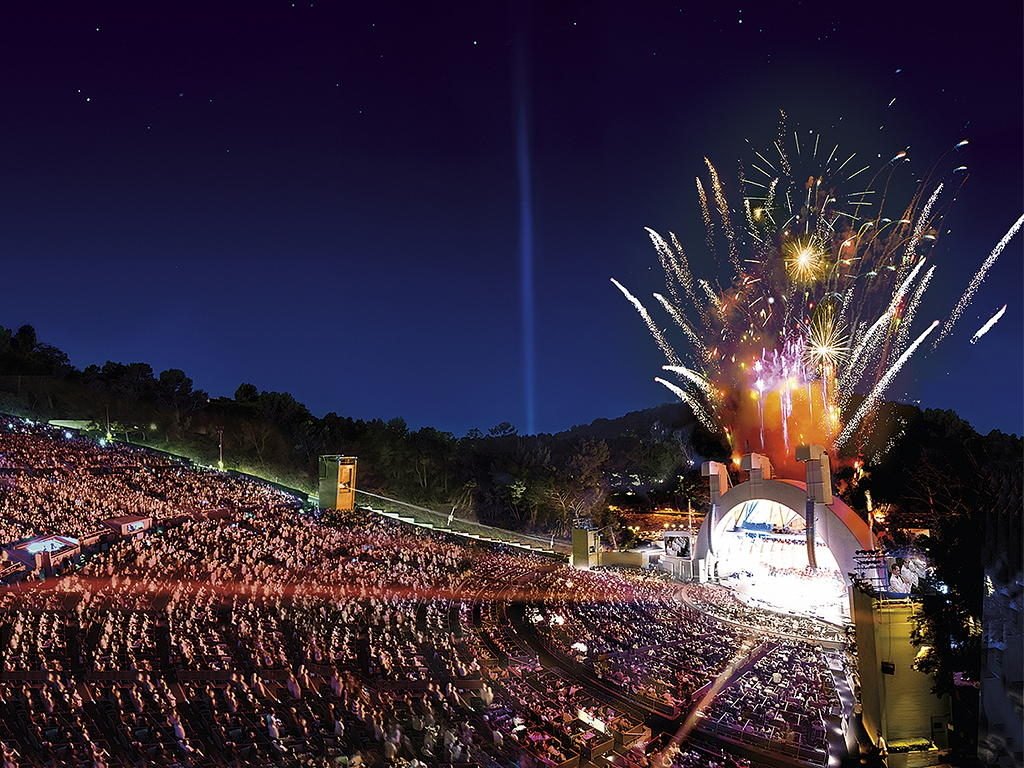
This is the silent, monumental promise of the Hollywood Bowl. Not just that you will see a performance, but that you will experience it. That the laugh of the saxophone, the ache in the singer’s high note, the seismic thump of the timpani will reach you you, in Seat 102 with the same clarity, the same emotional weight, as it reaches the patron in the front row box seat.
It is a promise of democratic intimacy, a logistical and acoustic miracle that must be renewed every single night. How does a nearly century old hillside, open to the chirrup of crickets and the grumble of the 101 freeway, achieve such consistency? The answer isn’t in a single silver bullet. It’s woven into the fabric of the place, a story of human intuition fighting geography, of technology whispering into the ear of tradition.
The Hill’s First Gift A Lesson in Geology and Grace
Our story starts with the hill itself. Long before Frank Sinatra’s voice curled around its curves or the Beatles created a brief, beautiful panic, this natural amphitheater in the Hollywood Hills was just that a scoop of land where sound carried. The early, makeshift benches leveraged this simple, ancient physics. Sound travels uphill. A voice from the bottom rises. It’s the oldest trick in the book, and the Bowl’s first and most crucial consistency officer is the land it sits on.
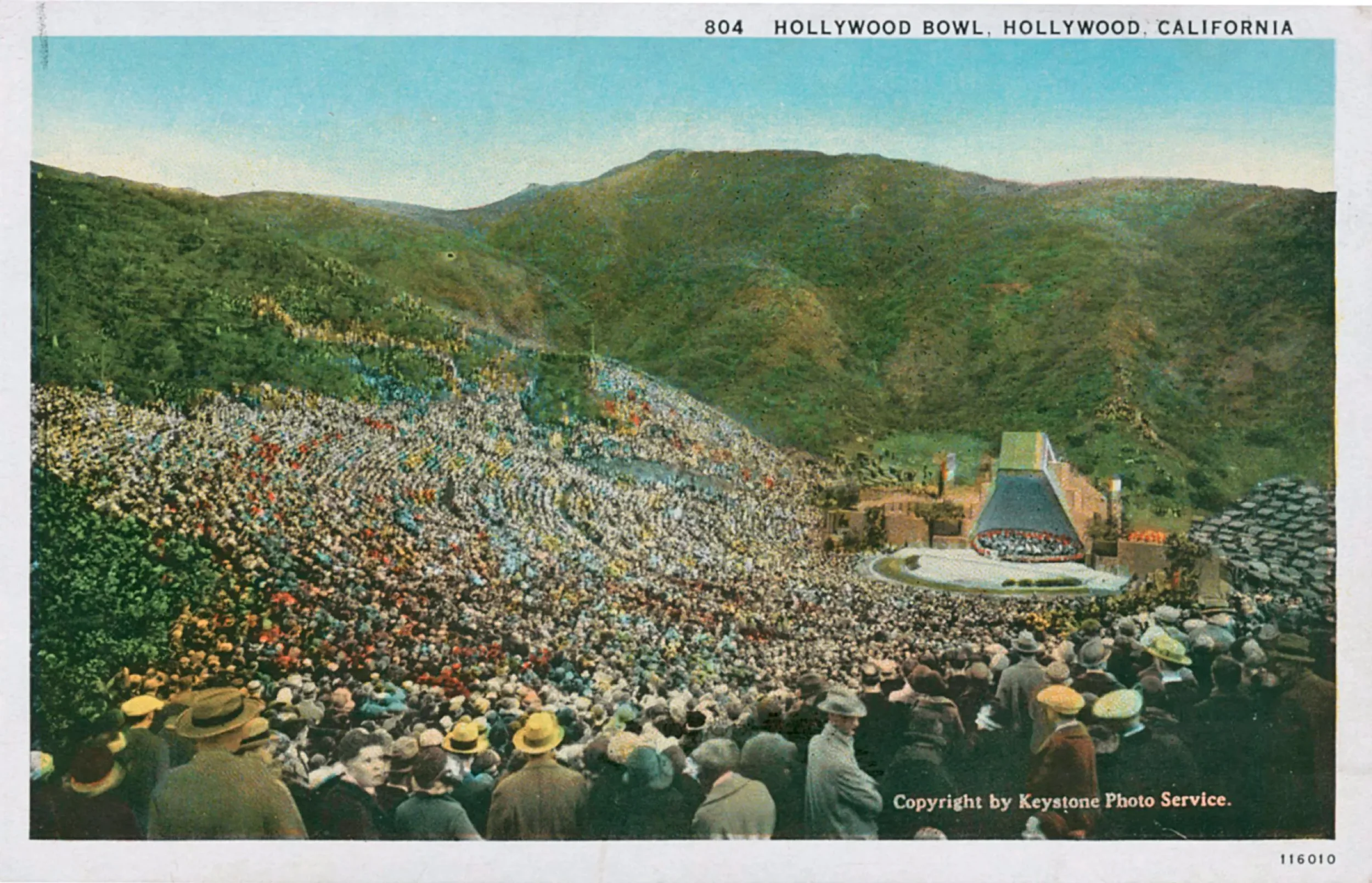
Every seat, from the priciest box to the cheapest bench at the very top, shares this fundamental, democratic advantage a direct, unobstructed sigh line to the stage. There are no giant pillars, no overhanging balconies to create sonic shadows. This is the foundational gift a natural focusing of attention and energy. The architects didn’t fight this geography; they listened to it. They followed its curve, letting the earth itself dictate the seating, ensuring that the connection between performer and audience, even in the farthest reaches, was first and foremost a visual and geometric one. Before a single note is played, the hill has already done its work, gathering everyone into its palm.
The Shell More Than an Icon, A Giant’s Whispering Ear
But a gift is not a guarantee. A whisper might travel, but a 70-piece orchestra is a storm of sound clashing frequencies, rumbling lows, piercing highs. Left to nature alone, that storm would be a mess by the time it climbed to the last bench. You’d get the muddy boom of the bass but lose the articulate pluck of the string bass. You’d hear the cymbal’s crash, but not the shimmer.
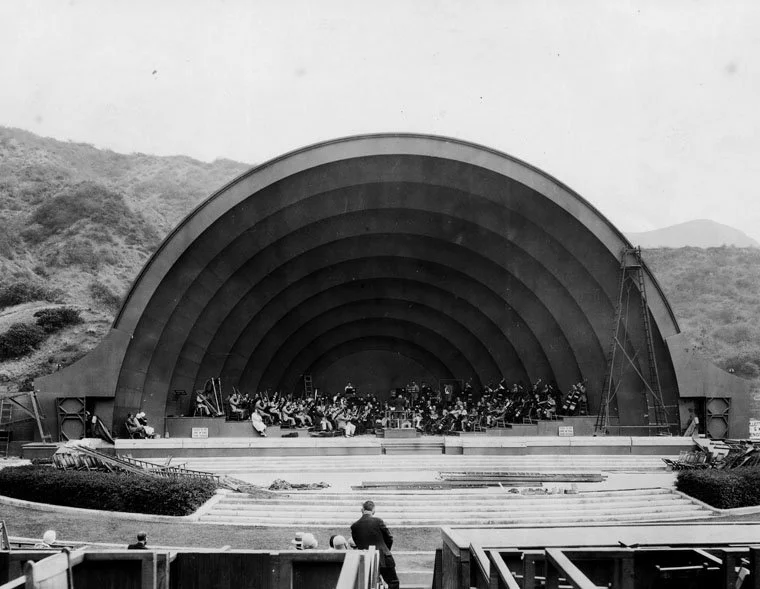
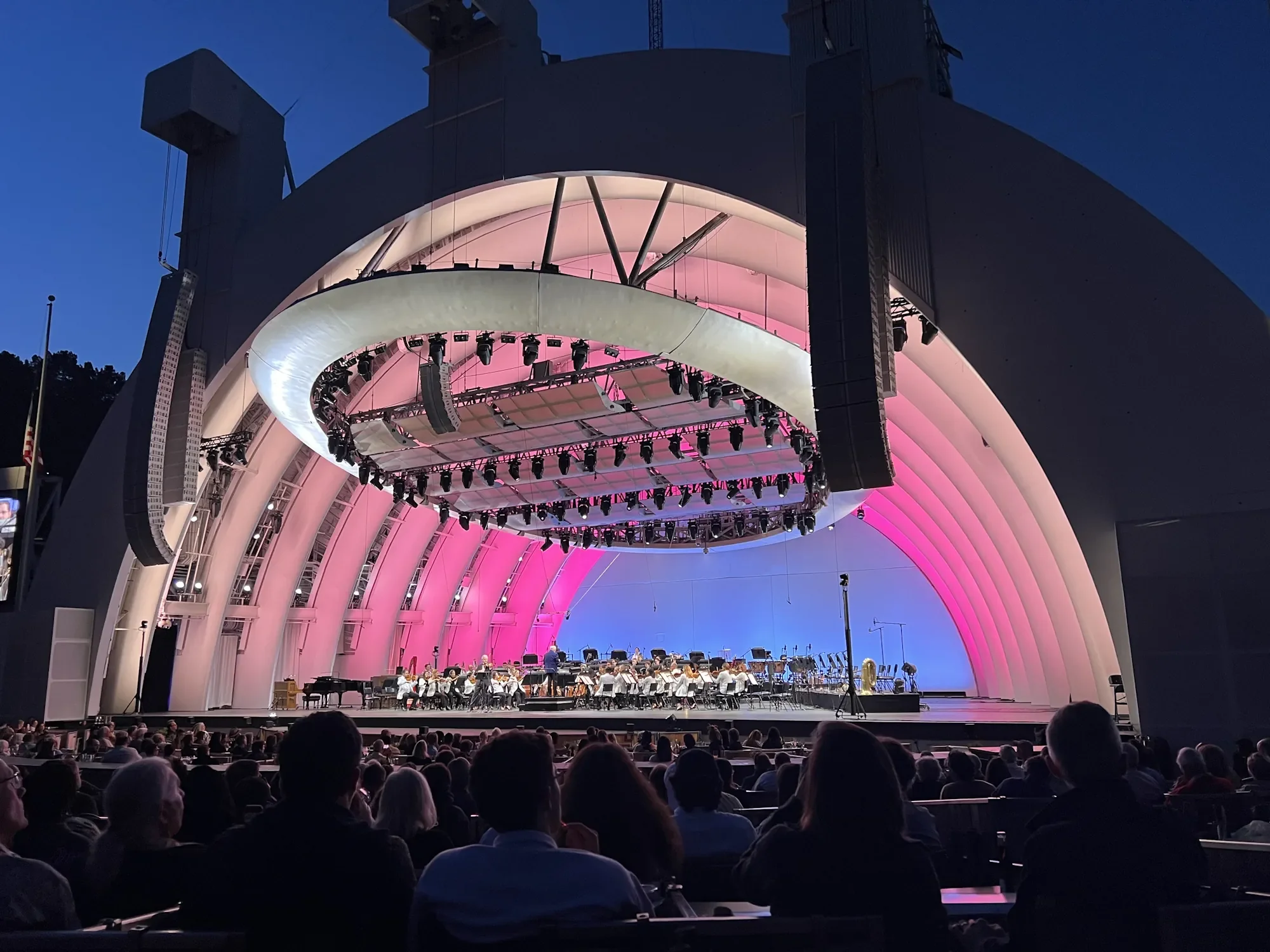
Enter the Shell. The iconic, banded arch is more than a logo it’s the first amplifier and the great organizer of chaos. The current shell, a sleek, modern iteration from 2004, is not a decorative cap. It is an acoustic reflector of meticulous, computer modeled design. Its curves are not arbitrary they are calculated trajectories.
Think of it as a giant, elegant ear turned inside out. Its job is to catch the delicate, fleeing sound emanating from the stage the violin’s sigh, the trumpet’s declaration and gently but firmly push it out and up, focusing energy that would otherwise dissipate into the vast night sky.
It acts as a sonic mirror, redirecting and blending the sound from different sections of the orchestra before it reaches the audience. This is consistency by architecture a single, powerful, silent gesture that treats the entire audience as one entity to be addressed. It ensures that the fundamental acoustic character of the music, its blend and body, is established before technology ever touches it.
The Unseen Conductors Mixing for a City of Listeners
Yet, as the Bowl grew and the world of music expanded with its electric guitars, synthesizers, and drum kits that needed a kick the shell alone couldn’t shoulder the burden. The need for reinforcement arose, and with it, the greatest threat to consistency the PA system. A bad sound system in a space this size is a tyrant. It creates pockets of blistering volume and valleys of muddy nothingness. It turns music into noise.
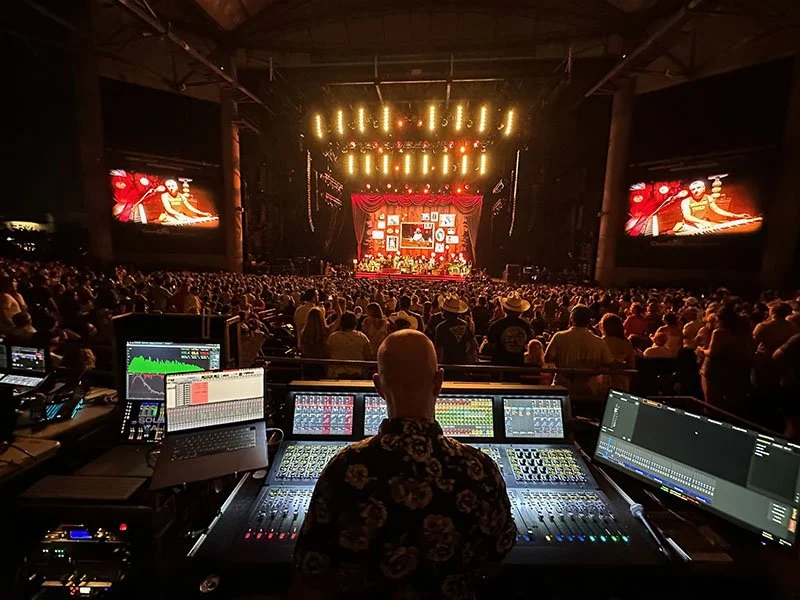
The Bowl’s approach to this problem is where the art truly meets the science, and where the human story emerges. Meet the mixers. Not the DJs, but the audio engineers, the unseen conductors of electricity and air pressure. Their kingdom is a small, tucked away booth at the top of the Bowl, with a window overlooking the entire panorama. From here, they don’t just “turn knobs.” They compose a second performance, in real time, for an audience of thousands who will never see them.
Their tool is a speaker array of breathtaking sophistication. If you look at the shell, you’ll see clusters of speakers, but they’re not just pointed forward. The system is “zoned” and “steered.” The speakers aiming at the front boxes are delivering a different acoustic recipe than those angled for the mid terraces, which are different again from those serving the nosebleed seats.
The sound is literally shaped, like a gardener pruning a bonsai tree, so that the sonic “tree” fills the space evenly. The high-frequency drivers, which give clarity and detail, are precisely aimed because high frequencies are notoriously directional they beam. The low end, which you feel as much as hear, is omnidirectional and blankets the area. But the engineer’s real secret weapon is time.
The Speed of Sound and the Art of the Delay
Sound is slow. It travels at about 1,130 feet per second. That means the natural, acoustic sound from the stage takes a perceptible amount of time a few hundred milliseconds to travel up the hill to the back benches. If the sound from the speakers at the shell reached those back rows instantly, you’d get a jarring, confusing echo the natural sound and the reinforced sound slapping against each other out of sync. Your brain would reject it; the music would feel blurred, unfocused, like a bad dub.
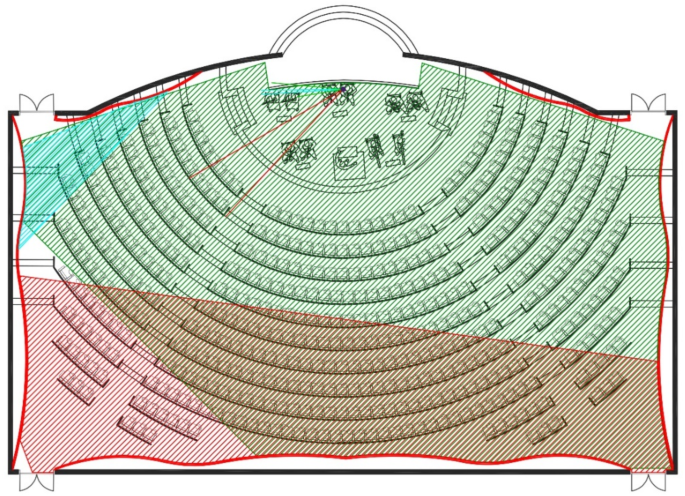
So, the engineers wield a counterintuitive magic they introduce a tiny, precise delay into the PA system. They hold back the electronic sound, just for those few critical milliseconds, so that it arrives at your ear in Seat 102 in perfect lockstep with the natural sound that just journeyed from the stage. This synchronization is the invisible glue that holds the entire acoustic reality together. It makes the massive speaker arrays disappear. The stage feels startlingly, immediately present, no matter your distance. The technology doesn’t replace the source; it partners with it, arriving hand-in-hand with the original sound to reinforce it without betraying its origin point. It’s the ultimate act of acoustic respect.
The Never-Ending Fight Against Noise
And then, there are the intruders. The Hollywood Bowl is resolutely, beautifully outdoors. The consistency battle isn’t just against distance, but against the living, breathing world. A helicopter thwack-thwack-thwacks through the airspace on its way to a nearby hospital. The 101 freeway, a river of light and noise, provides a constant, low frequency drone in the canyon below. A rogue evening breeze kicks up, threatening to carry the singer’s precious words into the grove of eucalyptus trees.
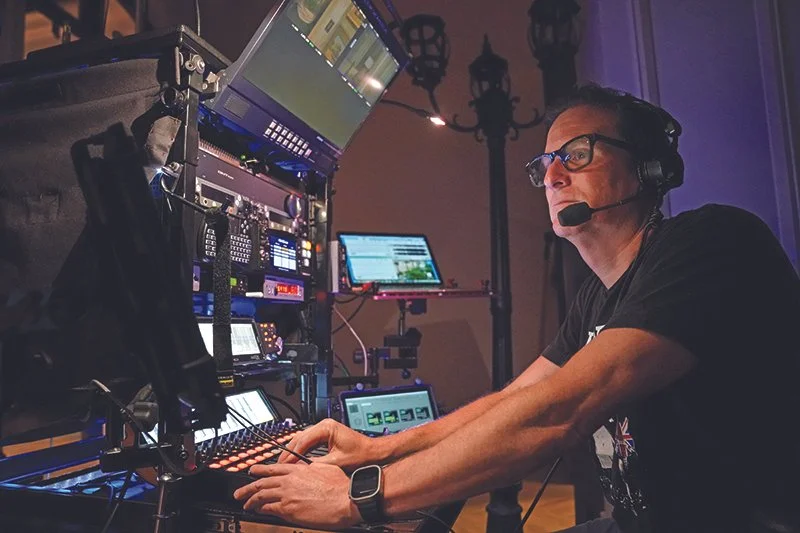
The engineers are listening for these things. Their fingers hover over faders, their ears constantly scanning. They are in a live, real-time negotiation with Los Angeles itself. When the helicopter passes, they might nudge the vocal level up a hair, dancing with the rotor’s decay. The entire system is tuned with sophisticated equalization a subtle acoustic filter
to mitigate the city’s perpetual rumble. The goal is not to create a sterile, soundproof bubble. That would betray the essential magic of being under the stars, part of the city. The goal is to make the performance resilient. To allow the art to sit atop the ambient noise of life, to be clear and compelling without pretending the world doesn’t exist. It’s a duet with chaos, and consistency is the melody that must always win.
Curating the View from Every Zip Code
But consistency isn’t just about what hits your eardrums. It’s a full-body, multi-sensory experience. It’s about what you see. From Seat 102, the stage is a perfect, postcard sized picture, framed by the shell and the dark hills. That’s no accident. The video screens those large, sharp, high-definition panels on either side are not just giant televisions for the "cheap seats." They are narrative tools, the great equalizers of sight.
The directors in the video truck are storytellers. They don’t simply show random close-ups. They curate sightlines. For you in the mid-section, they might cut to the violinist’s flying fingers during a virtuosic solo, adding a layer of detail you crave.
For the person in the last row, they provide the intimate, human moments you’d otherwise never see the smile exchanged between conductor and concertmaster, the look of concentration on a drummer’s face, the sweat on a brow caught in the stage lights. They ensure that the visual storytelling, the intimacy of a glance, is also part of your consistent ticket. They build a second, parallel narrative of close-ups and wide shots that ensures no one misses the human drama of the performance.
Ritual, Wine, and the Choreography of Thousands
And what of the other rituals? The clink of wine glasses on a rented picnic table, the unfurling of a linen napkin over a gourmet cheese board, the communal sigh as the sun dips and the iconic white arcs of the shell light up against the indigo sky. These rituals are engineered for consistency, too, in their own way.
The legions of staff from the ushers who’ve worked there for decades and know the place like their own living room, to the tireless vendors carrying trays of chardonnay up vertiginous steps are part of the delivery system. They are the warm, human interface. They handle the predictable chaos of 17,000 people arriving, feasting, and departing with a choreographed ease that feels peaceful, personal. The sacred tradition of bringing your own feast is a logistical tightrope that could lead to chaos, but it’s managed with clear, simple rules and a culture of shared respect that feels liberating, not restrictive. This consistency of culture is as vital as the consistency of sound. It tells you you’re in a place that understands the evening is more than a concert; it’s a personal event, a ritual, and that your comfort and enjoyment are part of the show’s success.
Epilogue: A Vibration in the Chest, A Shared Hum
I remember one night, during a performance of Beethoven’s Ninth, I was in one of those cheap, top row bench seats. The city lights were a sprawling, silent symphony below. As the “Ode to Joy” climaxed, the full chorus and orchestra erupting in that universe-spanning declaration, I had a sudden, petty thought: This must sound unbelievable down front.
A pang of seat-envy. But then I closed my eyes. The sound was not a distant, tinny thing. It was huge, enveloping. The contrabasses were a physical vibration in my chest. The sopranos cut through the texture with a celestial, terrifying clarity. I could hear the separate layers of the strings, the precise, golden attack of the brass. I opened my eyes, saw the tiny, ant like figures moving in a coordinated frenzy on the stage, and felt not distance, but connection. The sound was the bridge. It was, in all the ways that mattered, the same sound.
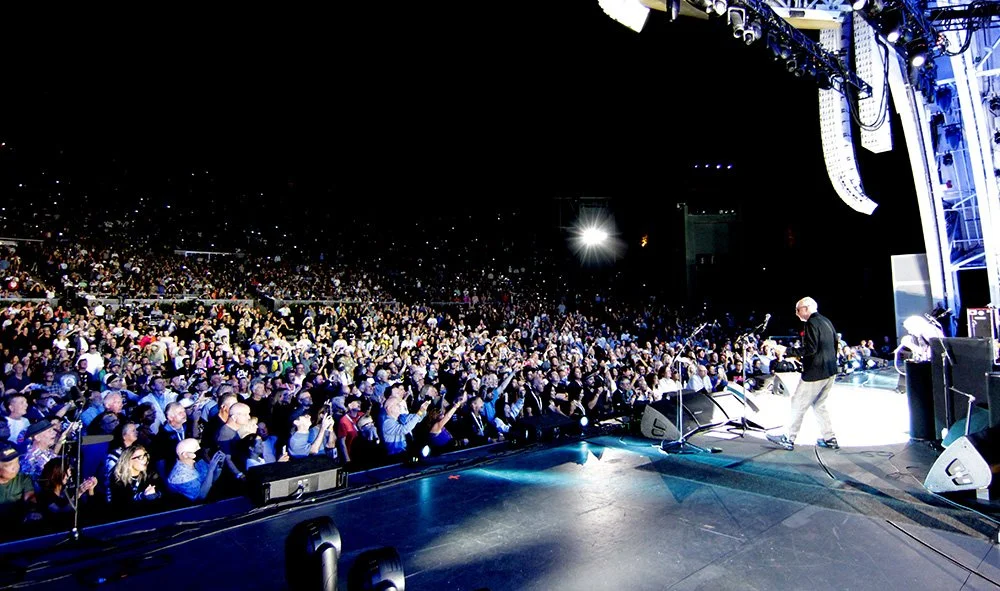
That is the Hollywood Bowl’s quiet, monumental triumph. It masters the physics of air and electricity not to create a perfect, clinical laboratory of sound, but to protect and deliver a shared, human moment. It fights the entropy of open space and urban noise to ensure that a whispered lyric, a weeping cello, a thunderous chord, lands with its intended meaning intact at every single one of its 17,731 points of longitude and latitude.
As you gather your things at the end of the night, the smell has changed. Now it’s mixed with night-blooming jasmine and the last, sulfurous trace of fireworks if there were any. You join the slow, happy river of people flowing out of the Bowl.
The person next to you, descending from a box seat, is humming the same encore tune you are. You shared it. You didn’t just hear the same concert; you felt the same thing. That consistency of feeling, of experience is the Bowl’s real masterpiece.
Not a technical spec sheet, but a sensation, faithfully reproduced, night after night, for nearly a century. It’s the proof that in a city built on illusions, some magic is meticulously, lovingly, and consistently real.
