 (585) 405-4375
 contact@echotonemusic.net




How the Las Vegas Sphere Handles Consistency Across Thousands of Seats
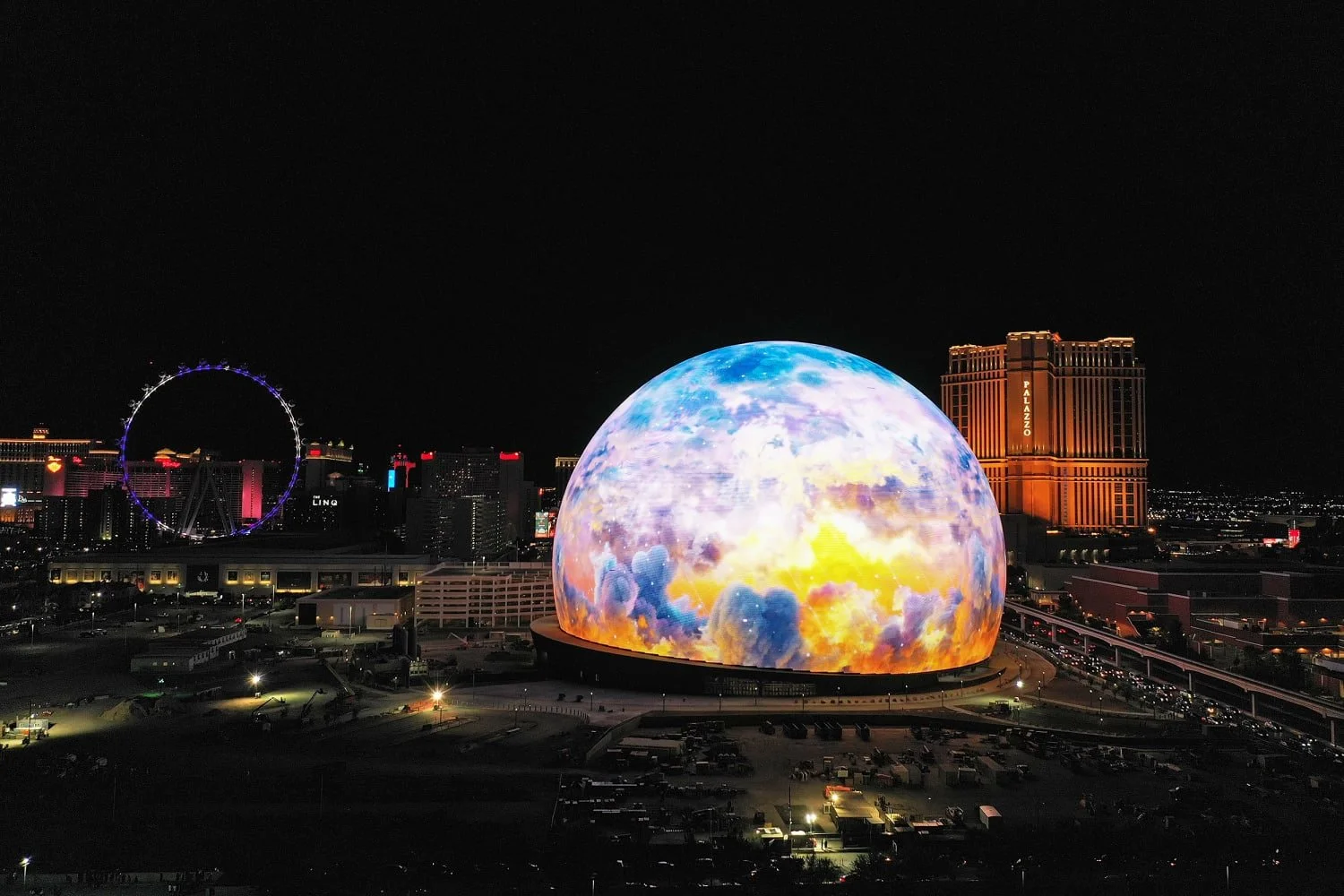
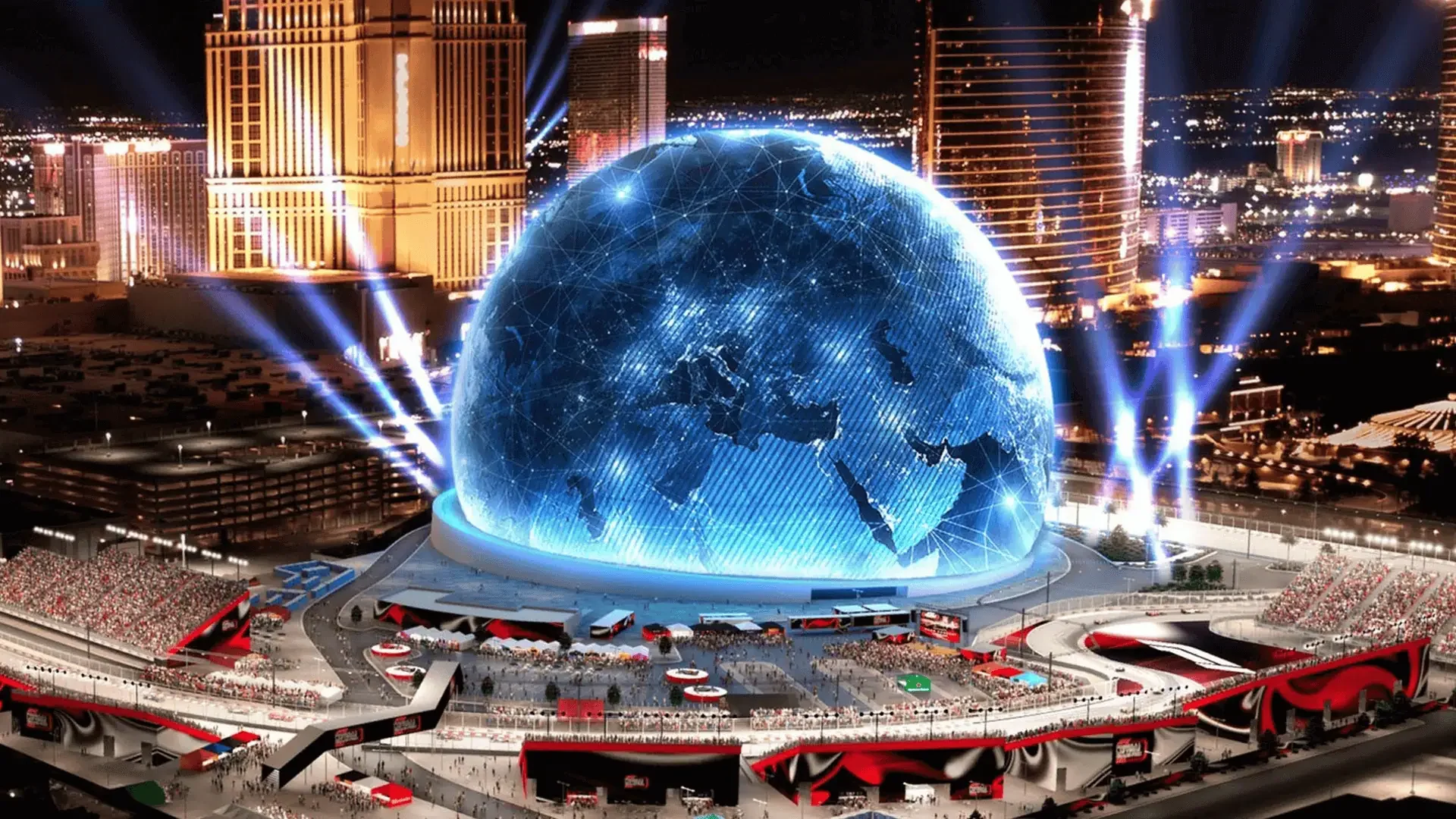
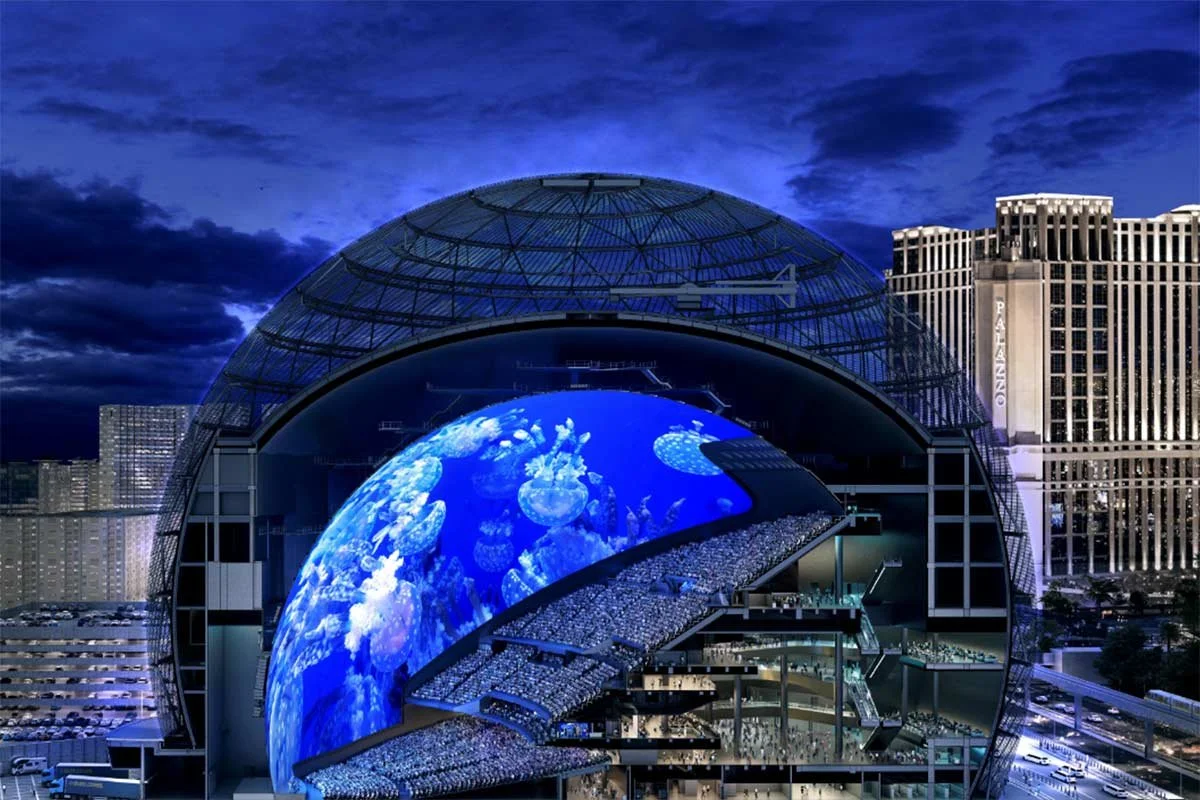
From the neon drenched boulevards of the Las Vegas Strip rises a structure that defies convention a massive, glowing sphere that pulses with life against the desert skyline. Opened in September 2023, the Sphere at The Venetian Resort isn't just another venue it's a bold reimagining of what live experiences can be. Towering at 366 feet high and 516 feet wide, its exterior exosphere the world's largest LED screen with 1.2 million hockey-puck-sized LEDs captivates passersby with dynamic displays. But step inside, and the real wonder unfolds a 160,000 square foot interior LED media plane wraps around the audience, creating a fully enveloping visual dome capable of 16K resolution.
With seating for up to 18,600 in concert configuration or 20,000 standing the challenge is immense how to ensure every patron, from the premium floor seats to the steep upper terraces, experiences audio that's not just loud enough, but consistently clear, balanced, and immersive. In traditional arenas, sound quality varies wildly front rows blasted, back rows muddled. Here, in a perfectly spherical bowl, acoustics could easily turn chaotic with reflections ricocheting off curved surfaces and distances stretching over 300 feet. Yet, the Sphere delivers something unprecedented uniform sound coverage where volume levels, tonal balance, and spatial imaging feel remarkably similar across the vast space.
This feat is powered by Sphere Immersive Sound, the most advanced audio system ever deployed in a permanent venue, developed by HOLOPLOT in collaboration with Sphere Entertainment. It's not hyperbole to say this system has redefined pro audio for large-scale immersion. Residencies from U2's groundbreaking U2:UV Achtung Baby Live at Sphere in 2023-2024, through Dead & Company's psychedelic runs, to the Eagles' ongoing performances and cinematic experiences like Darren Aronofsky's Postcard from Earth, have showcased audio that complements the visuals seamlessly. Attendees rave about hearing details as if wearing headphones, with bass thumping evenly and vocals cutting through crystal clear, no matter the seat. This consistency transforms the Sphere from a mere concert hall into a shared dreamscape, where technology dissolves barriers between performer and audience.
From Conceptual Sketches to Acoustic Reality
The Sphere's story begins over a decade ago, when Madison Square Garden Company (now Sphere Entertainment) dreamed of a next-generation venue. Inspired by sci-fi domes and planetariums, the vision was for a space where visuals and sound fully envelop spectators. Las Vegas, with its history of spectacle from the Rat Pack era to Cirque du Soleil's aquatic wonders proved the perfect stage. Construction started in 2018, but audio planning ran parallel, recognizing early that standard PA systems wouldn't cut it.
Traditional venues use point source speakers or line arrays, firing sound in broad patterns that decay rapidly and reflect unpredictably. In a dome, this would create echoes, hot spots, and dead zones. Engineers needed a solution that controlled sound propagation precisely. Enter HOLOPLOT, a Berlin-based innovator founded by Roman Sick in 2011. Drawing from aerospace and telecom beamforming tech, HOLOPLOT pioneered audio beamforming for pro applications. Their early installations, like at Berlin's Kraftwerk or corporate events, demonstrated focused sound delivery without physical barriers.
By 2021, prototypes tested at MSG's Beacon Theatre convinced executives. Scaled massively for the Sphere, the system comprises over 1,600 fixed HOLOPLOT X1 Matrix Arrays housing 167,000 individual drivers plus hundreds of mobile units. All hidden behind the perforated LED plane, preserving visual purity while allowing sound to pass through. This integration was years in the making acoustic modeling simulated the dome's behavior, material tests ensured the screen's 50% openness didn't overly attenuate highs, and redundancy built in for flawless operation.
The debut with U2 in fall 2023 marked a milestone. Bono himself noted the intimacy, as if playing in a club despite the scale. This evolution echoes broader industry shifts from mono PA in the 1950s to stereo, surround, and now object based audio but the Sphere accelerates it, proving immersive tech viable at arena scales.
The Seating Labyrinth: Understanding the Acoustic Battlefield
Walk into the Sphere empty, and the scale overwhelms. The bowl is a steep, terraced amphitheater rising in concentric rings around a central GA floor. Lower levels offer plush, haptic-enabled seats with wind and scent effects upper sections climb sharply for optimal sightlines to the overarching dome. Distances vary closest seats mere feet from stage, farthest over 110 meters away in the 400-level nosebleeds.
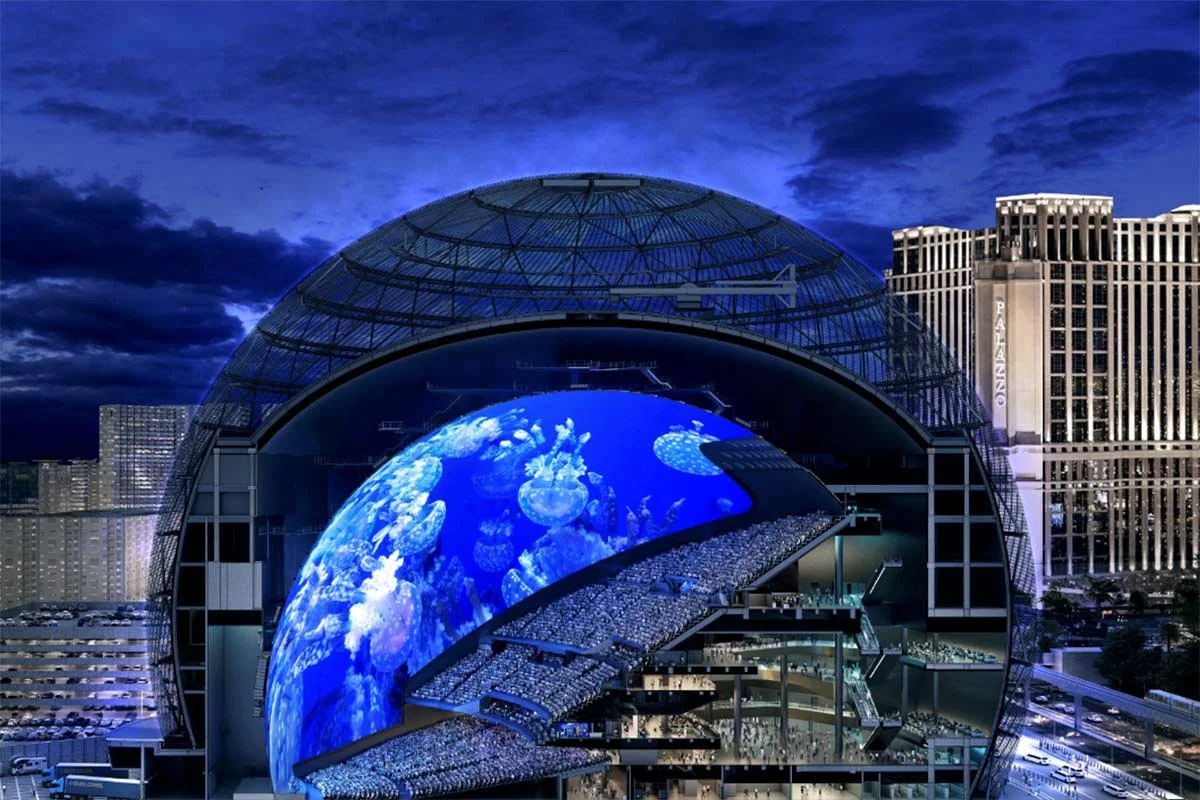
Acoustically, it's treacherous. The dome's curvature acts like a giant reflector, potentially causing slap-back echoes or comb filtering. The LED plane, while perforated, absorbs energy unevenly. Audience absorption changes dynamics empty venue bright and reverberant, full house damped. Temperature swings in Vegas affect air density and sound speed. Without intervention, low frequencies might boom in corners, highs fade rearward.
Yet, the design mitigates much inherently extensive absorptive treatments on walls and seat undersides control reverb to a tight 1.2 seconds, ideal for both music and film. Seats themselves, perforated for sound passage, mimic human bodies during tuning. This foundational acoustics set the stage for the tech overlay, ensuring consistency starts from architecture, not just electronics.
Decoding the Magic: Beamforming and Wave Field Synthesis Explained
At the heart lies 3D audio beamforming, a technique borrowing from radar and 5G antennas. HOLOPLOT's X1 arrays modular panels like the MD96 (96 drivers) or MD80—stack drivers in grids. Each driver amplifies independently, controlled by sophisticated DSP algorithms.
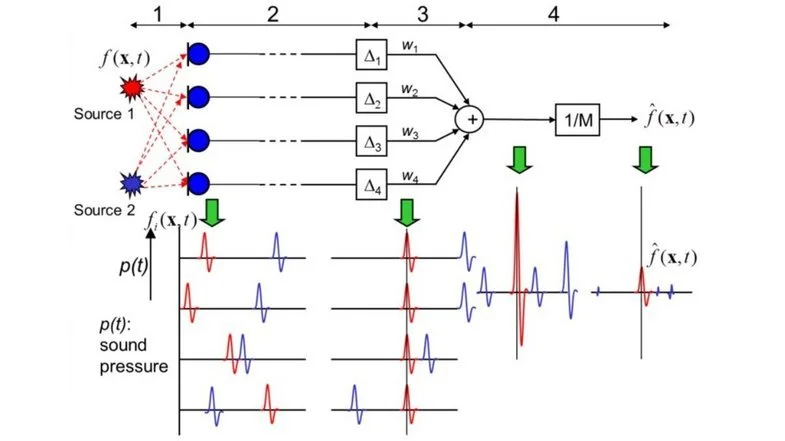
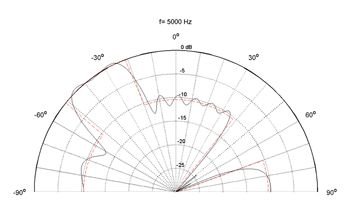
By precisely timing and phasing signals, the system forms "beams" narrow or wide lobes of sound that propagate as planar waves rather than spherical. Unlike conventional speakers losing 6dB per doubling of distance, beams maintain intensity far longer, delivering even SPL (sound pressure level) across the bowl. Multiple beams per array up to 12 allow layered coverage: one for mains, others for fills or effects.
Wave field synthesis (WFS) elevates this, creating virtual sound sources anywhere in space. Algorithms reconstruct wavefronts as if from imaginary points, enabling precise localization a bird chirp overhead, a guitar solo stage left without physical speakers there. Combined, this yields object-based audio, akin to Dolby Atmos but scalable massively.
The proscenium array, a colossal 33 meter wide curtain behind the stage, handles primary reinforcement. Distributed environmental arrays ring the dome, steering sound to avoid reflections or fill shadows. Software optimizes in real-time, compensating for humidity or crowd density via sensors.
This isn't brute force it's intelligent directionality. Beams can narrow to spotlight vocals, avoiding stage bleed, or widen for ambient washes. Zones enable section specific audio enhanced bass lower bowl, clearer highs upper.
Hardware Deep Dive: The Invisible Army of Drivers
Peering behind the LED facade reveals the arsenal: thousands of HOLOPLOT modules, each a self-contained powerhouse with onboard amplification and processing.
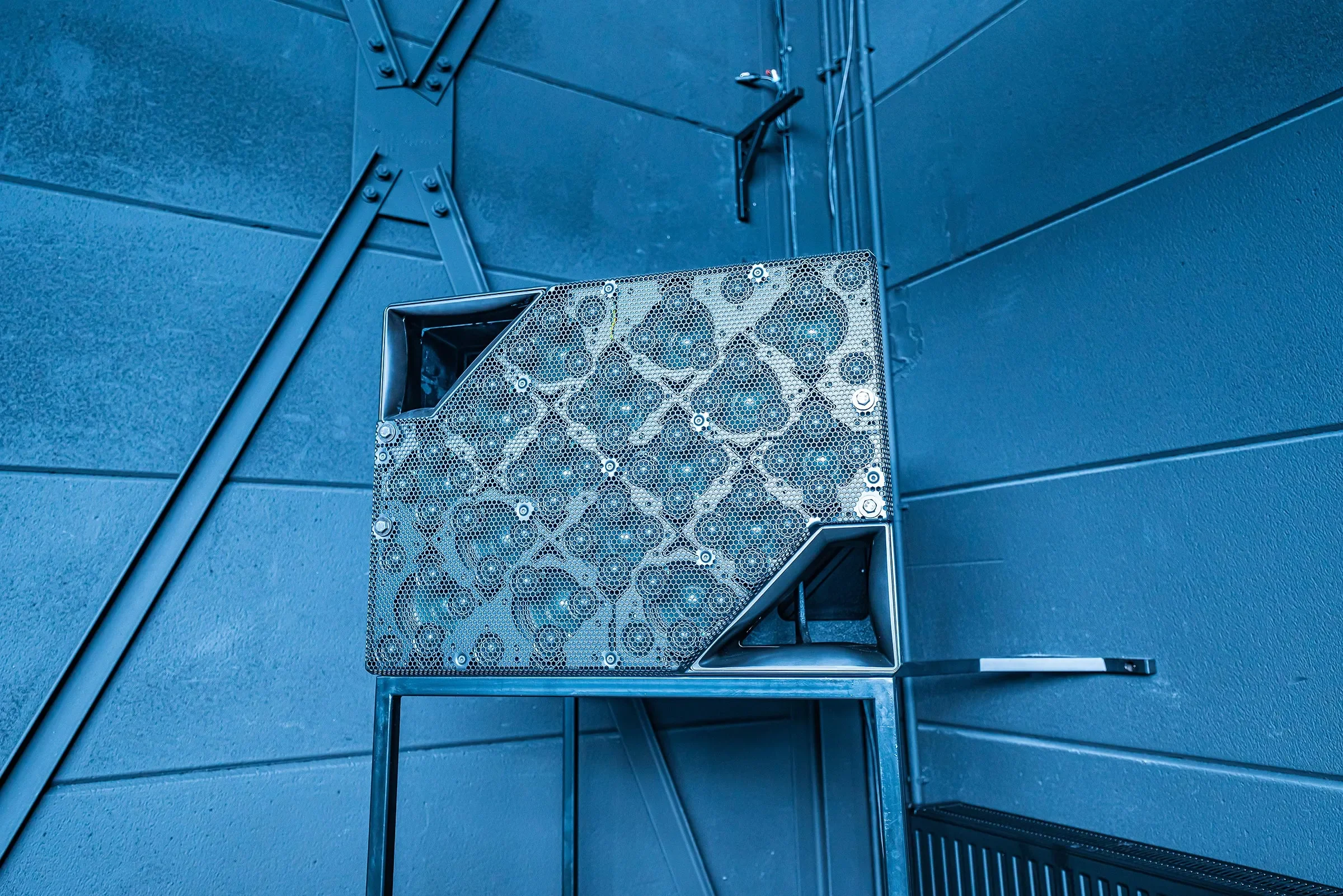
Drivers span frequencies dedicated lows for punchy subs, mids for vocal warmth, highs for sparkle. Dante networking routes signals digitally, minimizing latency. Power efficiency shines Class D amps with smart cooling reduce heat in the enclosed space.
Mobile arrays add flexibility for custom setups, like orchestral pits or asymmetric stages. Redundancy abounds dual PSUs, failover paths ensure no single failure darkens a show. Calibration tools like HOLOPLOT's Plan software simulate and optimize pre-install, refined onsite with measurement mics.
Compared to legacy systems L-Acoustics or Meyer line arrays visible overhead the Sphere's invisibility preserves immersion, sound emerging magically from the visuals.
Life in the Audio Control Suite
In a fortified room overlooking the bowl, engineers command the system. Consoles from DiGiCo or Avid integrate with HOLOPLOT's Matrix software, presenting beams as virtual channels.
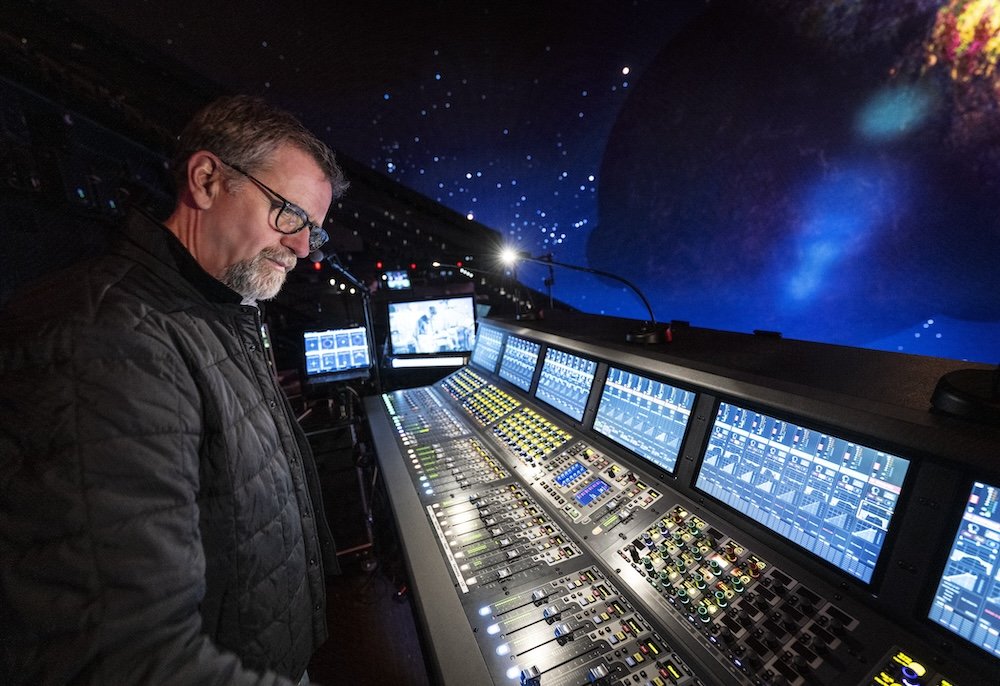
A typical show day arrival at dawn for line checks, then empty house tuning firing pink noise through beams, measuring with Smaart for flat response. As crew loads in, guest mixes import, beams assigned. Soundcheck refines: artists on in ears, FOH tweaking localization.
Crowd influx shifts acoustics auto compensation kicks in, but manual overrides fine tune. During performance, dynamic control shines beams tracking moving performers, effects swirling per script. For Postcard from Earth, narration intimate foreground, nature sounds enveloping.
Engineers like those on Dead & Company runs describe euphoria: mixing in 3D, placing jams spatially. Challenges? Vast I/O counts demand organization, but tools streamline.
Real-World Triumphs and Trials: Stories from the Front Lines
U2's residency tested limits 40 shows, complex setlists. Early nights ironed minor phase issues; by close, perfection. Phish's 2024 runs explored improvisation, beams adapting live.
Eagles leverage for cinematic clarity, voices pristine. Films demand subtlety whispers audible everywhere. Trials: atmospheric shifts during heat waves, solved via real-time algorithms. Feedback rare, thanks to directional control.
Attendees confirm reviews praise "best sound ever," no bad seats.
Gazing Forward: The Ripple Effects on Live Audio
The Sphere isn't endpoint; it's catalyst. HOLOPLOT tech eyes arenas worldwide, personalization app linked custom mixes. Integration with haptics deepens multisensory.
Sustainability efficient amps cut power. Future AI-assisted mixing, adaptive to crowds. As venues evolve, the Sphere's consistency benchmark pushes boundaries, ensuring live experiences captivate uniformly, seat by seat. In this orb, sound and vision converge, proving technology, when masterful, creates equity in wonder.
Setting a New Benchmark for Immersive Audio
In the end, the Las Vegas Sphere achieves something that once seemed impossible turning a vast, spherical arena into an acoustic sanctuary where every seat feels like the best in the house. Through HOLOPLOT's revolutionary beamforming and wave field synthesis, Sphere Immersive Sound delivers uniform clarity, tonal balance, and spatial depth to thousands simultaneously erasing the traditional compromises of distance, reflections, and scale.
This isn't just engineering prowess it's a profound shift in how we experience live events. From U2's intimate yet epic residency to the sweeping soundscapes of Postcard from Earth, attendees leave describing sound that feels personal, enveloping, and perfectly consistent, no matter where they sit. The Sphere proves that advanced audio technology can democratize immersion, making spectacle truly shared.
As the industry looks forward, the lessons from this glowing orb will echo far beyond the Strip inspiring venues worldwide to prioritize precision and equity in sound design. In an era craving connection, the Sphere reminds us that when audio transcends barriers, live experiences become unforgettable for everyone.
